Verdis Norton’s retirement came with quotation marks. In 1997, after more than four decades of work and a career that had carried his family from one American coast to the other, he and his wife Bonnie returned to Utah and “tried” to retire. That little verb, preserved in the family’s account of his life, has comic timing. It hints that stillness was never likely to hold. A decade later, Norton was examining a stranded piece of technology and deciding whether to put his money, reputation and remaining working years behind it. He was approaching 70. Sensible retirement had met an interesting problem, and the problem won.
Startup folklore usually hands the keys to someone young enough to regard sleep as a negotiable expense. Norton arrived with a different asset: memory. He had watched large organizations make choices, miss signals, repair divisions and carry plans across borders. He knew that a spreadsheet could be perfectly balanced while a company was not. He had also learned that strategy is less a thunderbolt than a long sequence of choices made before the applause, if any, arrives.
By the time he helped establish ASEA, Norton had served in the United States Coast Guard, earned a business degree, raised a family and occupied senior roles at General Foods, Hobart and Kraft Foods. He had been a vice president for strategy. He had consulted. He had retired. The fresh beginning did not erase any of that. It depended on all of it.
A degree earned in the thick of life
Norton was born on September 11, 1939, in LaPoint, Utah, the eldest of seven children. His father, Lamar, was drafted when Verdis was three and served under General George Patton during the Second World War. The household lesson was work, absorbed early and without much ornament. Norton later served in the Coast Guard, an experience his family associated with the discipline and resilience that followed him into business.
In January 1961, he married Bonnie Jo Hillstead in Salt Lake City. Their first son arrived later that year, their second less than two years after that. Norton was now doing several things that biographies often file into separate chapters: working full time, studying and raising children. In 1966, he graduated from the University of Utah with a business degree. Two more children followed. There was no pristine season reserved for preparation. Preparation happened amid responsibility.
That is an important detail because it rescues his later success from the tidy lie of inevitability. Norton did not step onto a polished executive escalator. He accumulated judgment while life remained crowded. His corporate rise eventually put him in senior leadership, but the early picture is simpler: a young father finding hours that were already spoken for.
The moves that followed gave the Norton household a wide-angle view of American business life. His career took the family from coast to coast, with each promotion carrying the practical consequences that résumés leave out: a new house, new schools, new neighbors and another set of routines to invent. Corporate mobility may appear as a neat sequence of titles on paper. At home, it arrives in boxes. Bonnie was the constant through those relocations, and their partnership would later stretch into shared service and a new company involving the next generation of the family.
“It’s never too late to start something with great purpose, especially if it is in service of humanity. Never stop growing, learning, and becoming.”Verdis Norton
The strategist learns to look twice
Across more than 40 years, Norton developed a specialty in strategy and in helping troubled parts of businesses become useful again. The work took the family around the United States. At Kraft, he served as vice president for strategy. The title sounds abstract, but strategy in a large company is practical anthropology: how people protect budgets, how departments interpret the same sentence differently, why a sensible plan stalls between approval and execution.
Norton built planning systems and advised organizations that operated at a scale far removed from the modest Utah setting of his childhood. Yet the lasting lesson he carried into his own company was strikingly human. He later described the essence of network marketing as “developing people, not the movement of product.” The sentence redraws the organization chart. Inventory matters, of course, but people are the compounding asset.
This was not merely conference language. People who met him remembered the small proofs. One convention attendee watched Norton greet a long line after a full day, giving each person attention even as fatigue would have offered a respectable escape. Another recalled sharing an elevator with him and walking into the lobby while he held her hand. Others remembered encouragement delivered in brief conversations years earlier. Business monuments are usually buildings. These were moments, carried away by strangers.
The long route to a late start
Retirement meets an unfinished idea
After returning to Utah, Norton and Bonnie took on a different kind of work. They served as directors of the Family Tree Center Genealogy Library on Main Street in Park City. The assignment suited a couple with a strong sense of family continuity. It also gave Norton a season outside the corporate sprint. Then, in the mid-2000s, he joined the board of a small biotechnology company whose research had outrun its financing.
The business was struggling and the underlying technology was headed for the shelf. Norton and several partners gathered resources to acquire it, commission further development and work out how an unfamiliar product might reach a broad market. James Pack joined him in the venture, as did Norton’s son Tyler. ASEA was founded in 2007 and officially launched its direct-selling business in 2010.
The daring part was not simply buying an asset nobody else had rescued. It was committing to the long, unglamorous middle: research, manufacturing, distribution, culture and international growth. A good opportunity can still be an awkward company. Norton’s decades in planning gave the young organization adult supervision from its first day.
He left corporate life in 1997. Roughly a decade later, he began the company that would define his public legacy.
ASEA expanded beyond the United States and eventually sold in more than 34 countries. Norton guided its early strategy before retiring from active leadership in 2015. The company marked that transition with celebrations in Cancun and Salt Lake City. Even afterward, he appeared at selected events, a founder emeritus with the unusual pleasure of seeing a late-life bet become an institution.
Scale altered the scenery but apparently not his preferred unit of attention. A company in dozens of countries creates stages, translations, logistics and a formidable number of lanyards. Norton still seems to have worked one conversation at a time. His most repeated lines were invitations rather than victory laps: begin, influence, grow, learn, become. The verbs point forward and leave room for someone else. For a strategist accustomed to the view from headquarters, he remained interested in what the person standing in front of him might do next.
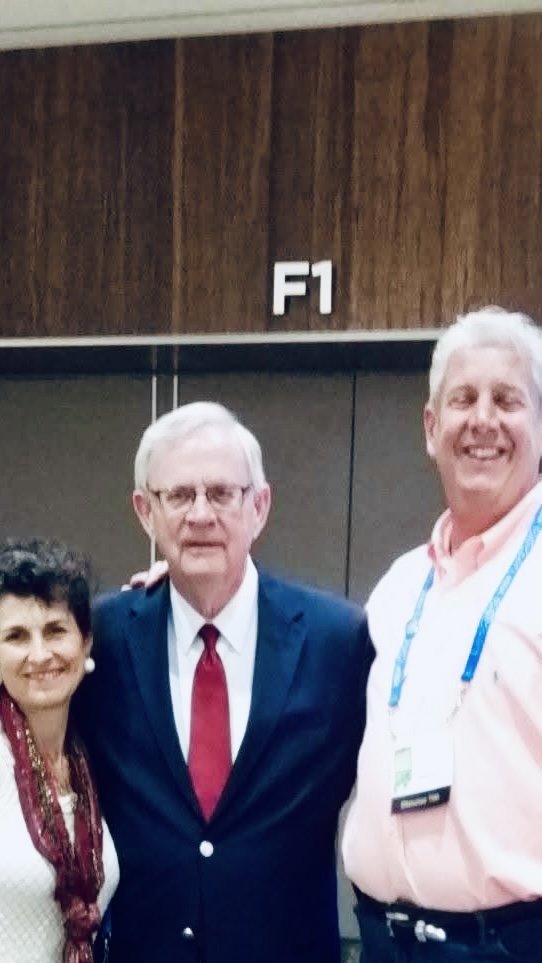
The company was large; the gestures were small
Norton’s public vocabulary tended toward purpose, influence and the future. Yet the recollections left after his death give those large words a domestic scale. He and Bonnie were married for 64 years. They had four children, 19 grandchildren and 18 great-grandchildren by the end of his life. His favorite travel destination was not an executive hideaway. It was Lake Powell, on houseboat trips with the family.
Family and enterprise overlapped without becoming identical. Tyler became a co-founder and chair of ASEA. Daughter Nancy and son Jon later told versions of the company’s early story in recorded interviews. The enterprise outlived Norton’s day-to-day involvement, which is one definition of a founder’s success: the organization can continue after the founder stops holding the wheel.
There is a temptation to turn any late-career beginning into a scolding lesson about productivity. Norton’s life resists that crude use. He did retire. He served. He spent time with family. He returned to business because a particular idea caught him, not because leisure had failed a quarterly review. The value of the story lies in permission rather than pressure. A life may contain more than one serious beginning.
“The real essence of network marketing is developing people, not the movement of product.”Verdis Norton
Verdis Lamar Norton died on April 14, 2025, at 85, surrounded by family. The corporate facts followed him into the obituaries: Kraft, strategy, ASEA, global reach. So did the other facts: Coast Guard service, church service, Bonnie, four children and a crowded set of descendants. Neither group feels complete without the other.
His career makes a graceful argument against the tyranny of the standard timeline. The University degree came with two sons at home. The defining company came after retirement. The global reach came from a man formed in a small Utah town. Norton did not beat the clock. He declined to let it make the decision.
The funniest phrase in his story remains the attempt to retire. It sounds less like failure now than a useful intermission. He had already spent a working lifetime learning what organizations do. At 69, he found somewhere new to use it.