BREAKING  Vave Health ships world's first wireless whole-body ultrasound on a single PZT transducer 10M+  scans performed and counting NO  subscription. Lifetime software updates. SINCE 2015  Stanford lab to lab coat PARTNERS  Inteleos Foundation · POCUS Academy · Touro University FDA-CLEARED  510(k) since 2019 BREAKING  Vave Health ships world's first wireless whole-body ultrasound on a single PZT transducer 10M+  scans performed and counting NO  subscription. Lifetime software updates. SINCE 2015  Stanford lab to lab coat PARTNERS  Inteleos Foundation · POCUS Academy · Touro University FDA-CLEARED  510(k) since 2019
Medical Devices · San Jose, CA

Vave
Health.

The ultrasound used to be a cart you wheeled down a hallway. Vave Health made it a probe you slip into a lab coat - wireless, phone-paired, and refreshingly free of subscription fees.

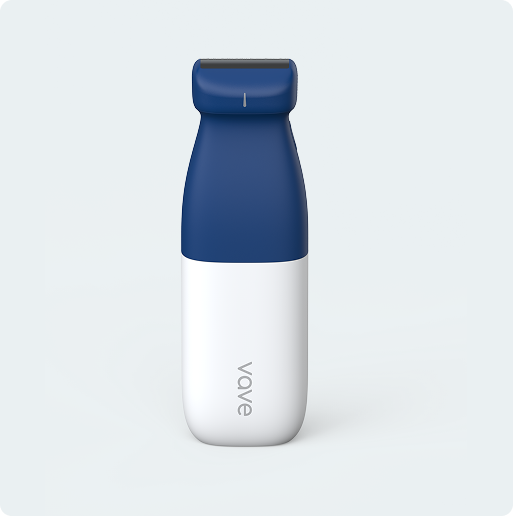
Vave Health Universal wireless handheld ultrasound probe
The whole hospital imaging department, allegedly. The Vave Universal Probe - one transducer, shallow to deep, photographed looking far calmer than the emergency rooms it works in.
The Dispatch

A scan that used to need a room now needs a pocket.

Somewhere right now, a clinician is pressing a device smaller than a TV remote against a patient's ribs, watching a heart beat in real time on the phone already in their hand. No cart. No cable snaking to a monitor. No login screen demanding this month's subscription. That device is a Vave probe, and the quiet revolution it represents is exactly the kind you miss if you blink.

Vave Health, headquartered in San Jose with a team of around 44, builds wireless handheld ultrasound for the point of care. The premise is almost suspiciously simple: the best imaging tool is the one a clinician actually has on them. So Vave shrank the hardware, paired it with iPhones and Androids, and - in a move the industry found mildly scandalous - refused to charge a recurring fee for it.

Field notes: it weighs less than the phone it talks to.
"Our unique platform is designed around simplicity, with a wireless ultraportable device that offers intuitive workflow at an unmatched price point."Amin Nikoozadeh, Founder
The Problem They Saw

Two-thirds of the planet can't get a scan.

A diagnostic tool helps no one if it can't reach the patient.

Here is the uncomfortable number that started everything: as many as two-thirds of the world's population lack access to medical imaging. Not because ultrasound doesn't work - it works beautifully - but because the machines were big, expensive, and bolted to buildings that most of humanity doesn't live near. A village clinic, a rural ambulance, a crowded teaching ward in a country with three radiologists per million people: all imaging deserts, not for lack of need but for lack of a tool that travels.

The conventional fix was to make imaging machines a little cheaper and hope. Vave's read of the situation was less polite. The cart wasn't the answer that needed a discount - it was the thing that needed to disappear.

"As many as two-thirds of the world's population lack access to medical imaging."The founding premise, Vave Health
The Founders' Bet

A Stanford PhD who spent years making things smaller.

Amin Nikoozadeh did his doctoral work at Stanford on the miniaturization of imaging systems - the unglamorous, deeply hard problem of taking something room-sized and making it pocket-sized without throwing away the physics that makes it useful. In 2015 he founded Vave Health on a bet that most people thought was premature: that consumer electronics had finally gotten good enough to host hospital-grade ultrasound, and that the smartphone in every clinician's pocket was the missing display, computer, and connection all at once.

It was a bet on convergence. Batteries, processors, and wireless radios had quietly become powerful enough to do the job; nobody had bothered to point them at a transducer. Vave did. Later the company brought in a commercial leadership team - David Garner, a 20-year point-of-care ultrasound veteran from Butterfly Network and Philips, stepped in as CEO - to turn the engineering feat into something a hospital purchasing department would actually sign off on.

The Engineer

Amin Nikoozadeh

Founder. Stanford PhD in imaging-system miniaturization. The reason a whole-body scan fits in one hand.

The Operator

David Garner

CEO. Two decades in point-of-care ultrasound at Butterfly Network and Philips, brought in to scale the bet.

The Product

One probe. Heart to muscle, shallow to deep.

Most handheld ultrasounds make you choose your transducer like you're picking a lens. Vave's headline trick, launched in March 2025, was the Universal Probe: the world's first wireless, handheld, whole-body ultrasound built on a single PZT transducer - the gold-standard crystal technology - that handles both linear and phased imaging. One device, shallow scans to deep scans, swappable presets for MSK, OB/GYN, cardiac, lungs, and the abdomen.

The hardware respects the chaos it lives in: a patented probe-head cover and a swappable battery so it keeps scanning when downtime isn't an option. For its harder-deep-structure work, Vave also sells a dedicated Phased Probe tuned for cardiac and trauma. And then there's VaveCast, a feature that lets an instructor mirror a live scan to a roomful of students' phones - because the people who most need to learn ultrasound rarely fit around one screen.

1PZT transducer, whole body
$0Subscription fees
Lifetime software updates
2Probes: Universal + Phased
"Consumer tech is changing so rapidly, and we've finally learned how to harness this work to directly benefit healthcare providers and patients."David Garner, CEO
The Record

Lab to Lab Coat: A Vave Timeline

2015
FoundedAmin Nikoozadeh spins a Stanford miniaturization thesis into a company.
2018
Series ABacking from Cota Capital, RONA Holdings, and NAIMIgroup; ~$6.4M raised to date.
2019
FDA 510(k) clearedThe wireless probe gets its regulatory green light.
2021
New leadershipDavid Garner, ex-Butterfly Network, named CEO to scale commercially.
2025
Universal Probe launchesWorld's first wireless, handheld, whole-body ultrasound on a single PZT transducer.
Today
10M+ scansAnd partnerships pushing ultrasound into education and underserved care.
Ten years, one stubborn idea: the cart had to go.
The Proof

Ten million scans is not a slide. It's a habit.

Mission statements are cheap. Usage isn't. Vave devices have logged more than 10 million scans - the kind of number you only reach when clinicians stop treating a tool as a novelty and start reaching for it on reflex. The company has collected six product awards along the way, including industrial-design recognition, which is a polite way of saying it also happens to look the part.

The proof shows up in who chooses to work with them. The Inteleos Foundation partnered with Vave to expand global access to imaging. The Point-of-Care Ultrasound Certification Academy teamed up to keep that access responsible, not reckless. And at Touro University California, students learn anatomy on living tissue with a Vave probe and a tablet, which beats a textbook diagram every single time.

Why "handheld" keeps winning

Relative portability vs. the imaging tools it competes with (illustrative)
Vave handheld
Pocket
Laptop / tablet US
Bag
Cart system
Room
Fixed radiology
Building
Bars are illustrative of where each tool can physically go, not a clinical performance benchmark. The point: reach is its own kind of resolution.
"Imaging that can't travel can't help. Vave's whole argument is mobility - 10 million scans say the argument landed."YesPress field read
The Mission

Make ultrasound limitless.

Simple, portable, affordable - in that order, on purpose.

Vave's stated mission is to make ultrasound limitless by expanding access to reliable imaging for clinicians and communities worldwide. The word that does the quiet work there is "affordable." In a medical-device industry that has perfected the art of the recurring fee, Vave sells the probe once and updates the software for free, for life. It's a business model that doubles as a position statement: a tool meant for underserved communities can't carry a paywall that follows it around.

That's also the bet's risk. Subscription revenue is the thing investors love and patients quietly resent. Vave chose the patient.

Who uses it

Clinicians & EMS

Emergency, MSK, OB/GYN, urology, cardiac, gastro - imaging at the bedside, the curb, or the field.

Who learns on it

Medical schools

Students scan living anatomy with VaveCast mirroring one probe to a whole classroom.

Why It Matters Tomorrow

The cart isn't getting cheaper. It's getting optional.

Point-of-care ultrasound is heading toward something close to the stethoscope's fate: a tool so portable and expected that not having one starts to look like negligence. If that future arrives, it arrives because a handful of companies made the hardware small, the workflow obvious, and the price honest. Vave is competing in a real crowd - Butterfly Network, GE HealthCare, Philips, Clarius, Exo - and the contest will be won less on raw image specs than on who clinicians actually keep in their pocket.

Back to that clinician at the bedside. A decade ago, the scan they just ran would have required wheeling a machine down a hall, or wheeling the patient toward one, or - for most of the planet - not happening at all. Now it's a probe, a phone, and a few seconds. Vave Health didn't invent ultrasound. It did something arguably harder: it made the good version of it small enough, cheap enough, and simple enough to show up where the patient already is. The cart is still in the hallway. It's just no longer the only way to see inside someone.

"The best medical technology isn't the biggest. It's the one that travels."Vave Health, in practice