Managing Director to founder in one resignation letter Every garment carries a digital ID, farm to closet Launched six weeks before lockdown and kept building Clothing as an asset, not landfill Wallpaper USA300 · Worth Worthy100 Managing Director to founder in one resignation letter Every garment carries a digital ID, farm to closet Launched six weeks before lockdown and kept building Clothing as an asset, not landfill Wallpaper USA300 · Worth Worthy100
Founder · Co-CEO · Executive Chair

Vanessa
Barboni Hallik

She spent fifteen years reading volatility on a trading desk. Then she put a passport on a blazer and asked an entire industry to show its receipts.

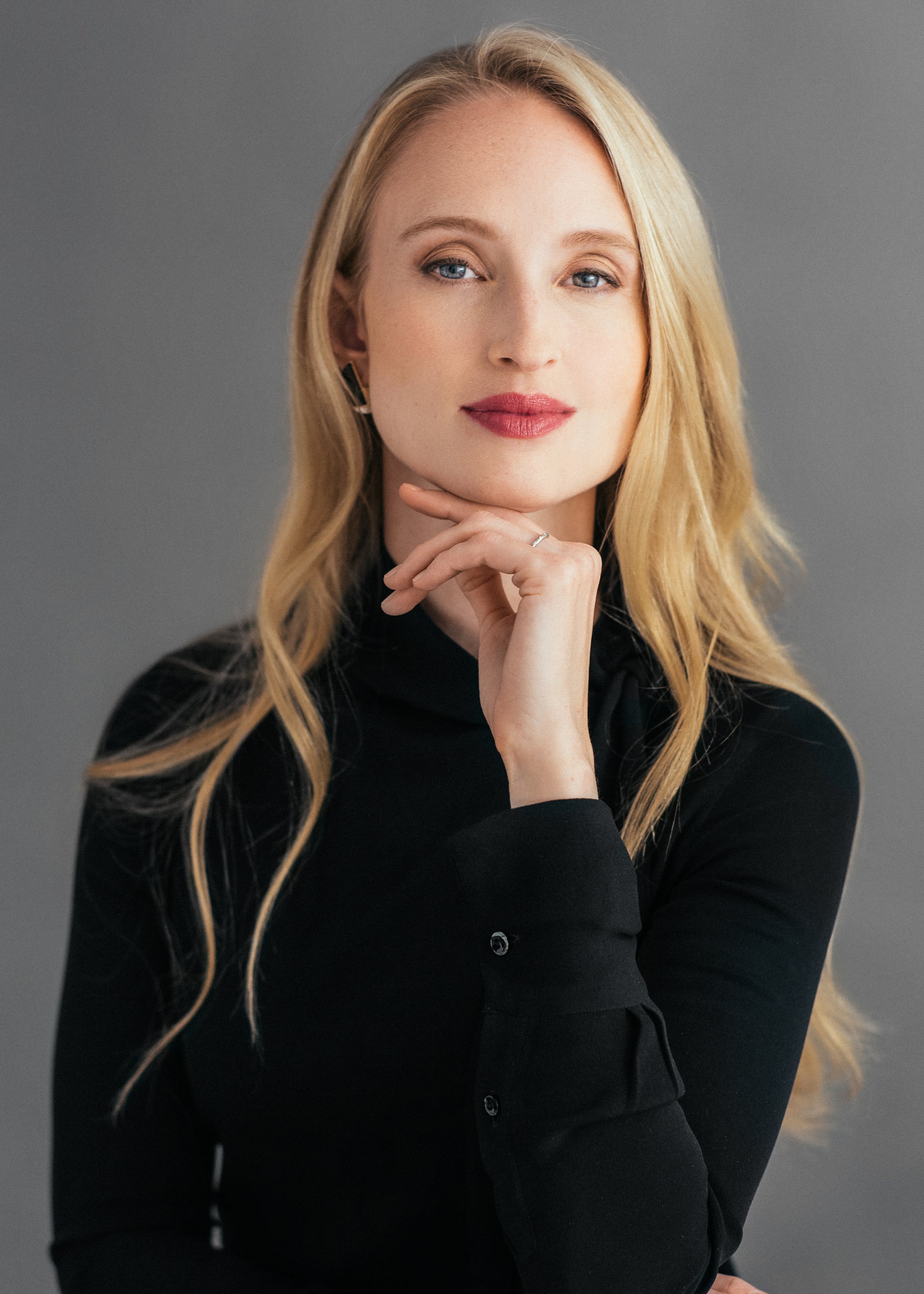
Vanessa Barboni Hallik
The MD who turned in her badge for a tape measure.
The Story So Far

She is rebuilding the closet in plain sight

Scan the seam of an Another Tomorrow blazer and a small chapter of natural history opens up: the farm the wool came from, the hands that cut it, the year it was made, and a standing offer to buy it back when you are done. This is the company Vanessa Barboni Hallik runs as Founder, Co-CEO and Executive Chair, and it behaves less like a fashion label than like a ledger you can wear.

The premise is deceptively plain - treat clothing as an asset rather than a disposable. Behind it sits a fully digitized product ecosystem: digital IDs that prove provenance, technology-enabled transparency across the supply chain, and an authenticated recommerce program so a garment can have a second and third owner without losing its paper trail. Another Tomorrow is B Corp certified, designed end to end, and built on regenerative and certified low-impact fabrics - traceable silk, regenerative wool, organic cotton, recycled cashmere.

"My mission is to create a truly sustainable and compassionate company - a foundational wardrobe of ethically made clothing, education, and a platform for activism."

That three-pronged idea - clothing, education, activism - is not a marketing afterthought stapled on at the end. It is the thing she left a Managing Director title to go do. The label launched out of New York roughly six weeks before COVID-19 closed the world. Most founders would call that the worst possible timing. She kept building.
15
Years in finance before the pivot
2018
Another Tomorrow founded, mid-sabbatical
Times she quit Wall Street before it stuck
B Corp
Certified, end to end
"I have come to find that I have a choice - to recognize the patterns of problems or the patterns of resilience." Vanessa Barboni Hallik
The Turn

A trader learns she likes fixing broken things

Before the wool and the digital IDs, there was a derivatives desk. Barboni Hallik spent roughly fifteen years at Morgan Stanley, trading foreign exchange and emerging markets and holding several leadership roles in the institutional securities business. A summer research internship in college had pulled her into finance almost by accident - her first boss spotted her there - and she rose to Managing Director.

The turning point was not a promotion. It was a slump. When her relevance to the firm started to slip, a colleague gave her counsel that sounds backwards until it works: ask for the hardest job in the building. She took over a struggling business unit, turned it around, and discovered something about herself in the process - she is a builder. Rebuilding a broken desk lit her up more than any clean win ever had.

That same instinct now points at an industry instead of a trading book. She took a sabbatical around 2017 intending to move into sustainable finance. The research went sideways in the best way. The deeper she dug into where things are made and what they cost the planet and the people who make them, the more fashion's quiet, enormous footprint refused to let her look away. By January 2018, the sabbatical had a company in it.

She had quit the industry three times before. This time she did not go back.

The Argument

Why a finance brain ended up counting sheep

Most people who leave a trading floor go quiet, or go to a hedge fund, or go to a beach. Barboni Hallik went to the parts of the apparel world that nobody photographs - the farms, the mills, the dye houses, the long opaque chain between a raw fiber and a folded sweater. What she found was an industry running on assumptions that would never survive a risk committee: nobody could tell you where most things came from, what they cost in water or carbon, or who was paid what to make them.

To a person trained to price uncertainty, that opacity read as the whole problem. You cannot fix what you cannot measure, and you cannot ask customers to value what they cannot see. So the first product Another Tomorrow shipped was not really a blazer. It was visibility - a way to make the invisible supply chain legible, and then attach that legibility to the garment permanently through a digital ID. The clothes are the delivery mechanism. The transparency is the payload.

The second move is just as contrarian. Fashion makes money by selling you the next thing; Barboni Hallik built a model that profits when a garment lasts and changes hands. Authenticated recommerce means an Another Tomorrow piece can be resold with its provenance intact, the way a watch or a painting carries its history. Treating clothing as an asset is not a slogan on a hangtag. It is a different unit economics, and it is the bet she left a Managing Director title to place.

It helps that she is not squeamish about hard years. She built businesses in the wreckage after the financial crisis. She managed volatile emerging markets where the floor could fall out overnight. Launching a luxury label into a pandemic was, by that standard, just another week with a wide bid-ask spread. The instinct she trusts is the one that turned around a failing desk: find the resilience pattern, and build on it.

How It Works

Three pillars, one receipt

Pillar 01

The Wardrobe

Foundational, timeless staples - tailored blazers, structured trousers, minimalist dresses - made from regenerative and certified low-impact fabrics built to outlast trends.

Pillar 02

Digital ID

Each garment is tagged with a scannable digital identity. Provenance, materials, and a path to authenticated resale travel with the piece for life.

Pillar 03

Activism

Education and advocacy baked into the brand - a platform to amplify collective voices for a fairer, more transparent industry.

The Long Way Round

From Rust Belt college towns to a Harvard board

Childhood

The Whole Earth Catalogue

Raised in small Midwest and Rust Belt college towns in a family she calls hippie, techy, academic, and artistic. One of her earliest memories is poring over the Whole Earth Catalogue - design, technology, and science tangled together.

College

An accidental finance career

An economics major and a summer research internship become a fifteen-year run on Wall Street.

~2002–2017

Morgan Stanley, to Managing Director

Trades FX and emerging markets, leads inside institutional securities, and turns around a failing business unit.

2017

The sabbatical

Steps away aiming for sustainable finance. Gets pulled into fashion's supply chain instead.

2018

Another Tomorrow is born

Founded in January, mid-sabbatical, with a clear sense of purpose.

2020

Launch, then lockdown

The brand goes live roughly six weeks before COVID-19 shuts the world. She keeps going.

2024

Series A

The company's most recent reported raise, building out the digitized, circular model.

The Receipts

Press, boards, and a few lists

  • Featured in The New York Times, Fast Company, Bloomberg, and Vogue.
  • Named to Wallpaper* Magazine's USA300.
  • Named to Worth Magazine's Worthy100.
  • Advisory Board, Harvard's Carr Center for Human Rights Policy.
  • Built a B Corp certified, end-to-end sustainable design company from scratch.
The Build, By Theme

What the brand is made of

Transparency
supply chain
Circularity
recommerce
Materials
low-impact
Digital ID
every garment

Bars reflect the brand's stated focus areas, not financial figures.

The Through Line

A builder who keeps showing her work

There is a tidy version of this story where finance was a wrong turn and fashion is the redemption. Barboni Hallik does not tell it that way. The same person who liked taking over the unit everyone else avoided is the person who took on an industry everyone agrees is broken and very few try to fix from the inside. The desk taught her how systems hide their risks. The brand is her answer - a system that refuses to hide.

She is candid about vulnerability in a way the trading floor does not reward. She talks openly about resilience and about meditation, about choosing which patterns to see, about wanting partnership over conquest. Those are not soft edges bolted onto a hard career. They are the operating system she now runs the company on, and the reason her hiring rule is so blunt: skill is cheap, alignment is not, and a brilliant person who does not share the mission will quietly pull the whole thing apart.

What makes her interesting is the refusal to pick a lane. She is a former markets professional who can talk regenerative wool and recycled cashmere. She sits on a human rights advisory board at Harvard and ships tailored trousers. She wants the garment to be beautiful and the receipt to be public. The whole project is an argument that those things were never actually in tension - that luxury and accountability can share a label, and that the proof should travel in the seam.

The aspiration is bigger than a brand. She frames Another Tomorrow as a model - a working demonstration of what fashion could look like if it aligned with human, animal, and environmental welfare instead of treating all three as externalities. A beacon, in her words. Whether the industry follows is an open question. That she built a legible, circular, B Corp version of it from a sabbatical idea is not.

In Her Words

The operating manual

"Be an active listener. Be truthful. Be kind."On building teams that hold
"My mission is to create a truly sustainable and compassionate company."Founder's note, Another Tomorrow
"I have a choice - to recognize the patterns of problems or the patterns of resilience."On reinvention
Talented people who don't share the vision and values become disruptive forces. Alignment comes first.Paraphrased, on hiring
Off The Record

The quirks that didn't fit the resume

She meditates

A consistent Vedic meditation practice she credits with transforming her relationships - especially the one with herself.

Almost an architect

She wanted to design buildings before finance found her. She wound up designing a supply chain instead.

The reluctant timing

Six weeks of runway before a global lockdown would have killed most launches. Hers became a stress test it passed.