Somewhere in Indiana, a software model just changed a lunch order.
A 54-year-old machinist in the Midwest checks her phone before lunch. Her continuous glucose monitor talked to an AI overnight. Her dietitian, her physician, and a model of her own metabolism all agree on the same small change: skip the bread, add the avocado. A week from now her morning fasting glucose will be eight points lower. Three months from now her doctor will halve her metformin. This is what Twin Health does for a living.
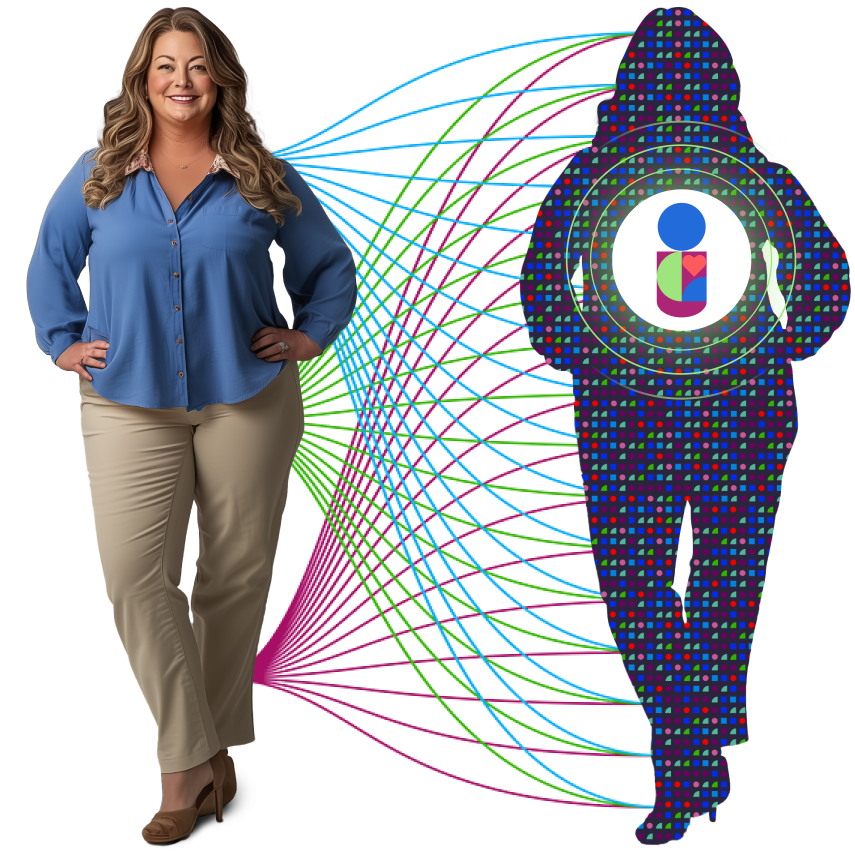
The company calls it the Whole Body Digital Twin. Engineers borrowed the concept from jet-engine telemetry, where digital replicas of physical hardware have been predicting failures for a decade. Twin Health pointed it at something stranger and squishier: human metabolism. The result is a 740-person, Menlo Park-based health business that just closed a $53 million Series E at a $950 million valuation, and is quietly asking an awkward question of the entire chronic-care industry.
America spends $400 billion a year on diabetes. The drugs work, and the disease keeps spreading.
Roughly 38 million Americans live with type 2 diabetes. Another 96 million sit in the pre-diabetes waiting room. The standard of care - daily medication, a quarterly visit, a printed pamphlet about "lifestyle" - has held the line, more or less, since the 1950s. GLP-1s changed the curve for weight. They did not change the underlying problem.
The underlying problem is that metabolism is personal. Two people can eat the same bowl of rice and post wildly different glucose curves. Two people can sleep the same seven hours and metabolize that sleep in completely different ways. Modern medicine has known this for years. Modern medicine has done very little about it, because there has been no practical way to measure a single person's metabolism in real time, at scale, for less than the cost of a small car.
Continuous data, no one watching
By the mid-2010s, a person with diabetes could wear a glucose sensor, a sleep tracker, a heart-rate monitor, and a smart scale. The data existed. What did not exist was a clinical system that could read all of it, understand any of it, and tell the patient what to do tomorrow morning. Twin Health was assembled in that gap.
A telecom founder, a researcher, and a CTO walked into a metabolism lab.
Jahangir Mohammed founded Jasper Technologies in 2004 to connect machines to wireless networks. Cisco bought it in 2016 for $1.4 billion. Most people would have retired to a quieter problem. Mohammed picked a louder one. In 2018, with co-founders Maluk Mohamed and Terry Poon, he started Twin Health on a simple thesis: if Jasper could put a SIM card in a vending machine, you could put a sensor on a person, stream the data to the cloud, and run an AI model that knew the person better than their doctor did.
It was a thesis with a polite amount of hubris. The team spent two years not selling anything, instead building the data infrastructure and the metabolic model itself. They published. They ran trials. They hired endocrinologists who did not want to leave academia. The first commercial program launched in India, where the diabetes epidemic was even larger and the regulatory path slightly more forgiving.
What you actually get is a sensor kit, an app, and four humans.
A new member opens a box from Twin Health. Inside: a continuous glucose monitor, a smart scale, a blood-pressure cuff, and a wearable activity tracker. The app pairs with all of them. Within 48 hours the Whole Body Digital Twin has enough data to start making recommendations - first about food, then about sleep, then about movement, then medication. Behind the app sit a physician, a health coach, a dietitian, and a behavioral specialist. They are not bots. They read the same dashboard the patient does.
The clever part is the loop. The twin learns from yesterday's data, predicts tomorrow's response, and recommends a small experiment - swap the white rice for cauliflower, push dinner an hour earlier, take a walk after lunch. The patient runs the experiment. The sensors report back. The twin updates. A month of this is more iterative learning about a single human body than most physicians get to do in a career.
What people can actually do with it
If you are a member: see how your body responds to specific foods in real time, get a daily plan that adjusts to last night's sleep, talk to a real clinician without scheduling a visit, and - if it works - taper off the medications you've been on for years. If you are an employer or a health plan: offer your population a benefit that is priced against clinical outcomes rather than office visits.
Seven years, one valuation curve, no spokesperson celebrity.
Company Milestones
The trials worked. The employers signed. The members stayed.
The Twin Health randomized controlled trial - published in NEJM Catalyst - is the kind of paper that makes endocrinologists put down their coffee. Members showed sustained drops in HbA1c, double-digit weight loss, and the slow disappearance of insulin and other medications, holding past the year mark. Most digital-health studies stop celebrating somewhere around 90 days. Twin's kept going.
What the model is actually doing to people
Self-reported and trial-reported figures from Twin Health and NEJM Catalyst. Approximate. Your mileage will, in fact, vary.
Who's paying for it
Twin Health is a B2B2C play. The customer is a U.S. health plan or a Fortune 500 employer - the company picks up the cost, the member uses the product. Named customers include Berkshire Hills Bancorp and US Foods, alongside a roster of self-insured employers in financial services, technology, retail, and manufacturing. Maj Invest, the Danish institutional investor that led the Series E, is the new arrival at a captable that already includes Iconiq Capital, Temasek, Perceptive Advisors, and Sequoia Capital India.
Make chronic disease less chronic.
Twin Health does not talk much about disrupting healthcare. Disruption is a word for software conferences. Twin talks about reversal, remission, and de-prescription - words that come from clinical journals, and that carry actual consequence when written into a member's chart. The company's public mission is to help people reverse, prevent, and improve chronic metabolic disease. The unspoken corollary is more interesting: prove that an AI model paired with a small clinical team can do something that pharma and policy have not.
The next layer of the platform
Diabetes and obesity are the entry points. The same architecture - sensors, twin, care team, daily nudge - applies to hypertension, fatty liver, sleep apnea, and a long tail of metabolic conditions that share the same underlying biology. If the model is right about one, it is probably right about several.
This is what 21st-century primary care actually looks like.
In a decade, the idea that you went to a doctor twice a year, blood test in hand, hoping she remembered your case will sound charmingly old-fashioned. Continuous biology will be the norm. The interesting question is who builds the model that interprets it. Twin Health is making the case that the company who shipped first, published the trial, and signed the employers will be the one running the platform.
Back to Indiana. The machinist, six months in. She still wears the sensor. The bread is mostly gone. So is half her medication. The digital twin in the cloud just learned that she sleeps better when she eats dinner before seven. Tomorrow it will tell her so. Quietly. In an app. Without a sales pitch. This is what Twin Health does for a living - and increasingly, what the rest of healthcare will have to learn to do too.