Somewhere inside nearly every software company sits a small machine nobody planned to own. It sends the password reset. It nudges a colleague after a mention. It decides whether an alert belongs in email, SMS, push, Slack, or the little inbox inside an app. It remembers who opted out. It retries failures. It produces a log when the customer swears the message never arrived. The machine rarely earns a launch event. It merely becomes indispensable.
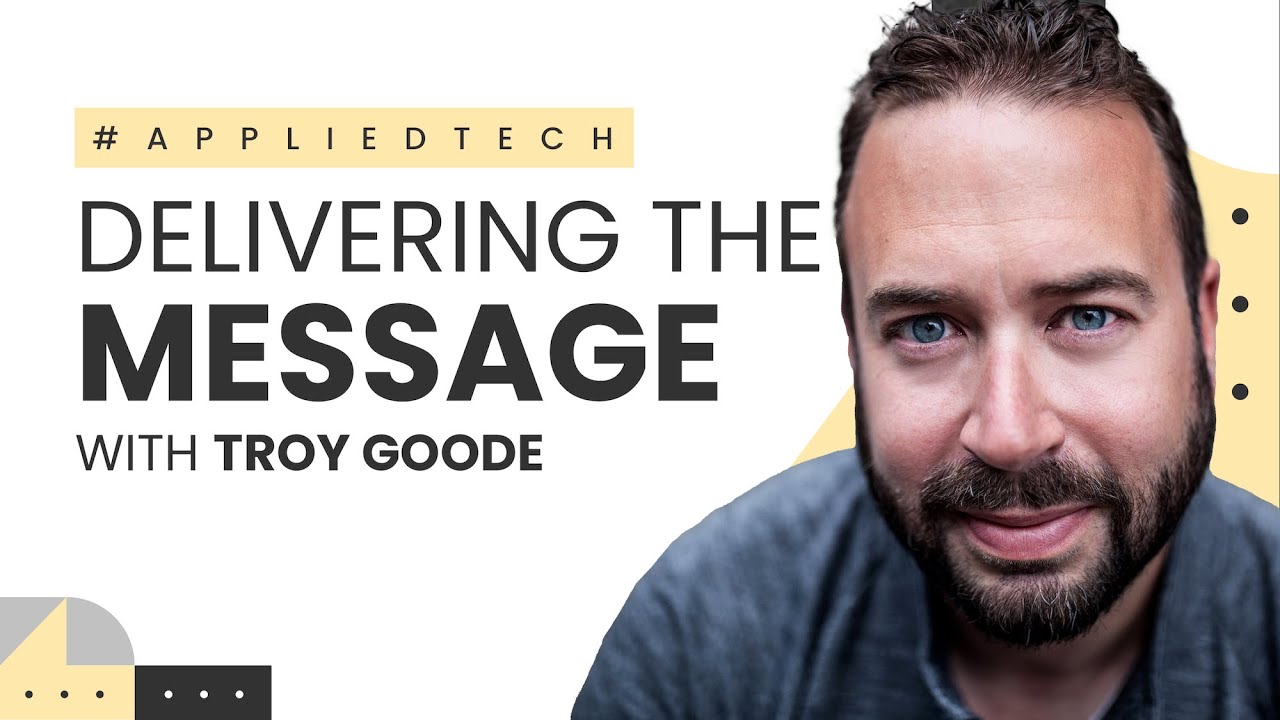
Troy Goode kept meeting versions of that machine throughout his career. He was an engineer by trade and, for much of two decades, the person responsible when engineering became an organization rather than a job title. At company after company, product notifications arrived disguised as a modest feature and matured into a private infrastructure project. The code could be written. The future maintenance was the expensive part.
By 2019, Goode had acquired the useful kind of irritation: informed, recurring, and expensive enough to support a company. He founded Courier so another team could own the machinery. The premise sounded almost impolite in its simplicity. Your product should decide that a person needs to know something. Courier should worry about how that knowledge reaches them.
A messaging education, paid for in repetition
Goode's route to Courier ran through the less photogenic rooms of the software business. He managed engineering at Diamax Information Systems, then led a team at the National Rural Electric Cooperative Association. In 2010 he joined Eloqua, the marketing-automation company that helped businesses decide who should receive which campaign and when. Eloqua went public in 2012 and was acquired by Oracle four months later. Goode helped lead engineering through that period.
Eloqua gave him a close view of industrial messaging. Marketing teams had canvases, segmentation, campaigns, and carefully tended systems for promotional email. Product teams had a different reality. Their messages originated in software behavior: an invitation, a comment, a security code, a weekly digest. Those messages were too operational for the marketing stack and too important for improvisation.
- Engineering management at Diamax and NRECA
- Eloqua engineering through IPO and Oracle acquisition
- Vice president of engineering at EveryAction
- CTO and head of product at Winmore
- Courier founded and accepted into YC Summer 2019
He carried the problem to EveryAction, the political-technology company then known as NGP VAN, and on to Winmore, which made cloud software for logistics. At one point, while building a collaboration tool, he tried to reproduce the hierarchy of Slack notifications. The task was possible, naturally. It was also fussy, consequential, and suspiciously familiar. Developers elsewhere were rebuilding it too. Goode decided to build the thing one final time, then make that version available to everybody.
“How can we just make it easier to build software?”Troy Goode, on Courier's aimThe company appears
Four people and a deadline called Demo Day
Courier entered Y Combinator's Summer 2019 batch shortly after Matrix Partners led a $2.3 million seed round. The young company had four people, an MVP to assemble, and an unusually precise enemy: the tangle of templates, channel providers, preferences, timing rules, and delivery records that grows behind a modern app. The team put its first production customers live before Demo Day.
A year later Courier had eleven employees and dozens of cloud-software customers. Bessemer Venture Partners led a $10.1 million Series A, joined by Matrix, Twilio, Slack, Y Combinator, and a group of operators from the messaging and developer-tools worlds. The investor list read like a compressed map of Courier's ambitions. Twilio and SendGrid moved messages. Slack was itself a destination for them. Courier wanted to become the switchboard among such systems.
The product put an API at the center and a visual studio beside it. Developers could send an event with the data and intended recipient. Courier could select a template, respect preferences, route the message, pass it to a provider, and record what happened. Colleagues outside engineering could adjust copy and presentation without turning every comma into a sprint ticket. A small team could borrow capabilities that larger companies assigned to dedicated notification groups.
Three rounds, one increasingly expensive nuisance
Publicly announced rounds. The visual compares round size, not valuation.
In June 2022, GV led a $35 million Series B with returning participation from Bessemer and Matrix. Courier said hundreds of software companies were using the platform, while TechCrunch reported more than 150 paying customers. The total publicly announced capital reached about $47.5 million. A maintenance chore had acquired the budget of a category.
The governing ideaReach the person, spare the person
Notification software contains an unfashionable moral problem. The sender wants attention. The recipient owns the attention. A platform that makes sending easier can also make nuisance easier, unless preferences, routing, and restraint are treated as product features rather than etiquette.
Goode once used WUPHF, the fictional service from The Office, to explain the distinction. The joke in the show was a notification delivered everywhere at once. Courier could connect every provider, but the point was to choose intelligently, not to stage a technological ambush. A useful system knows whether the message belongs in email or push, whether it can wait for a digest, and whether its intended recipient has already said no.
The small team's advantage: give a developer in a garage or dorm room access to routing, digests, preferences, retries, and logs before a ten-person infrastructure group becomes necessary.
This balance also shaped the economics. Courier used usage-based pricing, allowing cost to rise as a customer's own product and message volume grew. Goode described the desired destination as the “sensible default for software to human communication.” The phrase is careful. Defaults win by removing decisions, but sensible defaults leave room for the decisions that matter.
His technical instincts made that ambition concrete. He spoke about unpredictable bursts of API traffic, queues, retries, and the different templates demanded by different channels. He also insisted that API and user interface both belong to developer experience. Infrastructure may live below the waterline, but somebody still has to steer it.
There was a longer habit of reducing complicated behavior to an orderly model. In 2019, Goode was named as an inventor on a US patent for state-machine management. The patent describes states, transitions, tasks, versions, and the events that record change. Courier is a different system, but its central challenge has a familiar shape. A message moves through decisions and conditions before it reaches a person, and every transition needs to remain understandable after the fact.
That concern surfaced in his 2022 QCon talk, “Engineering an API First Product.” An API company has two audiences at once: the developer writing the first call and the organization that will someday investigate the thousandth failure. The cheerful demo is one moment. The durable product is the collection of choices around authentication, observability, versioning, scale, and the limits a team chooses to impose. Goode's career had supplied him with both views, first as the customer assembling those pieces and then as the founder accountable for them.
Life above the waterlineSails, small rules, and a founder's second act
Goode grew up in rural Virginia, where his parents had a boat. As a child he was more spectator than sailor on the nearby river. He returned to sailing as an adult because he missed its peculiar bargain: peace that must be earned through attention and work. It is tempting to turn every founder's hobby into an operating philosophy, and usually rude. Still, a person who likes both sailing and systems has chosen two activities that punish neglect without raising their voices first.
By the time he spoke at QCon San Francisco in 2022, his biography included a spouse, three children, and a rapidly growing board-game collection. Board games are another world of systems: rules first, surprises second, arguments about edge cases forever. His public GitHub profile offers a shorter autobiography: “Building nerdy stuff.” Among his pinned work are packages for CORS, recursively loading Node.js directories, shuffling cards, and rolling dice. The last two make the board-game shelf feel less ornamental.
At the end of 2024, Goode moved from chief executive to chairman and founder. The change put a different operator in the CEO seat without severing the company from its origin. His more recent public notes return to momentum, simplicity, and the discipline of deciding what not to build. They sound like observations from someone who has already watched a modest requirement become a system, then watched that system become a company.
Courier's wager remains easy to understand because its work is hard to see. A message should arrive in the right place, at the right time, in a form the recipient welcomes. When that happens, the machinery disappears. The password reset simply turns up. The dinner arrives before it cools. The colleague sees the mention and answers. Goode built a company around the engineering required to make such ordinary moments feel ordinary.
“It's turtles all the way down.”Troy Goode, on the layers beneath modern software