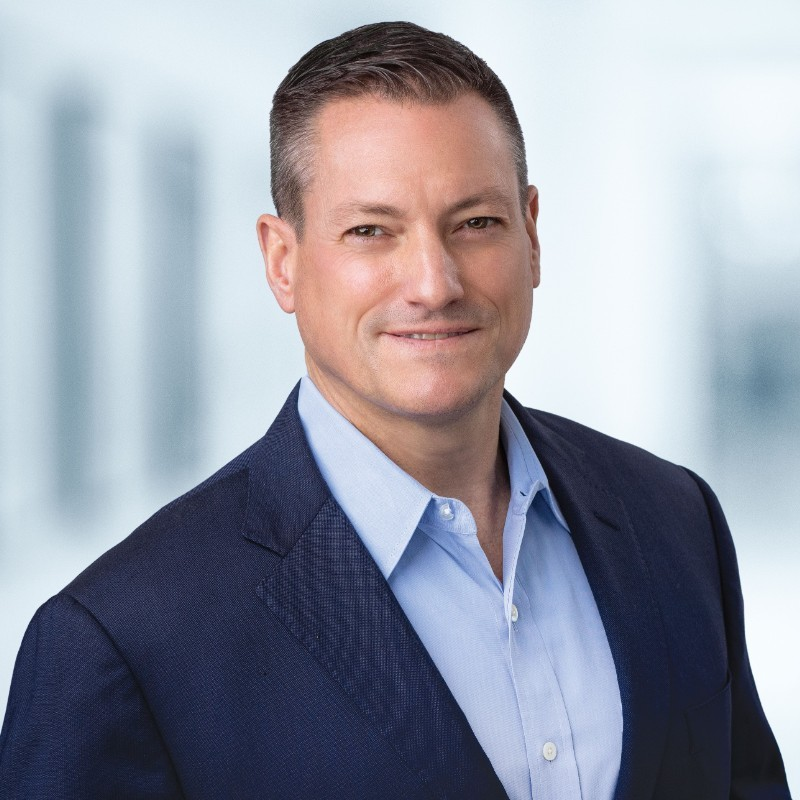
The Inventor of a Category
In 2015, when Thomas W. Morgan left New Mountain Capital after fifteen years, he didn't do what most senior private equity executives do. He didn't raise a fund in a strategy everyone already understood. He wrote a check nobody had ever written before.
Hycroft Capital was, by its own description, "the first firm ever formed solely to make minority, non-control investments into the management companies (GPs) of private equity and other private capital firms." That sentence sounds routine now. In 2015, it was a new idea - a bet that GP stakes would become its own asset class. It did. Blue Owl Capital, Goldman Sachs, Dyal Capital, and a dozen others eventually piled in. Tom Morgan was already there, alone, years ahead.
That's the through-line in a career most people have never heard of: a habit of showing up before the crowd. He joined Bain Capital in the early 1990s when it had $300 million under management. He joined New Mountain Capital in 2000 at its very inception. He founded Hycroft in 2015 before GP stakes was a category anyone invested in. He co-founded Aviditi Advisors to service private capital firms across their full lifecycle - then sold it to Piper Sandler in August 2024. Every move: slightly ahead, methodically executed, and then quietly handed off while he's already thinking about the next thing.
"The first firm ever formed solely to make minority, non-control investments into the management companies of private equity and other private capital firms."
How Hycroft Capital described itself at founding, 2015Today, Morgan operates from Manhattan's Upper East Side, managing Greylock Capital Partners - his personal family office. The portfolio is deliberately tangible: franchise concepts, commercial real estate, residential real estate, select private investments. After thirty years of deploying other people's capital across nine-figure funds, he's now investing from his own pocket. The scale is smaller. The authority is total.
A Career Built Firm by Firm
What Is GP Stakes - and Why Did Tom Morgan Invent It?
The private equity industry manages trillions. But for decades, the firms themselves - the GPs, the management companies that charge 2% and 20% - were black boxes to outside investors. You could invest in the funds they raised. You couldn't buy a stake in the economics of the firm.
Tom Morgan's insight with Hycroft Capital was structural: the GP management company is itself an asset. Carried interest, management fees, co-investment rights, team retention economics - these are streams of value that compound over decades. And the founders of private equity firms, facing succession and liquidity questions, needed someone who understood that value and would pay fairly for a minority slice of it, without trying to take over.
That required a specific kind of investor: patient enough to hold for a decade, credible enough that GPs would take the call, expert enough in fund economics to price fairly, and small enough not to threaten control. Morgan built Hycroft to fit that exact specification.
The GP Stakes Playbook - In Plain English
A GP stakes investor buys a small minority interest (typically 10-30%) in a private equity firm's management company. The return comes from that firm's future carried interest and management fees across multiple fund generations. The GP gets liquidity and a strategic partner; the stakes investor gets durable, compounding economics. Tom Morgan pioneered this before most institutions even had a vocabulary for it.
When Blue Owl Capital's GP stakes division eventually went public, it was valued in the billions. Goldman Sachs built out its own team. Dyal Capital (now Blue Owl) became one of the largest players in the space. All of them validated the category Tom Morgan identified first from a small office, with a name most people had never heard, in 2015.
What He's Built
The Pattern Behind the Career
First Mover, Not First Follower
Every major career move came before consensus: Bain before it was Bain, New Mountain at inception, GP stakes before the category existed.
Builder, Not Manager
Joins at inception, builds to scale, hands off. Doesn't stay to manage what's already working - moves to the next blank page.
Structural Thinker
The GP stakes insight wasn't about picking funds. It was about understanding fund economics structurally - and finding the missing instrument.
Long-Term Holder
19 years on a nonprofit board. 15 years at New Mountain. He doesn't exit until he's done building. Then he exits cleanly.
Morgan's career doesn't follow a linear corporate ladder. It follows a different logic: identify a structural gap, build a vehicle purpose-built to fill it, grow it to viability, and move on. Hycroft didn't fail when it merged into Magnetar - that was the plan, or something close to it. Aviditi didn't fail when Piper Sandler acquired it - that was the lifecycle completing itself.
There's a kind of craftsperson ethos here that's unusual in private equity: less about the brand on the door, more about whether the instrument was right for the moment. And once each instrument has been built and handed off, he builds another. Now he's building a family office. Same logic, smaller stage, higher personal stakes.
The Specifics
Williams College, 1991, magna cum laude. Double major: History and Political Science. Not a finance degree. The pattern-recognition came from reading history, not Bloomberg terminals.
First Boston, the investment bank. Then Bain Capital when Bain Capital was still proving itself. In private equity terms, this is the equivalent of joining Apple in 1985.
Greylock Capital Partners - his family office - shares sonic DNA with Greylock Partners, the storied Silicon Valley VC. They are entirely unrelated. The coincidence is probably not accidental.
Upper East Side of Manhattan. Two kids in high school, one in college. Roots deep enough to commit 19 years to a downtown nonprofit board. Not a West Coast transplant in either direction.
The Aviditi Advisors acquisition by Piper Sandler closed in August 2024. The firm Morgan co-founded was purchased by a major investment bank less than five years after its founding.
Franchise concepts, commercial real estate, residential real estate. After thirty years in institutional private equity, the portfolio he builds for himself is deliberately grounded in physical assets.