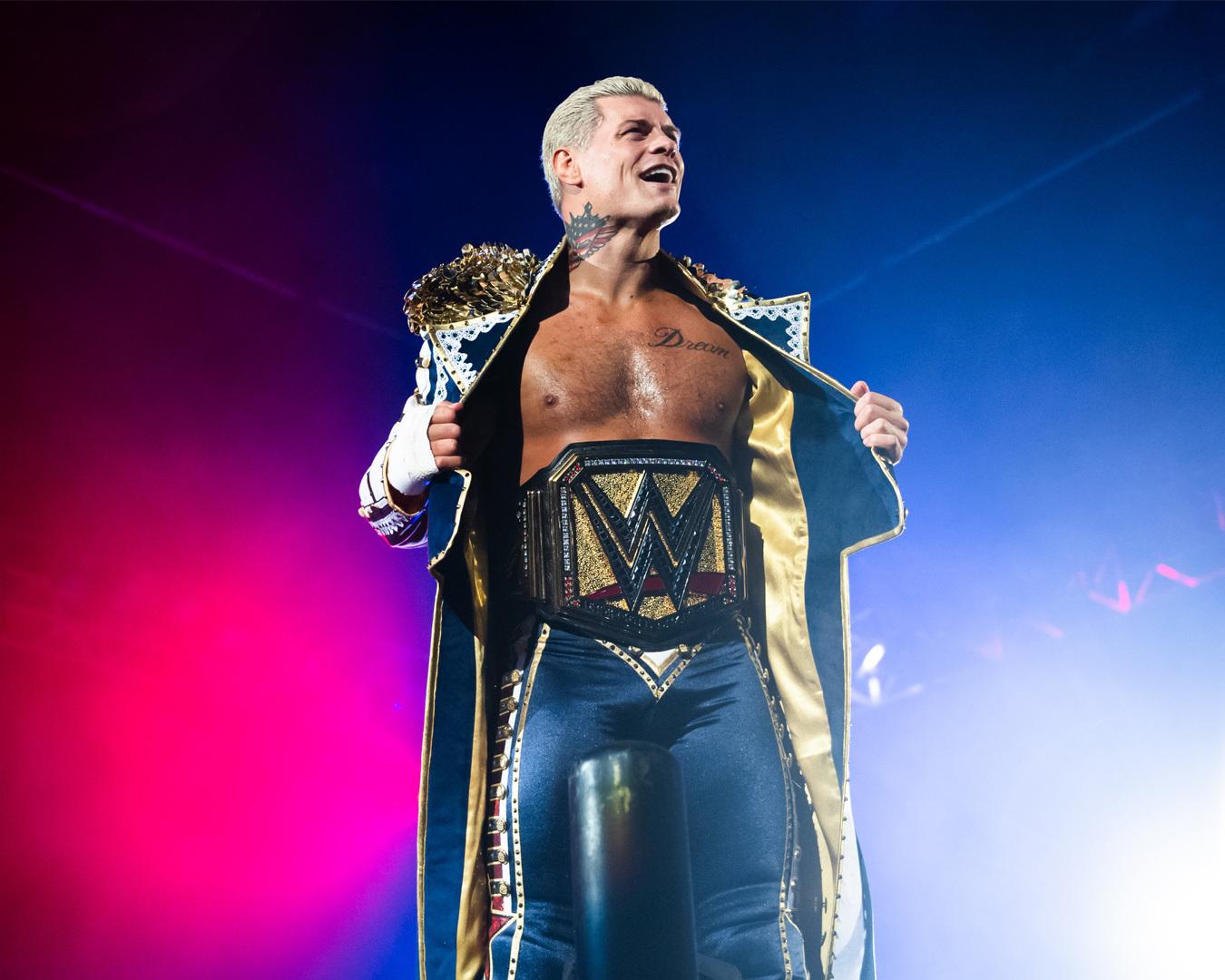
Consider a wrestling belt. To the fan, it settles an argument about who matters. To a television executive, it helps keep an argument going until next Monday. To a sponsor, it draws the eye toward the person wearing it. The object stays the same. Its commercial purpose changes with the person looking.
- TKO owns UFC, WWE and PBR, alongside sports services businesses.
- Fans, streaming platforms, sponsors and rights holders buy different things from it.
- Its useful lesson: build several offers around an audience people already care about.
That is a useful way into TKO, the publicly traded company assembled around UFC and WWE in September 2023. The spectacle is conspicuous. The organization behind it requires a closer look. TKO’s proposition is that the people producing the night, distributing the night and selling access to the night can benefit from sharing an owner.
The buyer you cannot see from your seat
A ticket buyer wants a good view. Netflix wants programming that brings people back. A brand wants its name associated with something people discuss. A sports federation may need help selling rights or producing coverage. Each has a different problem, even when the solution involves the same crowd.
TKO occupies several positions in that chain. UFC stages mixed martial arts. WWE makes wrestling programming, including Raw, SmackDown and events such as WrestleMania. PBR supplies bull riding. IMG handles sports rights, production and marketing. On Location sells premium hospitality and access. Zuffa Boxing, a joint venture with Sela, added boxing to the mix.
The distinction matters to a prospective customer. A sponsor can buy access to audiences; a rights holder can hire commercial expertise; a fan can buy admission or a hospitality package. There is no single TKO subscription that turns all of this into one consumer product. The company sits behind several familiar doors.
A Monday night that travels
Raw had been on linear television for 31 years when WWE announced its Netflix agreement in January 2024. The change was substantial, but the attraction was pleasantly old-fashioned: a continuing show with characters viewers already knew, returning every week. In an on-demand library, Monday could still mean something.
The initial agreement ran ten years, with a value above $5 billion and contractual options. It covered Raw in the United States and other markets, plus additional WWE programming internationally as rights became available. The January 2025 debut recorded 4.9 million global Live+1 views. That is a launch measurement, not proof of a decade’s retention.
For TKO, the deal illustrates its place in the market. It can supply a platform with established programming and recurring audience habits. Netflix handles the subscriber relationship. TKO brings the show. Its expertise lies in making those nights commercially useful without having to build a general entertainment streaming service around them.
When the tollbooth moved
UFC’s American distribution took another turn in August 2025. Paramount agreed to seven years of rights beginning in 2026, averaging $1.1 billion annually. The $7.7 billion total came with a change fans could understand immediately: numbered events would be included in Paramount+ subscriptions, without an additional pay-per-view purchase. Selected events would also appear on CBS.
The old model put another payment between an interested subscriber and the main attraction. TKO president Mark Shapiro described pay-per-view bluntly: “It’s a wall. It’s a barrier.” Reporting on the negotiations offers a practical explanation for the switch: when ESPN appeared unlikely to meet TKO’s desired increase, the company pursued other buyers.
“It’s a wall. It’s a barrier.”Mark Shapiro, on pay-per-view / CNBC, August 2025
Paramount offered both economics and distribution. The decision did not require the audience to stop caring about fighters. It required a different buyer to pay for reaching that audience. The takeaway for other businesses is specific: removing a customer’s transaction can make sense when a distribution partner values the resulting access enough to fund it.
The $3.25 billion around the ring
In February 2025, TKO completed an all-equity acquisition of IMG businesses, On Location and PBR from Endeavor, valued at $3.25 billion. Buying from its controlling owner made this a related-party transaction. Nor did the acquisition include every business carrying the IMG name. The details matter more than the shopping-list version.
On Location makes proximity a product. Premium seats, hospitality and special access let customers spend on convenience and experience beyond admission. IMG supplies the less visible work: negotiating rights, producing content and helping sports organizations develop commercial relationships. Together they expand what TKO can sell around its owned events and to other properties.
WWE’s August 2026 agreement with Tourism Western Australia shows the pieces meeting. Perth booked annual Weekend Takeovers through 2028. The announced package combined multiple shows, citywide fan activities and On Location offerings. A destination gets an occasion to attract visitors. Fans get a trip organized around something they already follow.
The costs the crowd does not chant about
There is friction in this model. An early UFC antitrust settlement proposal was rejected by the judge. A revised $375 million settlement of the Le case received approval in 2025. Former fighters had alleged suppressed compensation. That history puts a material cost beside the commercial power of owning a sports property.
Event services have their own uneven rhythms. TKO’s IMG segment reported lower 2025 revenue, largely because the prior year included Paris Olympics hospitality activity. A packed calendar does not make every year comparable. Acquisitions and accounting recasts also complicate simple growth charts. The cleanest explanation of the business still needs room for an untidy ledger.
Up 18% year over year. TKO raised its full-year revenue target to $5.775-$5.825 billion. A target is a forecast.
A smaller operator can copy the customer map: distinguish admission, distribution, sponsorship and service work, then price each against a real buyer’s needs. The approach depends on an audience worth reaching and control of something buyers cannot easily replace. Without those conditions, dividing one event into four offers mostly produces four harder sales conversations.
TKO’s advantage is that the attention already exists. Its continuing test is how much value it can build around that attention while keeping fans, performers and commercial partners invested. Return to the belt. The fan needs it to mean something. Every other transaction starts there.
Follow the next bell
TKO / Company news / Investor updates / LinkedIn / X / Instagram
UFC / WWE / On Location experiences / IMG
Watch: WWE’s official video channel / UFC’s official video channel