Now Filing
Tiffany Cortese, LCSW - founder, Honey & Twine Counseling Online-only practice across California 7 years of clinical experience Doctoral candidate at Rutgers Drama, art, music, dance in the toolkit 4.9/5 across 37+ reviews on Grow Therapy Tiffany Cortese, LCSW - founder, Honey & Twine Counseling Online-only practice across California 7 years of clinical experience Doctoral candidate at Rutgers Drama, art, music, dance in the toolkit 4.9/5 across 37+ reviews on Grow Therapy
Volume I, Issue 03 / Profile

Tiffany
Cortese,
LCSW.

A clinician who keeps drama therapy in the same toolkit as CBT, runs a private practice out of a laptop, and is writing a doctorate on how stories help survivors get their voices back.

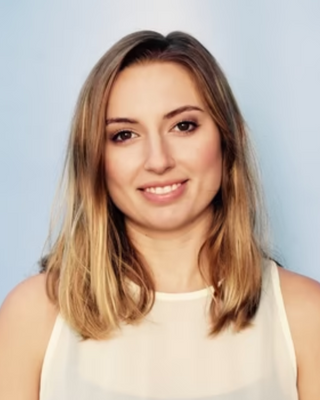
Portrait of Tiffany Cortese
Cortese, in the only office that matters - a video frame.

The Lede

The therapist who works in pixels, by design.

Tiffany Cortese took the long way to the chair. Theater first, then social work, then both at once. She finished her undergraduate at Rutgers carrying two majors most students think of as opposites - the stage and the case file - and refused to give either of them up. The result, almost a decade later, is a clinical practice with a quiet, unusual posture: trauma-informed, survivor-centered, and unembarrassed about asking a client to try a scene.

Her practice, Honey & Twine Counseling, is small in the way good private practices are small. There is no office tour. There is no waiting room with a fish tank. Clients open a video tab and the work begins. California licensure means her geography is the state, not a city. A 4.9-star rating across thirty-seven reviews on Grow Therapy suggests the format is not getting in the way.

The specialization is the part most clinicians refer out. Sexual violence. Intimate-partner violence. Stalking. Complex intergenerational and developmental trauma. The vocabulary of the worst week of someone's life. Cortese sits in that vocabulary every day and treats it, methodically, as the start of a long conversation rather than a verdict.

The Approach

Two majors, one method.

It is tempting to treat the Rutgers theater degree as a charming footnote, the kind of thing a clinician name-drops at a holiday party. Cortese keeps it inside the work. Drama therapy is its own credentialed discipline, not improv with a clipboard, and her doctoral research at Rutgers is built around its application to people who have survived power-based personal violence. The thesis, roughly translated: when language fails a survivor, give them another grammar.

The toolkit on her public profile reads more like a graduate seminar than a brochure. Cognitive behavioral therapy sits next to trauma-informed care, person-centered approaches, narrative therapy, and gestalt. Then, at the bottom of the list - because she will not pretend it belongs anywhere else - creative arts therapies: drama, art, music, dance. Most therapist bios on the internet end with a sentence like "I help clients reach their goals." Cortese ends with a syllabus.

Her training arc explains the syllabus. After Rutgers she went to NYU's Silver School of Social Work and specialized in Integrated Youth Behavioral Health, the program that asks clinicians to hold pediatric and adolescent mental health alongside primary care, school systems, families, and crisis response. Translated into practice: she has spent years working with kids and teenagers carrying the load that most adult systems quietly assume is theirs to bear alone. ADHD, anxiety, depression, autism, suicidal ideation and self-harm, grief, bullying, complex trauma. The adolescent caseload looks different than the adult one, but the rule is the same. Start where the client actually is.

"Trauma-informed and survivor-centered care for clients impacted by sexual violence, sexual harassment, intimate partner violence, stalking, and complex intergenerational and developmental trauma." - From her public clinical profile

Notice what is missing from the sentence. There is no promise of a fix in twelve sessions. There is no language of empowerment, of journeys, of unlocking. Cortese describes the population, not the outcome. That restraint is the work. A clinician who promises an arc to a trauma survivor on day one has, in some quiet way, already failed the appointment.
The File

Six things to know before the first session.

01

Two undergrad majors, on purpose.

Social work and theater at Rutgers. One degree on paper, two disciplines in practice. She still uses both.

02

NYU for the master's.

MSW with a concentration in Integrated Youth Behavioral Health, the discipline that refuses to silo pediatric mental health from the rest of a child's world.

03

Doctorate in progress.

Back at Rutgers, this time as a DSW candidate. Topic: power-based personal violence and drama therapy. Yes, both, at once.

04

Honey & Twine Counseling.

Her private practice. The name is gentler than the caseload, which is the point.

05

Online only.

Licensed in California, available across the state. The geography is the license; the office is bandwidth.

06

Insurance accepted.

Sliding cash rate around $190; in-network billing handled through the Grow Therapy platform.

The Toolkit

Modalities, named plainly.

Cortese lists her treatment approaches as a stack, not a brand. Each tool has its own scholarship; she picks the one the session needs.

CBT
Cognitive Behavioral
Trauma-Informed
Survivor-Centered
Person-Centered
Rogerian
Narrative
Story as Method
Gestalt
Present-Tense Work
Drama Therapy
Scene & Role
Art Therapy
Visual Process
Music Therapy
Auditory Process
Dance Therapy
Body-Based Process

The Arc

A working timeline.

Voice & Posture

What is and is not in the bio.

Public clinician bios are an art form unto themselves, and most of them are bad. They oversell. They invoke gardens. Cortese's reads more like a deposition: roles held, years served, populations supported, modalities used. The flourish is in what she will name out loud. "Sexual violence." "Stalking." "Intergenerational trauma." A meaningful share of therapists in California carefully avoid those words on a public-facing page because they invite difficult calls. Cortese does not avoid the call.

The list of populations she treats is broader than the specialty suggests. Children and adolescents struggling with ADHD, anxiety, depression, autism, suicidality and self-harm, grief, bullying. Families needing parent counseling. Adults and teenagers navigating LGBTQ+ identity, school issues, family conflict. The throughline is not the diagnosis; it is the posture. Survivor-centered means the client gets to decide what the room is for.

It also explains the medium. An online-only practice removes a meaningful set of barriers for clients whose trauma is bound up with public space, transit, or the act of walking into a building that looks like a clinic. The Zoom tab is not a downgrade. For a portion of her caseload, it is the upgrade.

The Doctorate

Why drama therapy is in the dissertation.

Drama therapy carries a credentialing system, a peer-reviewed literature, and a Registered Drama Therapist designation through the North American Drama Therapy Association. It is taught in graduate programs. It is reimbursable under certain plans. Practitioners use role, scene, story, and embodiment to help clients hold material that does not yet have words.

For survivors of power-based personal violence, that is a specific gift. A scene is bounded. A role can be set down. The body can stand in a room and rehearse a sentence that has been impossible to say for years. Cortese's doctoral research at Rutgers is pointed at exactly that intersection, and her clinical practice is the field site.

The combination is rarer than it sounds. Clinicians who specialize in trauma often borrow somatic and arts-based methods opportunistically; clinicians trained inside the arts-therapy lineage often run general caseloads. Cortese is doing the trauma-and-arts work as the through-line, not the garnish. That is the part worth watching.

For the Record

Quick file.

Role

Founder & Clinician

Honey & Twine Counseling.

Network

Grow Therapy

In-network virtual care in California.

Credential

LCSW

Licensed Clinical Social Worker.

Education

Rutgers / NYU

BA dual major; MSW; DSW (in progress).

Ages Served

13 - Adult

Teenagers and adults; family work.

Modality

Virtual

Online sessions throughout California.

Around the Web

Where to find her.

Share This Profile