The biggest wine company in the world hides in plain sight
It invented boxed wine, made Franzia the best-selling label in America, and quietly became the largest wine producer on the planet. Now the employee-owned house behind Cupcake and Chloe is buying its way further upmarket.
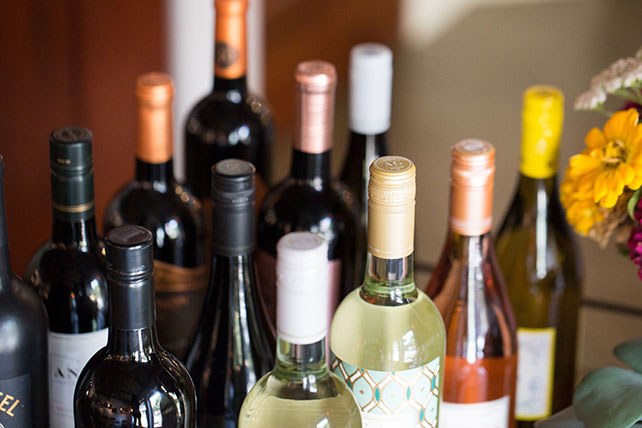
Walk down the wine aisle of almost any American grocery store and you are, whether you notice it or not, standing inside The Wine Group's showroom. The boxed Franzia stacked near the entrance. The Cupcake bottle with the friendly label. The moody 7 Deadly red blend. The Chloe pinot grigio marketed at people who wouldn't be caught dead near a jug. One company makes all of them, and most shoppers have never heard its name.
That is by design, or at least by habit. The Wine Group is privately held, employee-owned, and headquartered not in Napa but in Ripon, a farm town in California's Central Valley. It does not trade on a stock exchange, does not publish glossy annual reports, and does not spend much energy correcting the impression that wine giants are all named Gallo or Constellation. And yet, measured by the only metric that is hard to argue with - how much wine actually leaves the building - it is the largest wine producer in the world.
01What the company actually does
The Wine Group makes and markets wine across the entire price spectrum, from bag-in-box value wine that sells for a few dollars a liter to premium bottles pouring out of Sonoma estates. Its portfolio runs to more than 60 brands - a figure that has, at points in its history, been cited as high as 125 - and it moves them through every channel that touches wine: grocery and big-box retail, wholesale distributors, restaurants, hospitality, and, increasingly, direct-to-consumer e-commerce.
The flagship is Franzia. The company took the bag-in-box format and turned it into an institution; Franzia has been the top-selling wine brand from any U.S. producer since 1994, and by volume ranks among the best-selling wine brands in the world. The joke writes itself - "wine that comes in a box" - but the sales figures do not care about the joke.
02Who buys it
The customer is, roughly speaking, everyone who drinks wine but does not want a lecture about it. The value shopper filling a cart at a big-box store and the premium buyer reaching for a labeled pinot noir are both, from The Wine Group's point of view, the same customer at different moments. That is the logic behind a portfolio that spans price tiers: catch the drinker wherever they are on any given Tuesday.
CMO Helen Kurtz, who joined in 2023 after two decades at General Mills and stints leading marketing at Foster Farms and Calavo Growers, has framed the modern wine buyer as a bundle of contradictions - health-conscious but celebratory, price-sensitive but trend-hungry. The company's answer has been to widen the shelf rather than pick a lane.
03The problem it solves
Wine is intimidating, expensive, and slow. The category is famous for products that take years to reach a shelf and for labels designed to make casual drinkers feel underqualified. The Wine Group's whole existence is an argument against all three. It makes wine cheap enough to buy without thinking, packaged in formats that survive a picnic, and branded in language a first-time buyer can parse.
The other problem it solves is speed - its own. Under Kurtz, the marketing organization has pushed to bring new products to shelf "in months, not years," moving earlier on emerging trends like lower-calorie and better-for-you wine. In a category where competitors can spend an entire vintage debating a launch, cycle time is a weapon.
04How it is different
Two things set The Wine Group apart from the conglomerates it competes with. The first is ownership. Since a 1981 leveraged buyout pulled it out of Coca-Cola Bottling Co. of New York, and a 1984 restructuring put it in the hands of its executives, the company has been employee- and management-owned. No IPO, no private-equity roll-up, no quarterly earnings call. That structure lets it make long-horizon bets - buying vineyard land, holding brands through slumps - without a public shareholder base demanding an explanation.
The second is range. Where some rivals chase only premium and others only volume, The Wine Group deliberately owns both ends of the aisle and the middle. It is one of the few players comfortable selling three-dollar boxed wine and Sonoma estate bottlings under the same roof, and treating that spread as a feature rather than an identity crisis.
05Products and services
Beyond Franzia, the roster reads like a tour of the American wine aisle: Cupcake, with its still, sparkling, and lower-calorie LightHearted lines; Chloe, aimed at contemporary premium drinkers; the Benziger and Imagery estates in Sonoma, known for sustainable and biodynamic farming; bold blends like 7 Deadly and the spirits-finished Cooper & Thief; and heritage and value labels including Concannon, Almaden, Glen Ellen, Ava Grace, Fish Eye, Mogen David, and MD 20/20.
In 2025 the catalog grew again. The Wine Group agreed in April, and completed in June, the acquisition of a swath of Constellation Brands' mainstream wine portfolio - Woodbridge, Meiomi, Robert Mondavi Private Selection, Cook's, SIMI, and J. Rogét - along with three California production facilities in Monterey County, Healdsburg, and Lodi, and roughly 6,600 owned and leased vineyard acres. For a company built on value wine, it was a decisive step upmarket.
06The business model
The engine is straightforward: produce wine at scale, market it across price tiers, and sell it through grocery, big-box, wholesale, on-premise, and direct-to-consumer channels. Growth comes from two directions at once - building brands organically, and acquiring brands, wineries, and vineyard land when the price is right. Because it is private, exact revenue is not disclosed; third-party data providers estimate figures in the low hundreds of millions, though a 50-million-case output implies the real number sits well above any single public estimate. Treat the financials as approximate.
07The expertise behind it
The company's edge is operational: sourcing grapes globally, farming thousands of vineyard acres, running large production facilities, and moving product through a three-tier distribution system at national scale. Its Sonoma estates, Benziger and Imagery, carry credibility in sustainable and biodynamic farming - a reminder that a volume producer can also do careful, low-intervention winemaking when the brand calls for it. The 2023 leadership refresh - CFO Jennifer Evans, COO Mike Donich, and CMO Helen Kurtz joining CEO John Sutton - brought consumer-packaged-goods discipline from outside the wine bubble.
08Where it fits in the market
In the American wine industry, the top of the table is short. E. & J. Gallo sits first; The Wine Group has been the clear number two by volume, and globally it holds the top spot as the largest producer. Its rivals - Constellation Brands, Trinchero Family Estates, Treasury Wine Estates, Delicato Family Wines - each carve out a slice of the multi-brand business. What distinguishes The Wine Group is that it plays every position on the field at once, and that it does so without an owner it has to answer to.
The 2025 Constellation deal is the tell. As Constellation retreats to focus on higher-end wine, The Wine Group is doing the opposite - using its value-market cash machine to buy premium shelf space. The company that made its name on a cardboard box is, methodically, climbing the price ladder.
09A short history
Explore