A rent payment and a savings balance seem to belong to different worlds. One arrives with a deadline; the other is supposed to grow quietly. Open Tellus and the distance shrinks. The same app offers landlord messages, repair requests, expense records and cash accounts that reward users daily. Its central wager is that the business of owning homes can also help power a consumer financial product.
- Free rental tools bring owners, managers and tenants into one app.
- Tellus’s lending business supports its non-deposit cash-reward products.
- A separate bank Deposit Account adds FDIC eligibility through CBKC.
A plumbing problem becomes a money problem
Founded in 2016 by Rocky Lee and Tiancheng Zhu, Tellus began with property management. It is a sensible place to discover how much work a house creates. Rent has to arrive. A receipt has to survive tax season. Someone has to tell the plumber what happened, then tell the owner what the plumber said.
The software gathers those loose ends. Tenants can pay online, use AutoPay and send maintenance requests. Owners can track expenses, store documents and communicate with managers or contractors. Separate logins let collaborators work together without passing around an account password. The practical achievement is modest but useful: fewer pieces of a rental’s history stranded in separate conversations.
Tellus advertises the platform as free for landlords, tenants and property managers, without a minimum or maximum number of units. That makes it an alternative to landlord software sold by subscription. Its current website also labels tenant screening as a forthcoming feature, with the applicant paying the screening fee. A product menu is a promise; the availability label tells you which part has arrived.

The lender behind the screen
Tellus expanded into lending in 2019 and introduced Boost in 2020. The company’s expertise now spans rental workflows and residential underwriting. Its current description is specific: short-term, business-purpose loans against non-owner-occupied residential properties, typically lasting about twelve months. Borrowers include renovation operators, landlords releasing equity and small residential developers.
Distribution matters here. Tellus says it lends wholesale through licensed mortgage brokers, rather than working directly with borrowers. Its lending page explicitly excludes consumer loans. The person downloading the app to organize rent and the professional arranging a property loan enter through different doors.
The basic economic engine is a lending spread: borrowers pay for capital, while Tellus pays its funding costs and rewards to cash-account customers. What remains must cover operating expenses and credit costs. Free software can sit beside that business because collecting a monthly software subscription is not the only way the company earns money.
Tellus retains a lending spread before expenses and losses. The separate CBKC Deposit Account follows a different banking arrangement.
Progress, served daily
The consumer-facing idea is behavioral. Claim a Boost. Set a goal. See a reward. Tellus turns a balance that might otherwise sit unnoticed into something people have a reason to revisit. Its Stacks feature lets users organize money into buckets, giving an abstract financial target a visible place in the app.
As checked on October 23, 2026, the mobile-wallet page advertises a minimum 5.29% APY for Boost and 7.75% for Reserve, with a starting Reserve balance limit of $2,500. Those are different offers with different conditions. Daily payments describe when rewards arrive; APY describes an annualized yield. Neither tells the whole story of the underlying account.
“Tellus is not a bank. Tellus is not FDIC-insured.”Tellus’s own disclosure
That sentence matters as much as the percentage. Boost and Reserve are non-deposit products. They are not interchangeable with an insured bank savings account merely because the screen displays a balance and a rate.
When the explanation became the problem
The company’s history includes failures of protection and explanation. In 2021, Cybernews reported an exposed storage bucket containing 6,729 files, including user records, transaction records and private chat logs. The researchers said Tellus secured the bucket after notification. They could not establish whether malicious actors had accessed it.
In May 2023, then-Senate Banking Committee chair Sherrod Brown requested information about Tellus’s marketing, risk assessments and customer protections. His letters questioned whether consumers understood the difference between its accounts and insured bank deposits. They also raised concerns about lending concentrated in the San Francisco Bay Area and reported claims of bank relationships.
That scrutiny exposes the difficulty of the pitch. Residential collateral can support a loan, but property prices, refinancing and repayment still matter. If borrowers struggle while cash-account users want withdrawals, attractive interface design cannot settle the mismatch. The lending economics must hold up outside the app.
A bank enters the picture
September 2026 brought a distinct addition. Tellus and Central Bank of Kansas City announced an expanded partnership for a separate Deposit Account. The offer carried a variable 4.50% APY, a $100 opening minimum and a $100,000 maximum account balance. Eligible deposits are held at CBKC and qualify for FDIC insurance subject to applicable limits.
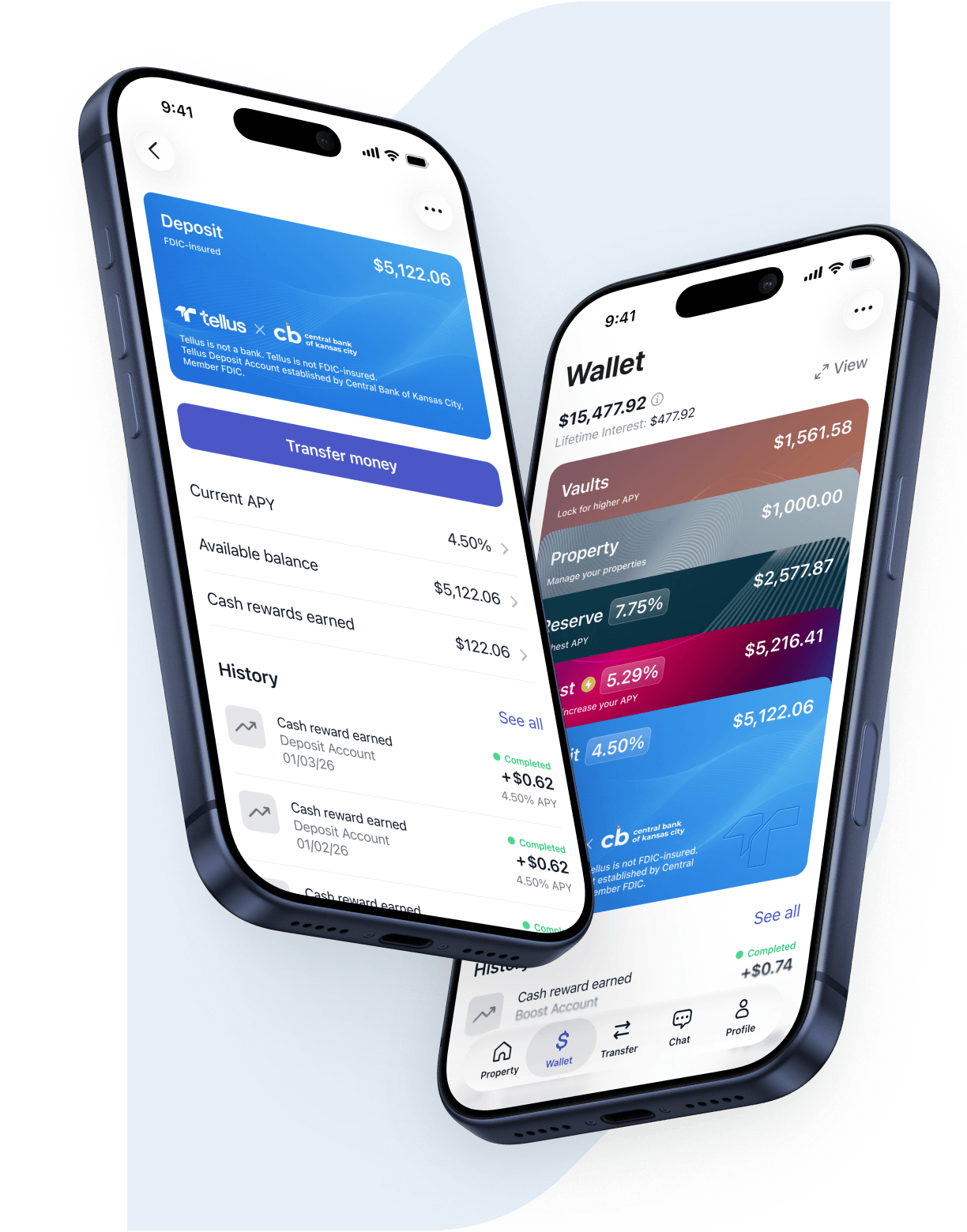
CBKC has held community development financial institution certification since 1998. For Tellus, the partnership adds a banking route alongside its existing non-deposit products. Insurance protects eligible deposits against the bank’s failure; it does not insure Tellus itself or turn every other balance in the app into a protected deposit.
The useful thing to borrow
Tellus occupies an unusual intersection: landlord software, consumer cash products and specialist property lending. Alternatives depend on the job. A landlord may compare rental platforms. A saver may compare bank accounts. A broker may compare lenders. One interface serves those needs, but each business faces its own competition.
The copyable lesson is concrete. Put the repair request beside the conversation and the receipt. Make progress visible enough that people return. Then explain every financial relationship with equal care. Tellus’s appeal comes from bringing activities together. Understanding it requires keeping the obligations clear.