Before Tainy designed records, he drew. The boy born Marco Efraín Masís Fernández in San Juan imagined an adult life in architecture or visual art. Music was everywhere - in the house, on Puerto Rican radio, in the first great surge of reggaeton - yet it belonged to a mysterious class of things he loved without knowing how to make. Then an older friend from his mother's church, the producer Nely "El Arma Secreta," showed him the hinge between listening and building: FL Studio.
His mother bought him a computer. Nely helped with the software. Tainy began the slow, private business of teaching his hands to catch up with his ear. The revelation was immediate. A sound that had existed only inside his head could now leave it. He was 14 when he started experimenting and 15 when a demo reached Luny Tunes, the production duo whose studio sat near the center of reggaeton's expanding universe. They gave the teenager a test. The test became music on Mas Flow 2.
The first break has acquired the neatness of folklore, but the useful part is less cinematic. Tainy entered a working room early. He watched records get assembled, revised and released. He learned how a producer could shape the atmosphere without occupying the microphone. By 2006, he had co-produced "Pam Pam" for Wisin & Yandel, a hit that carried his name beyond the local studio circuit. He was still young enough to be mistaken for the assistant. The speakers offered a correction.
“As soon as I sat down and started creating something that just came to me in my head... I realized this is what I want to do.”Tainy, on discovering production
Learning inside the engine room
Reggaeton was becoming a worldwide language while Tainy was learning its grammar from the inside. His early credits with Wisin & Yandel, Daddy Yankee, Don Omar and Arcángel placed him beside artists building the genre's commercial reach. Yet a grammar is useful because it makes invention possible. The habits that survived from those years were not a favorite drum pattern or a reliable synthesizer patch. They were attention and range.
The volume of work was its own school. On Los Benjamins, the 2006 Luny Tunes album, Tainy helped produce 15 tracks while still in his teens. Years later, Dynasty, his 2021 joint album with Yandel, turned that long apprenticeship into the subject. Its basketball imagery framed two collaborators as a seasoned team: Yandel, one of the voices who had trusted him early, and the producer who had grown alongside him. The record did not need to invent a partnership for the campaign. It could point to one that had already lasted roughly half Tainy's life. In a business fond of the sudden arrival, his story kept accumulating through return visits.
At home he had heard Juan Luis Guerra. Elsewhere he absorbed classic rock, rap, R&B and the sculpted rhythm of Timbaland and the Neptunes. Dance and techno drifted in through films and Puerto Rican radio. Later, Daft Punk's live spectacle, Aphex Twin's mutations, deadmau5 and Skrillex would widen the electronic horizon. Tainy did not treat those references as passports away from reggaeton. They became more colors within it.
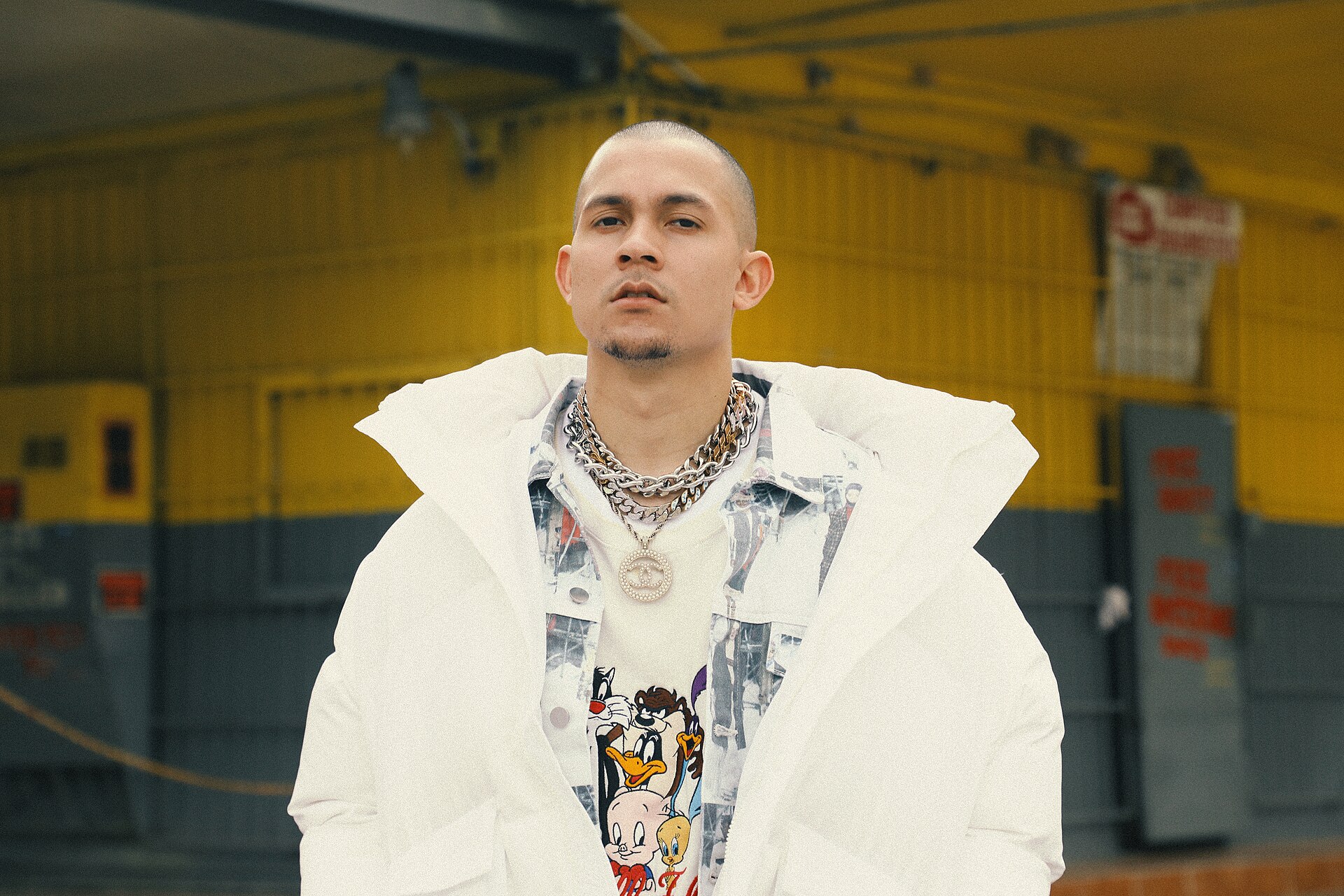
A move to Miami in 2013 expanded the room again. Spanish-language sessions led toward pop collaborations with artists including Selena Gomez, Justin Bieber, Cardi B, Shawn Mendes and Dua Lipa. Tainy met manager and business partner Lex Borrero there. In 2019 they launched NEON16, a music company and talent incubator built around creative risk. The teenage apprentice had become an employer and institution-builder, although his central question remained stubbornly artistic: what can this song become that nobody in the room has heard yet?
The art of making room
Tainy's account of production begins with listening. The artist arrives with a point of view; the producer brings another; the record has to hold both. It sounds civil, almost modest, until one considers how much ego a studio can accumulate by midnight. His manner is quiet. His ambition for the sound is not. He has spoken repeatedly about resisting formulas, especially after a successful record makes repetition look like common sense.
J Balvin helped sharpen that instinct by beginning with a vision and inviting the producers into it. Bad Bunny offered a different kind of trust. Benito Martínez Ocasio had wanted to work with Tainy since before his first album. Once they connected, he gave the producer room to experiment and move quickly. Tainy has described receiving finished vocals the day after sending an idea, without the usual rounds of repair. Their shared language can be heard across projects including Un Verano Sin Ti and DeBÍ TiRAR MáS FOToS.
The awards followed the work. Tainy's first Grammy nomination came through "I Like It," the Cardi B single with Bad Bunny and J Balvin. Un Verano Sin Ti brought a Grammy win in Best Música Urbana Album. At the 2026 ceremony, his credits on DeBÍ TiRAR MáS FOToS were tied to wins in that category and Album of the Year. The Recording Academy now lists three wins and five nominations. These numbers are clean. The working relationships beneath them are messier and more interesting: years of files sent, rooms shared and permission granted.
“A good producer listens to the artist and has a balance between what they can bring and the ideas the artist has.”Tainy, on the job behind the board
A cyborg learns how to feel
For most of his career, audiences encountered Tainy's taste behind someone else's face. DATA, released in 2023, gave that taste a body. Her name was Sena, a pink-haired cyborg inspired partly by the 1995 anime film Ghost in the Shell. The album's premise was wonderfully literal: each song would upload an emotion or memory into Sena until music made her nearly human.
The concept restored the drawer and architect to the foreground. Tainy was no longer arranging tracks around a guest list. He was designing a world where Bad Bunny, Daddy Yankee, Rauw Alejandro, Julieta Venegas, Young Miko, the Marías, Arca, Skrillex and Four Tet could appear as parts of one emotional system. Veterans from his history sat beside artists representing a new Puerto Rican generation. Female voices received deliberate space. The connective tissue was his own curiosity.
One of the album's revealing detours began in a car. A streaming recommendation served Four Tet's "Lush." Tainy heard its quick pulse, drove home and tried it against the more measured gait of reggaeton. He later showed the experiment to Skrillex, learned that Four Tet was his friend, and secured approval over FaceTime. The path ended in "Volver" with Rauw Alejandro - a song born because a producer followed the first interesting thought all the way home.
The album reached No. 11 on the Billboard 200, No. 2 on Top Latin Albums and No. 1 on Latin Rhythm Albums. It also earned Tainy a Grammy nomination under his own artist name. The distinction matters. He had not abandoned collaboration; he had arranged it into a self-portrait. Even Sena's awakening carries the producer's oldest conviction: music gives shape to feelings that resist ordinary description.
Watch Tainy explain his Puerto Rican upbringing and international pathOfficial artist channel / YouTubeThe next room has four languages
By 2026, Tainy's assignments had grown large enough to include a baseball tournament. As official music producer for the World Baseball Classic, he curated the event's first official soundtrack with Albert Hype and Jota Rosa. Three songs connected Becky G, YEONJUN, Myke Towers, Young Miko and Fujii Kaze across Spanish, English, Korean and Japanese. The job placed Puerto Rican pride beside K-pop, Japanese pop, Latin pop and reggaeton without asking the differences to disappear.
It also returned him to the problem he enjoys most: making distinct voices occupy the same piece of time. "Make It Count" carries the tournament theme. "MVP" pairs Young Miko with the baseball pulse of Puerto Rico. "My Place" celebrates the sport and Japan's previous championship. The scale is new, but the method belongs to the teenager inside the Luny Tunes studio - listen for what each person brings, then find the shape that lets it travel.
Tainy has said he hopes his experiments spark ideas and perhaps new subgenres. He has imagined turning Sena's upload into a live narrative. Those ambitions feel consistent with a career that keeps moving the control room walls. He remains soft-spoken enough that collaborators sometimes wait for a larger reaction. The records supply it. A beat lands, a strange texture enters, and the familiar room discovers another door.