multiple-sclerosis
(6)
CIONIC and the art of taking the next step
A father went looking for better mobility tools for his daughter. CIONIC’s answer is a leg sleeve that reads movement, activates muscles and makes the everyday business of walking its engineering problem.
BeCareLink Put a Neurologic Exam in Your Pocket - Now It Has to Prove the Data Travels
A family tragedy sent two founders after one of medicine's most subjective rituals. Their bet: short phone tests can make the months between neurology visits visible - if patients, doctors and drug developers trust the measurements.

JuneBrain Inc.
JuneBrain Inc. is a Baltimore medtech startup building a wearable, AI-powered eye-scanning system that brings optical coherence tomography (OCT) out of the eye clinic and into neurology, primary care, and the home. Its flagship Neuro-i SS-OCT captures high-resolution retinal images without a technician, and its AI software turns those images into quantitative biomarkers clinicians can use to monitor diseases like multiple sclerosis, Alzheimer's, and Parkinson's between visits. Founded in 2017 by neuroscientist Samantha Scott after her own diagnosis with a neuromuscular disorder, the company is a WBENC-certified women-owned business on track for FDA submission in 2026.

Nura Bio
Nura Bio is a clinical-stage biopharmaceutical company in South San Francisco developing brain-penetrant, small-molecule neuroprotective medicines. Its work centers on SARM1, an injury-activated NAD hydrolase that triggers axon degeneration, an early and common event across many neurological diseases. The lead candidate, NB-4746, is an oral, brain-penetrant SARM1 inhibitor that completed Phase 1 in healthy volunteers and shows protection in preclinical models of ALS, MS, traumatic brain injury and chemotherapy-induced peripheral neuropathy. The company has raised more than $140 million in Series A financing led by The Column Group.

Progentec Diagnostics, Inc.
Progentec Diagnostics is an Oklahoma City company building blood-based biomarker tests and digital health tools for autoimmune diseases, starting with lupus. Its lead product, the aiSLE DX Flare Risk Index, uses an 11-biomarker algorithm to predict a lupus flare up to 12 weeks before it happens, giving rheumatologists a chance to intervene early. Spun out of research tied to the Oklahoma Medical Research Foundation, the company pairs lab science with patient-facing tools like the LupusCorner community to move autoimmune care from reactive to proactive.
REEV
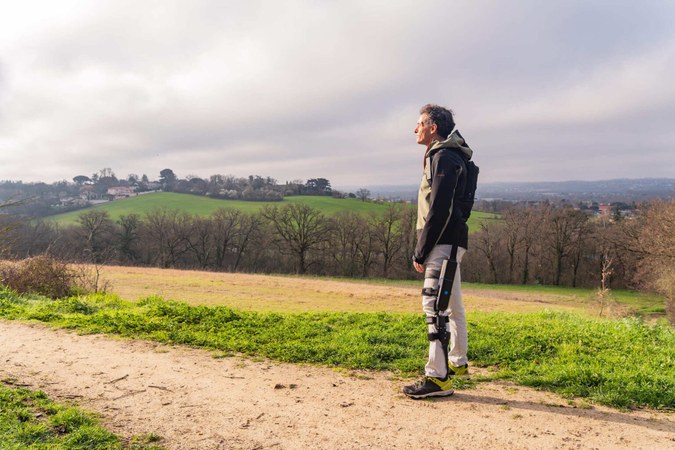
REEV is a medical robotics company building AI-powered wearable robotics to restore everyday mobility for people with neurological gait disorders after stroke, multiple sclerosis or paraplegia. Its flagship DREEVEN is a lightweight (about 3kg) motorized knee orthosis driven by electro-hydraulic actuation and real-time gait sensing, paired with REEV SENSE, an IMU wearable that turns a person's walking pattern into clinical-grade gait reports. Founded in 2021 and split between Boston and Toulouse, REEV raised $9.2M in February 2025 to finalize DREEVEN, run a clinical study at Boston University and prepare for FDA trials.