answer-engine
(8)
Perplexity Makes Search Feel Curious Again
The answer engine turns a web scavenger hunt into a cited briefing. It is quick, addictive, occasionally wrong, and most useful when you keep clicking the footnotes.

Miso.ai
Miso.ai (Miso Technologies) builds LLM-powered search, answers, and personalization for publishers, marketplaces, and content sites. Its flagship product, Miso Answers, sits on top of a customer's own content catalog to deliver ChatGPT-style, citation-backed answers with no hallucinations - fine-tuned to each brand's voice and grounded only in their material. Spun out of privacy-centric 'small data' research at Cornell Tech's Small Data Lab, Miso helps sites like O'Reilly Online Learning and Foundry's tech publications turn their archives into trustworthy answer engines that lift engagement and subscriptions.
Orama
Orama is an open-source search company building an 'answer engine' for developers - a lightweight, high-performance stack that bundles full-text, vector, and hybrid search with automatic embedding generation and built-in LLMs. Started as the open-source project Lyra and incorporated as OramaSearch Inc. in 2023 by Issac Roth and Michele Riva, its core library ships in under 2KB and runs in the browser, on servers, or at the edge. Orama powers site search and AI answers for developer platforms including nodejs.org, tanstack.com, and solidjs.org, and its OramaCore runtime packages a search engine, vector database, and LLM interface into one deployable unit.

serviceMob
serviceMob is an Irvine, California enterprise software company that calls itself the Answer Engine for Customer Service and Support. Born as an academic project at MIT, it unifies the scattered 'dark data' of the service journey - CRM, contact center, workforce management, and ticketing systems - into a single behavioral data ontology it calls Ontolytics. Instead of reporting traditional KPIs like average handle time and CSAT, the platform models each customer experience as structured data to find and prevent the root causes of repeat contacts. Delivered by embedded Forward Deployed Engineers, serviceMob says it has driven more than $75M in client savings and eliminated hundreds of thousands of repeat contacts.

Lucky Gunasekara
Lucky Gunasekara is the co-founder and CEO of Miso.ai, an AI media lab that builds private answer engines for news publishers and learning platforms. A trained interaction designer who once built an RSS crawler to track global disease outbreaks, he now partners with 45-50+ publishers worldwide on what he calls 'liquid content' - adaptive, machine-readable information that pays royalties back to the writers and sources it draws from. His pitch to the news industry is blunt: AI is an asteroid coming for all of us, so we had better get to dinner and figure it out together.

Issac Roth
Issac Roth is a Silicon Valley founder, operator and investor who has spent 25-plus years turning hard infrastructure into products developers actually use. He created Red Hat OpenShift out of his startup Makara, was founding CEO of the Node.js company StrongLoop (acquired by IBM, where he became a cloud CTO), and invested as a Venture Partner at Shasta Ventures. Today he is co-founder and CEO of Orama, an open-source search and answer-engine company building a fourth-generation database that fuses full-text search, vector search and built-in LLMs to power AI agents and copilots.
Aravind Srinivas
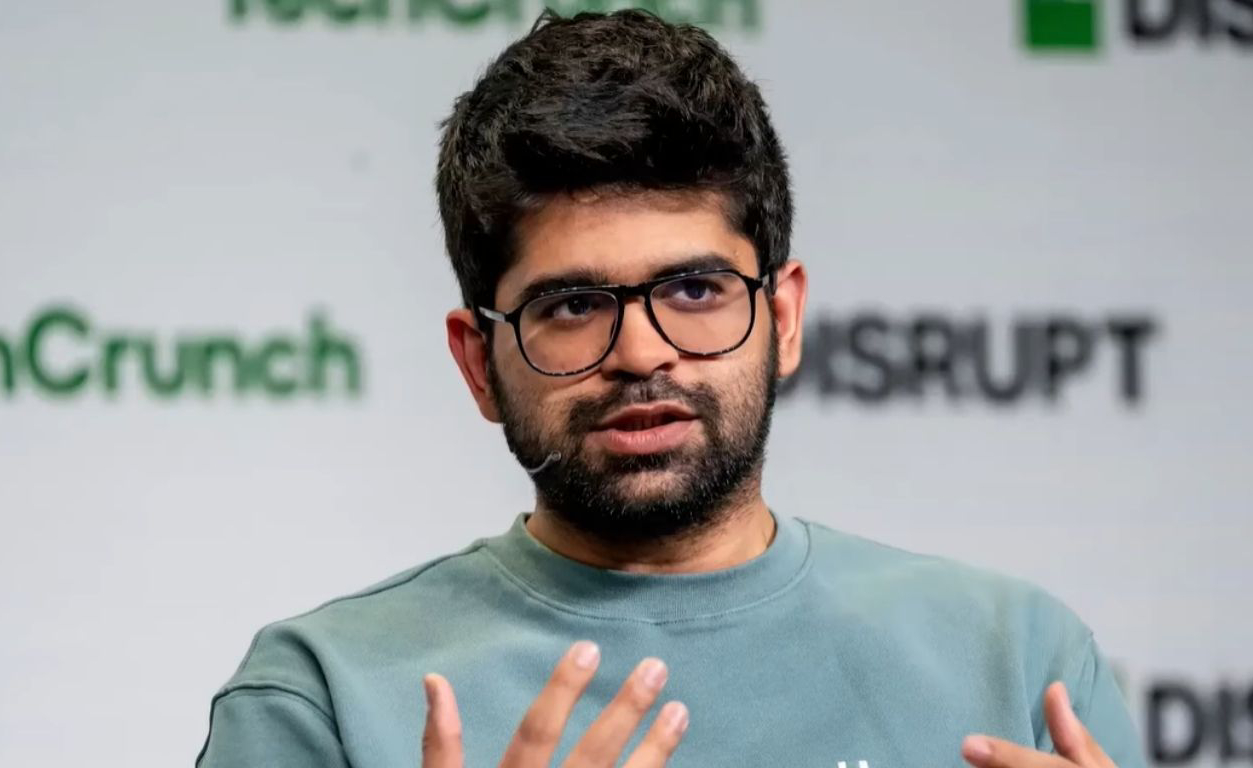
Aravind Srinivas is the co-founder and CEO of Perplexity AI, the citation-backed AI answer engine that reached a $21B+ valuation in under three years. Born in Chennai in 1994, he earned a dual degree from IIT Madras before completing a PhD at UC Berkeley, then worked as a researcher at OpenAI, DeepMind, and Google Brain before founding Perplexity in 2022. India's youngest billionaire at 31, he has positioned Perplexity as a direct challenger to Google Search by insisting that every AI-generated answer carry verifiable citations - a principle he lifted straight from academic paper standards.

Perplexity AI
Perplexity AI is a San Francisco-based AI company that built the world's leading 'answer engine' ? replacing traditional link-based search with real-time, AI-generated responses that cite their sources. Founded in August 2022 by four AI researchers from OpenAI, Meta, Databricks, and Quora, Perplexity has grown from a scrappy post-ChatGPT prototype to a $20B+ company with 45 million monthly active users, over $1.7B in total funding, and a product suite spanning a conversational search engine, a developer API platform, and the Comet AI browser.