At Rush University Medical Center in Chicago, a laboratory rule had a surprisingly expensive consequence. Samples with an immature granulocyte percentage above 1.5 required a technologist to verify the differential manually. Every flag meant another review. The instrument could count cells; the rule decided how much human attention followed.
In a customer profile published by Sysmex, Rush described raising that threshold to above 5 percent. Staff concluded the change could improve efficiency without overlooking significant findings. The reported payoff was more than three hours of technologist time freed each day. One small number, changed deliberately, altered the working day.
- Sysmex sells laboratories a connected testing system: instruments, reagents, software and support.
- The useful metric is often how much work reaches a person after the machine finishes.
- Automation pays when the laboratory validates its rules and measures the whole workflow.
The machine is only one stop
Sysmex America occupies a part of healthcare patients rarely see. Its customers are clinical laboratories and healthcare facilities across the Americas. They need blood counts, coagulation measurements, urine analysis and other laboratory information that clinicians use in diagnosis and treatment. Sysmex supplies the equipment and helps keep that equipment useful.
The American business dates to 1979, when its Japanese parent established TOA Medical Electronics (USA). In 2003, two American subsidiaries merged to form Sysmex America as direct sales and service began in the United States. That history matters: a testing instrument needs a local organization capable of installing it, teaching people to use it and answering when something goes wrong.
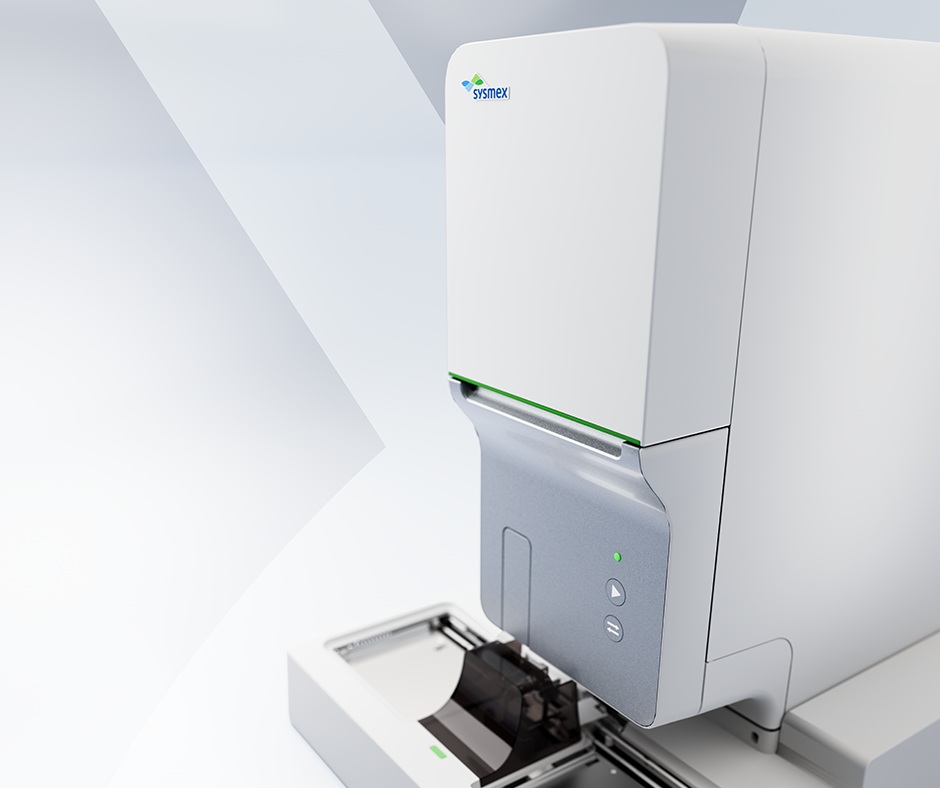
The portfolio reaches from compact hematology analyzers to automated systems linking multiple steps. Digital cell imaging adds another layer. With CellaVision products, cells can be captured and presented on a screen for review. The expert still has a job. Getting the relevant cells in front of that expert becomes a different kind of task.
A faster answer can begin with fewer errands
At Pomona Valley Hospital Medical Center in California, the daily workload included approximately 450 complete blood counts. Its previous process required staff to move slides manually to a standalone digital imaging unit. In March 2023, the laboratory went live with an XN-3100, integrated DI-60 digital imaging and Caresphere Workflow Solution.
Sysmex’s customer account describes a practical attraction: concentrated reagent delivery. At that workload, diluent changes could fall from daily to monthly. Fewer heavy containers to move sounds almost comically modest beside the language of healthcare innovation. For the person moving them, it is wonderfully concrete.
The laboratory also reported moving its received-to-result target from 45 minutes to 30 while maintaining roughly 94 to 95 percent performance. These are results from a particular customer, published by its supplier. They describe what changed there; another laboratory must establish its own baseline.
Same reported performance range: approximately 94-95%. Customer-specific results.
The rules have to travel with the sample
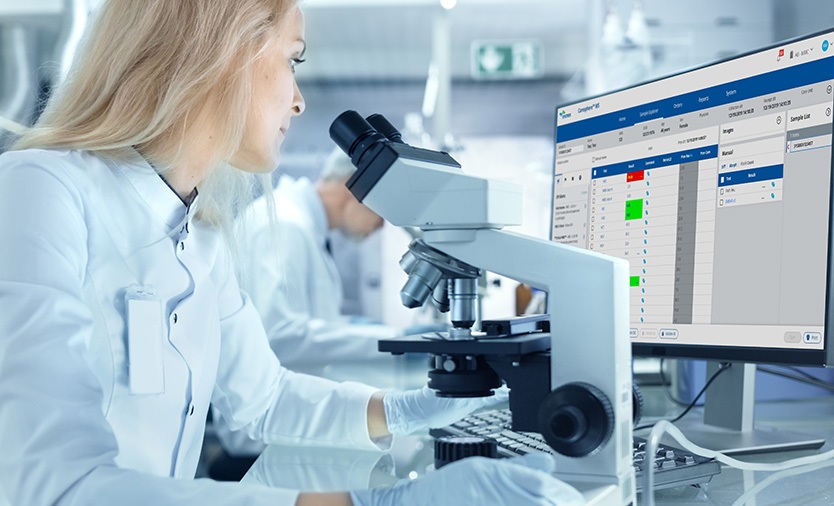
Caresphere WS helps manage the decisions surrounding results: autoverification, reruns, alerts and laboratory-defined procedures. It lets a network standardize rules while retaining customization where needed. Sysmex Validation Solution can generate test scenarios and capture evidence when those rules are tested. A laboratory’s instructions become part of the system rather than another thing someone must remember.
That distinction explains the Rush example. Its XN-9100 and Caresphere setup handled approximately 800 to 1,000 samples a day. The improvement involved reconsidering a review policy. The transferable idea is to examine which flags create work, then validate any change against the laboratory’s patients and procedures.
“Shaping the advancement of healthcare.”The mission stated in the Sysmex Way
The commercial model follows this connected approach. Sysmex supplies analyzers and the reagents they consume, together with service and informatics. Caresphere WS has a subscription model that includes software updates and virtual education. Its brochure lists unlimited users and connected analyzers, with possible additional fees for approved third-party devices. Buyers need to evaluate the continuing operating relationship alongside the equipment.
Keep the controls familiar
In May 2026, Sysmex America introduced its next-generation XR-Series. The launch emphasized improved analytics and throughput while preserving familiar XN operation, user interface and modular design. That is an interesting choice for a new product: make parts of it feel old. Familiar controls can matter when an upgrade must fit into a working laboratory.
Size matters, too. The XQ-320, announced in March 2025 for lower-volume settings, offers a three-part differential, up to 70 samples an hour and a 16-microliter aspiration volume. A physician office laboratory and a large hospital need different arrangements. Buying more automation than the workload warrants is hardly an efficiency strategy.
Sysmex competes with alternatives such as Beckman Coulter’s DxH 900, which also targets slide reviews, staffing time and workflow. Its case therefore rests on how its analytical methods, software, imaging connections and support fit a particular laboratory. A specification sheet starts that discussion. Actual samples and operating requirements decide it.
The laboratory reaches an airport hangar
One recent experiment moved the question outside the building. Sysmex supported an International Testing Agency project involving a 1,000-kilometer drone flight in Alaska. Blood samples flew in temperature-controlled kits while matched samples stayed on the ground. Sysmex equipped a satellite laboratory in an airport hangar with XN-Series technology and provided financial support.
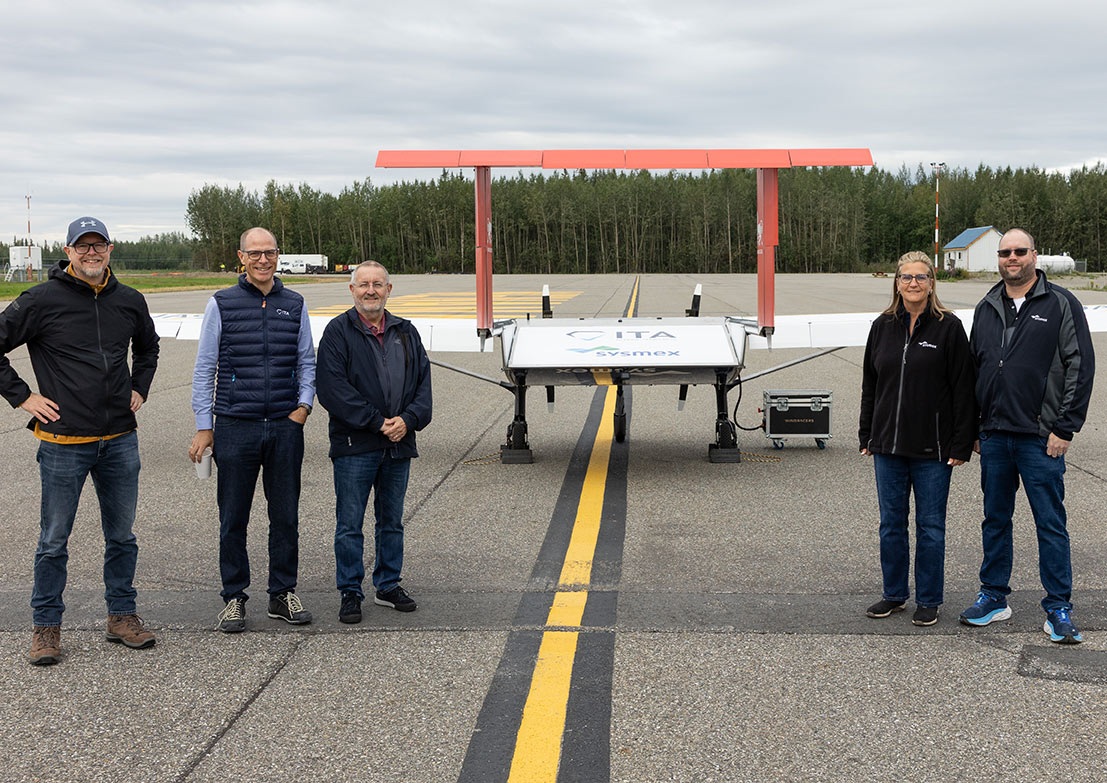
The study was designed to test sample integrity, with scientific evaluation still pending in the announcement. It makes a useful closing image: after all the instruments and software, someone must still get a suitable sample to the laboratory. The lesson for anyone improving a complicated service is practical. Follow the work from beginning to end. Count the handoffs. Measure what each one costs in time. Then decide which ones deserve to disappear.
Follow the work
Website · LinkedIn · X · Instagram · Facebook
Company news · Caresphere Academy+ · Watch: XN-3100 product overview · More product videos