Profile · Founder & CEO, Optimal
Sung Rhee
He helped ship software to a billion desktops, then quit to do something harder: tell college students the truth.
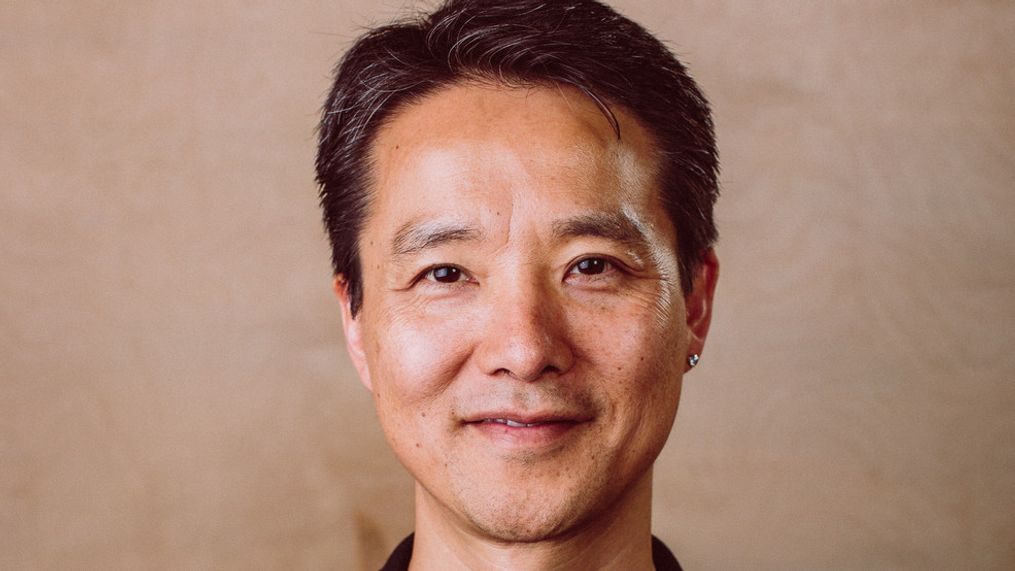
Sung Rhee. The reluctant CEO, holding still for once.
He helped ship software to a billion desktops, then quit to do something harder: tell college students the truth.
There is a moment in every founder's life where the spreadsheet says one thing and the conscience says another. Sung Rhee chose the conscience, and it cost him accounts.
Today Sung Rhee runs Optimal, a company most people have never heard of that quietly shapes one of the biggest decisions a young person ever makes. From a building in Kirkland, Washington, a town better known for wineries and lakefront than for technology, his team of roughly two dozen publishes OnlineU and GradReports - sites that rank colleges and degree programs by what actually happens to graduates. Tuition. Reviews. Alumni salaries. The unglamorous numbers that admissions brochures tend to bury.
The premise is almost confrontational in its plainness. Optimal argues that the name on your diploma matters far less than the subject printed underneath it. As Rhee puts it, "Your salary tends to be a function of your major than what school you went to." It is a sentence that undermines an entire prestige economy, and he says it without apology.
What makes this interesting is that Optimal did not start out so principled. It began as a lead-generation machine, a clever way to route students searching online into the arms of for-profit colleges. The traffic flowed, the commissions arrived, and for a while that was the whole business. Then the complaints started. Then the regulators. Rhee looked at where the money came from and did the thing founders almost never do voluntarily - he turned some of it away.
"We didn't want to be part of a process driven by misleading info," he has said. So Optimal rebuilt itself around student reviews and transparent data, even when that meant losing the schools that had been paying the bills. Over 15,000 verified student reviews later, the company has become a reference point rather than a funnel. The bet was that honesty would outlast the commission. So far it has held.
Prestige doesn't always translate to quality.— Sung Rhee, on the idea Optimal was built to prove
Long before he was ranking universities, Rhee was writing the software that landed on them. For roughly nine years he worked at Microsoft, eventually as a general manager, leading teams that built Outlook Express and MSN Mobile. This was email and mobile in their formative, awkward, world-changing years. If you sent a message on a Windows machine in the late nineties, you were touching something his teams shipped.
But the itch to build his own thing never went away. "I always knew I felt the need to strike out on my own," he says. So he left, and founded ViAir, a venture-backed software infrastructure company. Then 2003 happened. He sold ViAir into the wreckage of the dotcom crash and suddenly found himself with no company, no title, and no clear next move.
What he did next is the part most resumes would airbrush. He started building websites. Not one or two - by various accounts, more than a hundred, some say over two hundred. Experiments, mostly. A scattershot search for the one idea that would catch. The one that did was a humble site for students hunting for online education. That site became SR Education Group, and SR Education Group became Optimal.
He resists the heroic origin story. Rhee calls himself a "reluctant entrepreneur," and a reluctant CEO too. It is a strange thing for a multi-time founder to say, but it rings true. He builds not because he loves the title but because the work needs doing and nobody else is doing it the way he thinks it should be done.
Optimal's whole thesis can be drawn as a simple comparison. Strip away the marketing, and what predicts a graduate's outcome is not the crest on the letterhead. It is the field of study and the price paid to learn it.
"Your salary tends to be a function of your major than what school you went to."
It is the kind of claim that makes admissions offices wince and parents exhale. And it is exactly the conversation a lead-generation business is not supposed to start. That Rhee built a company around it is the whole point of him.
He plays basketball as a point guard and takes pride in assists over points. The tell of someone who'd rather set up the play than take the glory - which is roughly how he runs a company too.
He collects Gundam figurines and has made the pilgrimage to the Gundam museum in Japan with his son. The robots, it turns out, are a family affair.
In college he drew cartoons for The Harvard Crimson. Before he was drawing conclusions from salary data, he was drawing for the paper.
He used to fly to Las Vegas five or six times a year for craps and poker. A man who reads odds for a living, testing them for fun.
He calls himself a reluctant entrepreneur and a reluctant CEO. Multiple companies later, the title still seems to surprise him.
His idea of a perfect day: free diving, spikeball, and hiking in Lanai, Hawaii with childhood friends. No deck, no dashboard, no rankings.
Somewhere along the way, Rhee rethought not just his company but himself. He has spoken candidly about reshuffling his priorities, both at work and at home, and coming out of it a steadier leader. The lesson he landed on is the opposite of the usual founder gospel.
The standard advice is to follow your passion. Rhee pushes back. "Pursuit of passion is ultimately a selfish endeavor," he says - a line that sounds almost heretical in startup culture. His counterweight is a question about where you locate your sense of self. "If you think your center of gravity is other people - not yourself - it makes you more resilient."
It is a tidy summary of how Optimal operates. The company exists to serve the student on the other end of the search box, the eighteen-year-old weighing debt against a dream. Put that person at the center, and the hard calls - dropping a paying account, publishing a review a school would rather hide - get easier to make. Not painless. Just clearer.
That instinct shows up in his hobbies too. The point guard who lives for the assist. The father who flies to a robot museum because his son loves it. The center of gravity, again and again, is somebody else. It is an unusual operating system for a founder, and it may be exactly why a small company in Kirkland has outlasted the cynical business it started as.