The Kid From Quebec Who Changed the Mind of the Internet
The year is 2018. A man sits at a folding table outside Texas Christian University, a hand-drawn sign in front of him: "Male Privilege is a Myth. Change My Mind." The photo goes viral. The meme spreads to every corner of the internet. Within months, the format is being remixed by corporations, comedians, and governments. The man is Steven Blake Crowder - and this is not even close to the strangest chapter in his biography.
Crowder was born in Detroit, Michigan on July 7, 1987, and raised in Greenfield Park, Quebec - a suburb of Montreal where he grew up bilingual, attending Centennial Regional High School before briefly studying at Champlain College in Vermont. He left college after two semesters. He had already been working in entertainment for years by then.
At 12, Crowder began voicing Alan "The Brain" Powers on the beloved PBS children's series Arthur - appearing in seasons 5 and 6. If that seems incongruous with his later reputation for confrontational political commentary, it is. That contrast is perhaps the most distinctly Crowder thing about him.
Youngest on the Stage, Longest on the Platform
At 18, Steven Crowder returned to Montreal - not to go back to school, but to perform at the Just for Laughs comedy festival. He became the youngest comedian to take the stage in the festival's history. That same year he moved back to the United States, and the comedy career quietly pivoted toward political punditry.
By 2009, he was appearing on Fox News as a conservative commentator. By 2013, Fox ended the relationship. What most commentators do after losing a Fox News platform: wait for another network to call. What Crowder did: launch a YouTube channel, build a podcast from scratch, and grow it on his own terms.
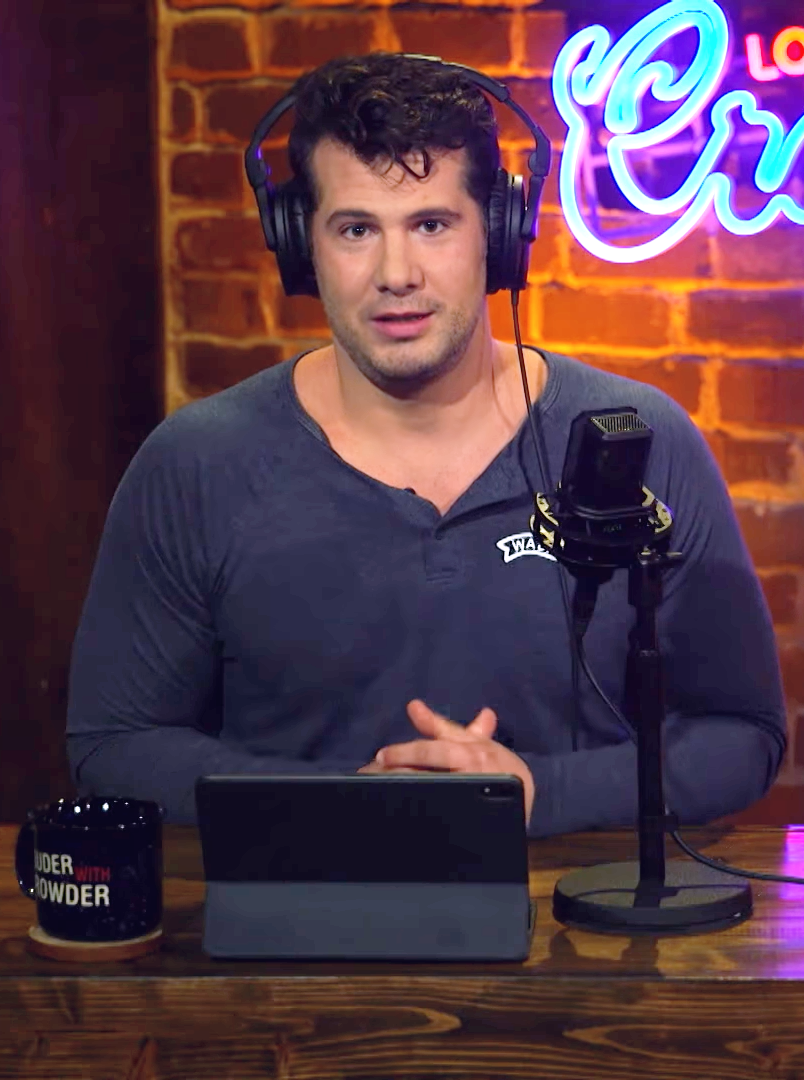
Louder with Crowder debuted as an independent production and scaled steadily into a cultural fixture in conservative media. By 2017, CRTV - Conservative Review's streaming service - picked it up as a daily program. When CRTV merged with Glenn Beck's TheBlaze in 2018, Crowder moved with it.
Facts don't care about your feelings.
- Steven CrowderThe Change My Mind Moment
Internet Meme Origin Story
A single photo from a Texas Christian University campus in February 2018 became one of the decade's most replicated meme templates - remixed millions of times by brands, governments, and comedians worldwide.
The "Change My Mind" segment started as a recurring element on Louder with Crowder: Crowder sits at a table in public, sets up a debatable proposition, and invites strangers to argue with him. The format is simple and disarming. It treats debate as a sport rather than a war, which - regardless of where you stand politically - is a different register than most of what passes for political media.
The TCU photo became an internet format because the structure was so clean. A table. A sign. A claim. Three words: Change My Mind. The template spawned hundreds of thousands of remixes - from political commentary to absurdist humor - making it one of the more durable meme architectures of the late 2010s.
Walking Away From $50 Million
In January 2023, Crowder posted a video that upended conservative media. He held up a contract - reportedly from The Daily Wire, valued at around $50 million - and publicly rejected it, arguing that demonetization clauses in the deal would give the network financial leverage over his content. If YouTube demonetized him, the contract payout would drop. He framed this as a structural threat to independent commentary.
Daily Wire CEO Jeremy Boreing disputed Crowder's characterization. The back-and-forth played out publicly, drawing criticism from some and admiration from others. Whatever the truth of the negotiation, the move itself was a statement: Crowder chose independence over a guaranteed payday from the largest conservative media network in the country.
The free market is the greatest force for good in human history.
- Steven CrowderTwo months later, he signed with Rumble - the YouTube alternative favored by right-leaning creators - and launched the Mug Club subscription community on the platform. Before the show even went live, 58,000 paying subscribers had signed up. Within five months, Mug Club had generated over $7.5 million in subscription revenue. By any independent media metric, that is a remarkable number.
The Mug Club model - $89 per year for access to a show that streams four days a week plus a Friday podcast - is deliberately priced to signal subscription-funded, ad-independent media. Crowder has since signed comedians and commentators including Bryan Callen, Nick Di Paolo, and former SNL host Jim Breuer to the platform, building out a network rather than just a show.
The Platform Wars and YouTube
No Crowder biography is complete without documenting his complicated relationship with YouTube, where the Louder with Crowder channel still holds nearly 6 million subscribers and 2 billion total views. The platform demonetized him in June 2019 following a dispute with Vox host Carlos Maza, restored monetization in August 2020, then demonetized him again in March 2021 over 2020 election content. A two-week suspension in October 2022 preceded a final suspension in May 2023.
Through all of it, the subscriber count kept growing. The secondary channel, CrowderBits, has surpassed 1.2 million subscribers on its own. Crowder's position - that major tech platforms systematically disadvantage conservative voices - has become the founding premise of his entire media infrastructure. Whether or not that premise is entirely accurate, it has proven to be a commercially effective organizing principle.
His podcast ranked in Apple's top 100 throughout all of 2020 - a year that was, it should be noted, among the most competed podcast years on record.
Facts don't care about your feelings.
The free market is the greatest force for good in human history.
Gun control is not about guns, it's about control.
Big Tech is in bed with Big Con.
The show streams on both YouTube and Rumble. The YouTube channel remains one of the most-watched political commentary channels in the US, despite repeated platform demonetizations.