The first thing to understand about a complicated machine is that the machine is rarely the whole story. A driverless delivery truck is also a labor story, a safety story, a retail story, a regulatory story and, if somebody has just invested $85 million in it, a money story. The engineering may be miraculous. The public explanation has to fit in a breath.
That gap - between what a technology does and what a stranger can remember about it - is where Skyya works. Founded in 2008 by Susan Donahue and Derek Peterson, the independent communications agency has teams in New York, Minneapolis and Chicago. Its portfolio has the cheerful disorder of a very specific garage: Indian motorcycles, a three-wheeled Polaris roadster, folding electric bikes, lidar sensors, autonomous box trucks, connected-vehicle software and yellow school buses that plug in.
Skyya calls itself a strategic communications firm. The phrase covers media relations, investor and analyst work, crisis planning, government relations, executive positioning, events, content and media training. But the useful distinction is narrower. It specializes in companies whose products cross categories and therefore arrive with an explanation problem.
The week is the unit of attention
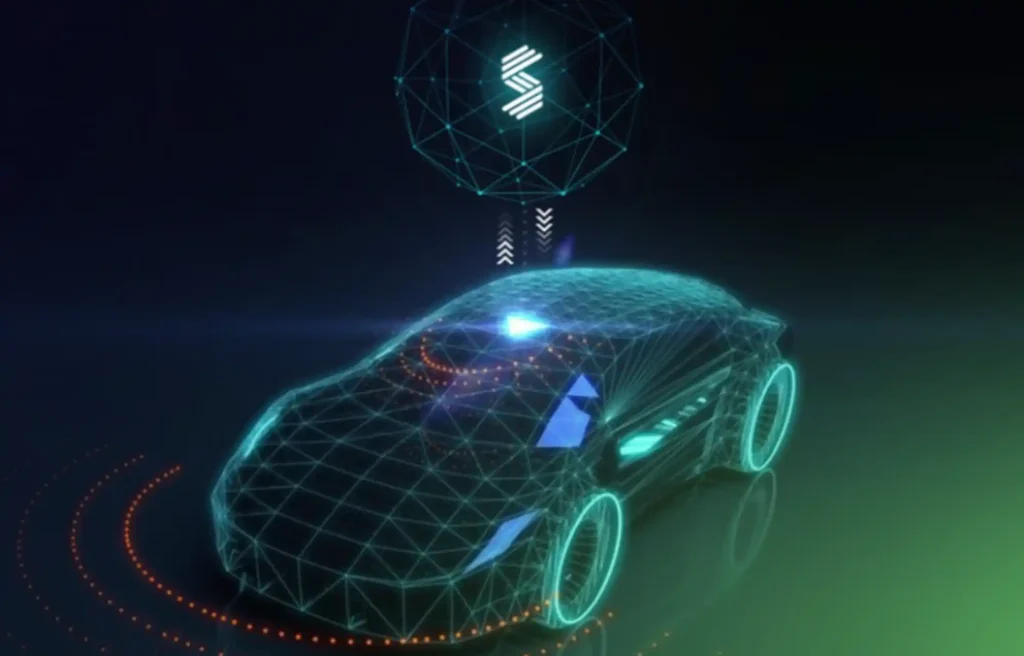
Consider Sibros, a startup selling software that connects a vehicle to the cloud. The underlying system handles over-the-air updates, live data and analytics. Important, yes. Also difficult to describe without sounding as if one is reading from the back of a router.
Skyya began with Sibros's Series A announcement. According to the agency's case study, it secured nearly a dozen stories in the first week, including coverage in Bloomberg, Forbes and TechCrunch, for more than 35 million impressions. The trick was not merely distribution. Funding supplied the clock; connected-vehicle software supplied the category; recognizable outlets supplied borrowed authority. A vague technology company became a company doing a particular thing at a particular moment.
This is the agency's recurring product: synchronized attention. Skyya lists press tours, proactive pitching, reviews, thought leadership and rapid response as separate services. In practice they behave like instruments in the same arrangement. A CEO briefing prepares the explanation. A product demonstration removes doubt. A funding round creates urgency. An award keeps the name circulating after launch day.
A launch is not a press release. It is a brief period in which the funding, the proof and the public explanation all agree.
From a billion impressions to one useful click
PR agencies love large numbers, and Skyya's case-study pages contain several with enough zeroes to require commas and courage. Its 2014 work on the Polaris Slingshot is credited with 2.07 billion unpaid impressions. The Indian Scout launch is credited with more than 2.6 billion. Those are Skyya's reported figures, and “impressions” describe possible exposure, not attentive humans.
The more revealing numbers appear farther down the page. For Indian Motorcycle, Skyya reported more than 500,000 website visits in the first five days after the Sturgis unveiling, over 10,000 consumer test rides, and lead generation that beat the client's goal by more than 300 percent. These actions are smaller than billions, but more legible. Someone arrived. Someone rode. Someone raised a hand.
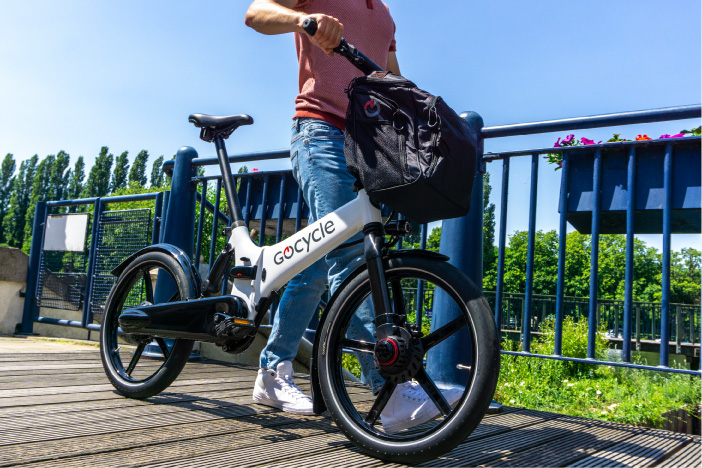
Gocycle offers the cleanest version of that funnel. The British maker of a folding electric bike wanted a U.S. audience. Skyya arranged a New York press tour, seeded reviews across technology, automotive and consumer outlets, and pursued launch-day attention. The agency reported more than 168 million impressions. More useful: U.S. visitors reached 15,923 in June, up 115 percent from May; 1,800 clicked “Buy Now,” and 1,500 searched for a dealer.
The road includes Washington and Wall Street
Mobility companies do not operate in a tidy consumer market. Their products touch roads, jobs, emissions rules, public procurement and capital markets. That is why Skyya's offering includes both a business and financial press bureau and stakeholder relations involving transportation departments, economic bureaus and policymakers.
For GreenPower, an electric bus maker, Skyya helped stage a demonstration at the U.S. Capitol with the Zero Emission Transportation Association. The agency organized a press conference with congressional members, West Virginia delegates and advocacy groups, and coordinated with staff from the transportation secretary's office. The bus was the object. The audience was an ecosystem.

That range also explains the firm's customer list. A startup can hire Skyya to introduce a category or announce a round. A public company can use the agency around earnings, an analyst day or an executive narrative. A manufacturer can ask for product reviews; a company entering a regulated market can need public-affairs support. The firm is not a software platform and does not publish a menu of packages. It sells judgment and execution, scoped to an engagement.
When the original announcement disappears
In 2021, Eli Electric Vehicles planned a U.S. rollout for its small urban EV. Tariffs changed the economics, and the company pivoted away from that launch. This is the first failure in many communications plans: not the pitch, but the premise. The event the campaign was built around stops being true.
Eli still had a redesigned vehicle, European production and distribution, and a crowdfunding campaign. Skyya reorganized those facts into a U.S. reintroduction. Its case study reports nearly 20 pieces of coverage over September and October, an estimated reach above 85 million, and interviews with TechCrunch, New Atlas, Treehugger and Green Car Reports. A test drive at Italy's EICMA show gave the story something tangible.
The transferable move is simple enough to write on a card: identify the claim that survived, attach it to evidence, and choose an audience for whom the changed plan is still news. The caution is equally simple. This works when the company has proof - a working product, credible customer, material financing or policy milestone. It works poorly when publicity is being asked to compensate for the absence of substance, when a global rollout needs dozens of local teams at once, or when the goal is guaranteed sales rather than earned attention.
A narrow beat creates a wide field of view
Skyya competes with in-house communications departments, giant agency networks and other technology specialists. Its advantage is not scale. It is accumulated context. A team that repeatedly works on electric vehicles, autonomy, robotics and manufacturing recognizes the recurring anxieties: Is it safe? Is it real? Who pays? Who regulates it? What changes for the customer today?
That context shortens the distance between onboarding and a useful idea. It also lets one campaign borrow a mental model from another. The “middle mile” of autonomous delivery can be explained through a retailer's route. Lidar can be explained through what the sensor enables. A financial story can be expanded with a geographic announcement, as Skyya did when Gatik paired an $85 million Series B with a move into Texas.
The copyable lesson is not to mimic the spectacular stunt or chase the largest possible impression count. It is to make the hard thing tellable. Pick one category sentence. Find one fact that proves it. Give the news a clock. Brief the people whose audiences already care. Then provide somewhere for attention to go - a demonstration, a dealer, an investor page, a policy event, a product that works.
Skyya's own history suggests that specialization need not make a firm dull. Quite the opposite. Stay in one lane long enough and the lane fills with electric motorcycles, school buses, sidewalk robots and a three-wheeled roadster. The machines keep changing. The human requirement does not: before people can care, they need a story they can carry.