New York biotech Sanavia Oncology — Series A closed 2023 Backed by Two Bear Capital ~$26M raised Weill Cornell PhD · MSK postdoc · Cornell Tech Runway SANA-01 ADC in development BIO 2025 speaker JPM Healthcare 2026 New York biotech Sanavia Oncology — Series A closed 2023 Backed by Two Bear Capital ~$26M raised Weill Cornell PhD · MSK postdoc · Cornell Tech Runway SANA-01 ADC in development BIO 2025 speaker JPM Healthcare 2026
Profile / Oncology / Founder

Server
Ertem & the
80% problem.

Roughly four in five cancer patients do not benefit from the therapies we have. That is the number the New York biotech Sanavia Oncology puts on its front page. Its founder is treating it less like a slogan and more like a spec sheet.

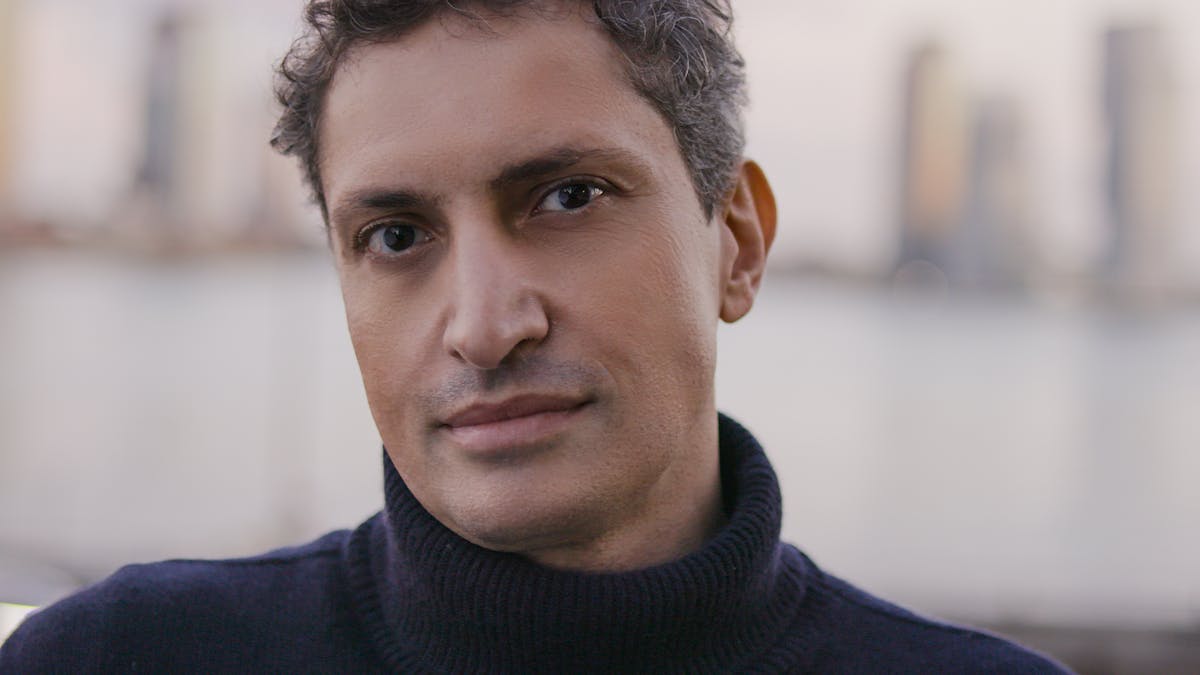
Portrait Server Ertem, founder and CEO of Sanavia Oncology
Server Ertem, at the Alexandria Center for Life Science on East 29th Street, where Sanavia Oncology runs its epitope discovery work. He trained in cancer cell biology two blocks over.
~$26MTotal raised
14Employees
2020Founded
4NY research institutions on the team card
The Lede

A biology problem that reads like a search problem.

Sanavia Oncology, the company Server Ertem founded in 2020 and has run as chief executive since February 2021, is doing something oncology companies usually treat as separate steps in the same sentence. It is looking for cancer-specific epitopes - small pieces of proteins on the surface of tumor cells that an antibody can bind - and it is trying to do this at the moment those epitopes appear in the patients who no longer respond to standard drugs. The pitch is not "new target." It is "same target, better piece of it, in the tumor that is currently escaping."

The platform is a stack, not a single machine. High-throughput sequencing sorts through tumor samples. Super-resolution microscopy, the single-molecule kind, maps where things sit on a cell. Three-dimensional protein modeling turns those coordinates into shapes an antibody can be designed against. Machine learning ranks candidates, then ranks the antibodies that come out the other side. The output is not a hypothesis; it is a shortlist of epitopes with a suggested modality attached - an antibody-drug conjugate here, a bispecific T-cell engager there, a CAR-T if the biology calls for it.

SANA-01, Sanavia's lead antibody-drug conjugate, is the first proof of concept. According to the company's own presentation, its target epitope shows up in a striking share of the tumors that draw the most attention: as much as three quarters of lung cancers, seven in ten triple-negative breast cancers, seven in ten ovarian cancers, three quarters of pancreatic cancers. It is the kind of number a founder does not put in a slide unless a lawyer has looked at it. Sanavia has put it in a slide.

Ertem's background makes the setup unsurprising. He did his PhD in oncology and cancer biology at Weill Cornell Graduate School of Medical Sciences between 2003 and 2009, then a postdoctoral fellowship at Memorial Sloan Kettering Cancer Center for four years. Those two institutions sit on either side of York Avenue. Sanavia's office, at 430 East 29th Street inside the Alexandria Center for Life Science, is a short walk south. The New York cancer research corridor is a real place, and Ertem has spent most of his adult life on it.

The intermediate step between MSK and the CEO title was Cornell Tech. In 2019 he joined the Runway Startup Postdoc program at the Jacobs Technion-Cornell Institute, which pays scientists an equity-backed stipend to try to build a company instead of writing another paper. He stayed roughly a year and a half. Sanavia followed.

Because every patient deserves a cure. And everyone deserves hope.
— Sanavia Oncology mission line, as printed on the company's own homepage
Data / Reported prevalence

The tumor list for SANA-01.

Sanavia's public materials describe SANA-01 as an antibody-drug conjugate that binds an epitope present in a large share of patients across a handful of major cancers. These are the company's own figures, not independent estimates.

Reported epitope prevalence for SANA-01

Approximate share of patients with the target epitope, by tumor type. Source: Sanavia Oncology.
Lung
75%
Pancreatic
75%
TNBC (breast)
70%
Ovarian
70%
Gastric
55%
Colon
40%
Company-reported figures; independent validation pending.
The Method

Four instruments looking at the same cell.

The phrase Ertem uses in public talks is "immunology driven AI platform." What that actually means, walked through slowly, is that Sanavia treats the same tumor sample as raw material for four kinds of measurement at once. Sequencing tells you what genes the cell is expressing. Super-resolution microscopy tells you where the resulting proteins sit and how densely they cluster. Three-dimensional protein modeling proposes what those proteins look like, down to the fold. Machine learning threads the three together and calls out epitopes that are surface-accessible, cancer-specific, and abundant enough to draw an antibody to.

Then the same platform runs the antibody side of the problem. Sanavia's team combines in vivo immunization with antibody screening, with a machine-learning layer picking the antibodies that bind the chosen epitope with what the company calls atomic-level specificity. The claim is that the whole loop - from finding an epitope to producing a lead antibody - takes weeks, not the many months a traditional discovery program would spend on the two steps in sequence.

This is where the multi-modality choice starts to make sense. Once you have the epitope and a good antibody, the modality decision - ADC or T-cell engager or CAR-T - is a downstream engineering call, not a wholly new research program. Sanavia's public deck lists all three options.

The Money

$26 million, mostly quietly.

Sanavia's funding history reads like a company that raised what it needed and got back to the bench. Public sources put total capital raised at roughly $26 million. The most recent identified round was a Series A closed in July 2023. Two Bear Capital, a firm that markets itself as investing at the intersection of biology and technology, has been a lead backer since the earliest days and continues to feature Sanavia prominently on its portfolio page.

The other funding data point Ertem talks about in public is smaller and older, but he keeps mentioning it: the Bristol Myers Squibb Golden Ticket, a benefit that gave Sanavia free access to BMS bench space and equipment. His stated reason for citing it years later is not sentiment. It is that the ticket let Sanavia produce data before its first fundraise, which is what let it close that fundraise. In his own words, it was proof that "New York is the right place for a biotech startup."

The BMS Golden Ticket

Ertem credits the BMS program with letting Sanavia "generate data from day one" while keeping burn low. The company then used those data to show investors NYC could work.

Chronology

The route from bench to boardroom.

2003 — 2009

PhD at Weill Cornell Graduate School of Medical Sciences, in oncology and cancer biology.

2009 — 2013

Postdoctoral research fellow at Memorial Sloan Kettering Cancer Center.

2019

Joins the Runway Startup Postdoc program at Cornell Tech / Jacobs Technion-Cornell Institute.

2020

Founds Sanavia Oncology in New York.

Feb 2021

Named CEO of Sanavia Oncology.

Jul 2023

Sanavia closes Series A funding.

2024

Two Bear Capital features Sanavia publicly in its portfolio.

Jun 2025

Speaks at BIO International Convention in Boston.

Jan 2026

Sanavia at JPMorgan Healthcare Conference; returns to BIO 2026.

Field Notes

Small facts that add up.

Address

430 East 29th Street

Sanavia sits inside the Alexandria Center for Life Science, the East River building complex that has become the anchor tenant of the NYC biotech corridor. Ertem trained a few avenues away.

Team card

Four institutions, one crew

Public descriptions of Sanavia's founding team list drug developers with training from Memorial Sloan Kettering, Rockefeller University, Weill Cornell Medicine, and Columbia University - plus alumni of Amgen, Genentech, Roche, and Gilead.

Program

SANA-01

The lead antibody-drug conjugate. Aimed at an epitope Sanavia says appears in a majority of patients across six of the largest solid-tumor indications.

Patents

Named inventor

Justia lists Server A. Ertem as an inventor on filings related to cancer-relevant nucleic acids and proteins. The paper trail predates Sanavia by years.

Speaking

BIO 2025, BIO 2026

Ertem is a listed speaker at the BIO International Convention 2025. Sanavia returns for 2026 sessions.

Backer

Two Bear Capital

The Whitefish, Montana firm has publicly featured Sanavia since its early days and describes it as a company "harnessing scientific research and breakthrough technologies" against drug resistance.

BMS Golden Ticket allowed Sanavia to generate data from day one by having access to the equipment we needed while minimizing upfront costs. This showed our investors that New York is the right place for a biotech startup.
— Server Ertem, on Sanavia's earliest fundraising strategy
Read On

Why the story travels.

There is a version of the Ertem profile that is a tidy academic-to-founder narrative and stops there. It would miss the specific thing Sanavia is trying to do. Cancer immunotherapy has had a decade of miracles that mostly worked for a minority. The interesting founders now are the ones who have picked up the exact number - 80% - and started building companies backward from it. Ertem is one of them.

Two things about him are easy to underestimate. First, he is a fairly quiet operator. His LinkedIn feed is measured, his public quotes are matter-of-fact, his company website is graphs. The volume in the pitch is coming from the pipeline, not from him. Second, the platform strategy is being executed alongside an asset strategy at the same time. That is expensive and hard, and it is the correct answer if you actually believe that resistance is not one thing but a category of things.

The 14-person question

Sanavia lists 14 employees, and a target list spanning six major solid tumors. The next hires will tell you which part of the platform they trust the machines to do.

New York, again

NYC biotech has been trying to escape "small satellite" status for two decades. Sanavia's premise is that the East River corridor now has enough gravity for a company to be born here, raise here, and stay here.

Share

Send it on.