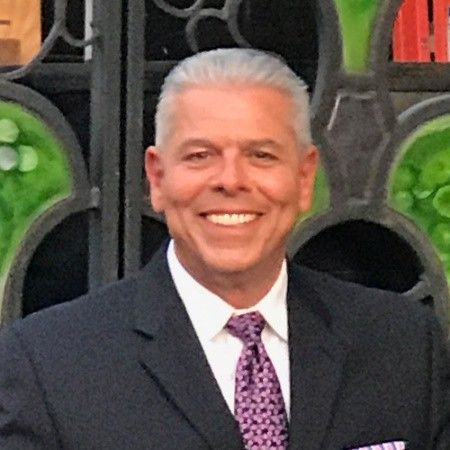
NOW: EVP & Chief Commercial Officer, MIDAS Healthcare SolutionsPRIOR: 25 years at Johnson & Johnson2020: Launched XCOPRI over video callsMISSION: Ending medication diversionBASE: Philadelphia, PANOW: EVP & Chief Commercial Officer, MIDAS Healthcare SolutionsPRIOR: 25 years at Johnson & Johnson2020: Launched XCOPRI over video callsMISSION: Ending medication diversionBASE: Philadelphia, PA
Profile / Healthcare Commerce
Sebby Borriello
He launched a pharmaceutical product without ever shaking a customer's hand. Now he is asking a question hospitals have dodged for decades: what really happens to wasted medication?
// 30 years in pharma & medical devices - one career, many frontiers
The commercial chief who keeps choosing the build over the comfort. Sebastian "Sebby" Borriello.
The Dispatch
A 360-degree camera, pointed at the medicine cabinet
There is a moment in every hospital that almost nobody watches. A nurse holds a half-used vial of a controlled substance over a sink and pours. No witness, or a rushed one. No record worth the name. The dose is gone, and so is the proof of where it went. Sebby Borriello has decided that moment is worth a career.
As Executive Vice President and Chief Commercial Officer of MIDAS Healthcare Solutions, a small New York company of around nineteen people, Borriello sells a product built around a deceptively simple idea: put a camera on the act of throwing medication away. The platform, MidasVIEW, captures panoramic video of each disposal through what the company calls Anytime Witness technology, so that the witnessing can happen later, by anyone, instead of requiring a second clinician to stand around in real time. A companion feature, Rx Intercept, lets samples of what was discarded be pulled back and tested.
It is a strange thing to build a company around - the garbage end of pharmacy. But that is exactly the kind of unglamorous, high-stakes problem Borriello has spent thirty years walking toward rather than away from. Drug diversion, the quiet theft of medication inside the healthcare system, feeds directly into the opioid epidemic. The question MIDAS puts on its own homepage is the one Borriello now repeats: "How do we really know what happens to wasted medication?"
By the Numbers
30+
Years in industry
~25
Years at J&J
2020
XCOPRI US launch
~19
People at MIDAS
"We saw this as a marathon, not a sprint. True to our original plan, we were here for the long term, and that helped us build credibility."
- Sebby Borriello, on building SK Life Science
The Pattern
He keeps choosing the unfinished building
To understand why a man with a comfortable big-pharma resume is now evangelizing a disposal camera, look at the shape of his choices. Borriello spent roughly twenty-five years inside Johnson & Johnson, moving across some of its most demanding commercial franchises - wound management, biosurgery, aesthetics. That is a quarter-century of stability most executives would coast on.
Instead, in 2016, he joined SK Life Science, the US arm of a South Korean company that had only ever done drug discovery and research. There was no commercial organization. There was no product on the market. His job was to build the engine from nothing and point it at the American healthcare system. He helped grow it into a fully integrated pharmaceutical company, planning a sales force of roughly 100 to 125 representatives.
The crucible came in 2020. SK Life Science's first FDA-approved, independently commercialized drug - XCOPRI, an epilepsy treatment - was due to launch in May. Then COVID-19 closed every door a sales team would normally walk through. Borriello and his team scrapped the in-person playbook and launched the product virtually, arming reps with digital tools and video conferencing to reach physicians who could no longer be visited. It worked. The launch went ahead. That same summer, SK's South Korean parent completed a major biotech IPO, and the US commercial story Borriello helped author was part of the proof that the company could stand on its own.
His resume reads like a tour of the places where medicine meets the market. Before and around the J&J years run names like Ortho-McNeil Pharmaceuticals, Ethicon, and Johnson & Johnson Healthcare Systems - the surgical and pharmaceutical engines of one of the largest healthcare companies on earth. Later came Mentor Worldwide and Cempra, then a stint advising Carmell Therapeutics before he formally took its Chief Business Officer seat in 2022. Carmell works on plasma-based biologic materials, the kind of science aimed at bone and wound healing and aesthetic applications. "Biologic development of plasma-based material is an important area that could make a significant impact," Borriello said on joining - the words of someone who still gets curious about the science, not just the spreadsheet.
Wound & Biosurgery
Two decades-plus inside Johnson & Johnson's commercial franchises, learning how to sell into operating rooms and hospitals.
SK Life Science
Built a US commercial organization from an R&D-only base, then launched XCOPRI in the teeth of a pandemic.
Carmell & MIDAS
Advisor, then Chief Business Officer at Carmell Therapeutics; now commercial chief at MIDAS Healthcare Solutions.
"Can I learn from the opportunity, and can I make a contribution?"
// The two questions Borriello says he asks before any leap
The Arc
A career told in jumps
1981
St. John's University. Earns a B.A. in Public Administration.
~25 yrs
Johnson & Johnson. Commercial leadership across wound management, biosurgery and aesthetics franchises.
2001
University of Pennsylvania. Completes an M.S. in Organizational Dynamics - the study of how teams and cultures actually work.
2016
SK Life Science. Joins to convert an R&D-only entity into a commercial organization.
2020
XCOPRI. Leads the virtual US launch of SK's first FDA-approved, self-commercialized drug during COVID-19.
2022
Carmell Therapeutics. Named Chief Business Officer after advising the plasma-based biologics company.
Ask Borriello how you build a company and he talks about people before product. At SK Life Science, he treated recruitment as a craft. "Attracting talent is a skill in itself," he has said. The company looked for experienced leaders ready to build their own teams, not hires who needed to be told what to do. More striking, they actively discouraged the wrong candidates - filtering for commitment to the hard reality of startup life rather than padding a headcount.
Underneath the hiring sat a values test. "Openness, honesty and transparency were key to their outlook," he said of the team he built, "and everyone who signed on had to honor those values." For Borriello, this is not soft decoration. It is commercial strategy. "People need to trust the company brand if they're to trust what you're selling," he argues. "We needed to communicate what our culture was."
There is a coherence to it that traces back to that Penn degree in Organizational Dynamics. He talks about companies the way an engineer talks about systems - inputs, trust, the long compounding of credibility. His ambition at SK was telling: "Our goal is to not be big pharma; more like big biotech, operating in the spirit of big pharma but be more of an advocate for HCPs, patients and caregivers." Big company discipline, small company conscience.
Range
One commercial career, many frontiers
Few executives can claim a map this wide. Borriello has carried products to market across radically different corners of medicine - a reminder that what he sells is not a single category but the act of commercialization itself.
Wound management
J&J era
Biosurgery
J&J era
Aesthetics
J&J era
Epilepsy / CNS
SK Life Science
Plasma biologics
Carmell
Medication safety
MIDAS
"Our goal is to not be big pharma; more like big biotech, operating in the spirit of big pharma but be more of an advocate for HCPs, patients and caregivers."
- Sebby Borriello
The Stakes
Why the garbage end matters most
Medication diversion is not a niche compliance headache. It is one of the quiet supply lines of the opioid crisis - controlled substances slipping out of legitimate systems, often through the gaps in how waste is documented. The witnessing requirement that hospitals rely on is part theater: a second person attests, briefly, and the record is only as good as the moment. MIDAS reframes the whole thing as a data problem. Capture the event on 360-degree video, store a secure digital record, and let verification happen any time, by anyone, with AI helping flag what looks wrong.
For Borriello, this is the through-line of everything before it. The advocate-for-patients instinct from SK. The systems thinking from Penn. The thirty years of learning how hospitals actually buy and behave. He is, at this stage of a long career, using all of it to chase accountability in the least glamorous room in the building. The pitch is not about hardware. It is about shifting institutions from reacting after something goes missing to preventing it in the first place.
It is also, characteristically, an unfinished building. A small team, a hard sell, a problem most people would rather not look at. Which is, by now, the most reliable signal that Sebby Borriello will want in.
Watch how he frames the move from a giant like J&J to ventures measured in dozens of employees, and the consistency is almost stubborn. He does not romanticize the chaos of startups, and he does not pretend the safety of a large company is a trap. He measures both against the same yardstick: is there something here worth learning, and is there something here only I can add? It is a quietly demanding standard. It rules out the merely lucrative. It rules out the merely safe. What survives is the work that stretches him - which is why his last three acts have all been organizations trying to become something they were not yet.
There is a patience underneath the ambition, too. The marathon line he used about SK Life Science - here for the long term, building credibility one honest interaction at a time - is not a throwaway. It is how he thinks selling actually works in healthcare, where the buyers are clinicians who have seen every pitch and trust almost none of them. You do not win them with a quarter of aggression. You win them by being the same company in year three that you claimed to be in year one. For a man now asking hospitals to put a camera on their most overlooked moment, that long-game credibility may be the only currency that counts.
Margins
Things that stay with you
The two-question test
Before any jump, just two: can I learn, and can I contribute? Everything else is noise.
Launch over Zoom
He pulled off a major pharma product launch without one in-person sales meeting.
Student of teams
His Penn degree is literally in how organizations work. It shows in how he hires.
From OR to the sink
Wound care, biosurgery, aesthetics, epilepsy, bone healing, and now medication waste.