He built games for Facebook for eleven years. Now he is on a one-man mission to make real-money play fun again.
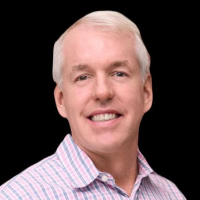
Sean Ryan. Thirty years in gaming and still grinning like a man who just found a new high score. CEO & co-founder, ZOOT.
Most people who spend three decades inside the gambling-adjacent internet end up reaching for the slot machine. It is the safe bet. Spinning reels print money. Sean Ryan went the other way. His company, ZOOT, is a sweepstakes gaming platform built on Plinko, Mines, Crash and Dice - arcade shapes, not casino felt. The cash prizes are real. The slots are nowhere in sight.
That single decision tells you most of what you need to know about him. In an industry engineered to extract attention, Ryan keeps insisting the game should be worth playing on its own. "I want fun back in the experience," he says. "The sweepstakes part is ancillary." Coming from the man who helped invent the modern social-sweepstakes category, that is either heresy or wisdom. He is betting it is both.
ZOOT - the company behind getzoot.us, operated under Enigma Lake - is headquartered in New York with its engineering core in Bucharest. Every game is built in-house. No white-label catalog, no borrowed titles. In June 2025 the company closed a $6 million seed round led by CoinFund, the crypto-native investment firm, with Griffin Gaming Partners alongside. The plan is to take a US sweepstakes business and turn it into a global, stablecoin-powered network.
It is a strange, specific bet. Stablecoins to solve the unglamorous problem of getting players paid quickly in places where banking is slow and borders are hard. Arcade games to win people who are bored of reels. And a founder who has been here, in one form or another, since Space Invaders ate his quarters.
Social sweepstakes is one of those things that sounds like a loophole because it is one - a legal one. You buy virtual gold coins to play for fun. Bundled free with those coins come sweepstakes entries, which carry real monetary value and can be redeemed for cash. The whole thing holds up legally because there is always an alternative method of entry, traditionally a mailed-in postcard, so no purchase is ever strictly required.
Ryan can recite the mechanics in his sleep, including the roughly 65% prize-payout standard the category lives by. He watched it grow from essentially nothing in 2017 to about $6 billion by 2023, with some forecasts pointing toward double that by 2025. He had a front-row seat because he helped build one of the early players: Open Wager, the studio behind LuckyLand Slots, which VGW acquired in 2017. He is generous about VGW too, crediting them as the category's real pioneer.
Regulation, he argues, is not the wall everyone assumes. It is the moat. Getting a single payment processor live can mean filling out something like 32 separate forms. Legal counsel guides the state-by-state patchwork; payment partners demand mountains of documentation. "It takes longer - months, not weeks," he says. Most founders flee that paperwork. Ryan sees it as the thing keeping casual imitators out.
Cuts his teeth in early online gaming during the messy handoff from dial-up to broadband.
Runs one of the first legal digital music subscription services, years before streaming was obvious.
Joins to build the games platform from inception and leads it for roughly 11 years into a multi-billion-dollar business - the era when the original social-game studios were born.
The social casino studio he co-founded, maker of LuckyLand Slots, is acquired - an early marker that sweepstakes had arrived.
Reunites with longtime colleague John Cahill to launch the arcade-first sweepstakes platform under Enigma Lake.
CoinFund leads, Griffin Gaming Partners joins, and the mission turns global - stablecoins aimed at Southeast Asia, Latin America and Africa.
I want fun back in the experience. The sweepstakes part is ancillary.
We shut that down in December, waited a week to lick our wounds, and January 2 we started back up.
Blockchain gaming with real currency integration is one of the most compelling opportunities in digital entertainment today.
Be different, act different.
Ryan watched his sons AirPlay ZOOT's games onto TVs at bars - playing socially, no skill required. That casual, screen-to-screen behavior shaped where the product went.
When his Web3 venture failed, he shut it down in December, gave himself a single week, and relaunched on January 2. The clock matters more than the wound.
Every game is proprietary, engineered by a team in Romania. No licensed slot packs, no off-the-shelf casino. If ZOOT ships it, ZOOT made it.
His idea catalog runs to oddball arcade concepts - including a political fighting game - because the whole point is that the games should be a little ridiculous and a lot of fun.
Off the clock he has cycled through Age of Empires Mobile, Pocket Necromancer, and 100 Days, a wine-business simulator he enjoys despite admitting it is short on actual fun.
Thirty-two forms for one payment rail sounds like a nightmare. To Ryan it is the barrier that keeps the tourists out and rewards the operators willing to do the unglamorous work.
His gaming roots trace to arcade classics - Space Invaders and Asteroids - then Atari and the Apple II. He has been chasing the high score since the quarter-slot era.
The social-sweepstakes category he helped pioneer went from near-zero in 2017 to roughly $6 billion by 2023.
ZOOT operates under Enigma Lake and is live across 45 US states and four Canadian provinces.
He co-founded ZOOT with John Cahill, a veteran whose own resume runs through Sega, Shockwave, Yahoo Games and Open Wager.
He cites Steve Jobs' "Think Different" ethos as a personal operating principle - "be different, act different."
The global piece of ZOOT is where the stablecoins come in. In Southeast Asia, Latin America and Africa, the hard part of real-money gaming has never been the game. It has been the payout - slow rails, geographic restrictions, players left waiting. Ryan's pitch is that on-chain dollars make winnings transparent and instant, which is exactly the experience a player wants and exactly the experience legacy gambling rarely delivers.
"We're bringing video game design principles to iGaming," he says, "to create experiences that are not only entertaining, but also transparent and instantly rewarding." It is a careful sentence from someone who has watched plenty of crypto hype curdle. He shut down a Web3 venture once already. The difference this time, he argues, is that the technology is in service of something boring and real: getting people paid.
He expects the category to mature the way social casino did - scrappy at first, then normalized through app stores, then courted by IP holders and legacy players. He plans to be standing there when it does, having done the unglamorous regulatory homework while everyone else was chasing the spin. Be different, act different. It is a slogan. For Sean Ryan it has also been a thirty-year strategy.
Profile compiled from public reporting and interviews. Figures cited reflect public statements and may be estimates.