A scuba regulator looks like a piece of equipment until you remember what it does. It lets a person breathe where breathing is otherwise impossible. That changes the ordinary rules of shopping. The fit of a mask matters. The condition of a buoyancy compensator matters. A technician matters long after the credit card has cleared. Scuba.com, an early online dive retailer now owned by Adorama, has built a business around that stubborn truth: the box on the doorstep is only one part of the transaction.
- Scuba.com sells new and inspected used dive equipment, from masks to regulators and cameras.
- Its New York dive shop adds classes, rentals, air fills, and repairs to the online catalog.
- Trade-ins and guided trips give customers reasons to return after the first purchase.
- Adorama bought the company in 2019, joining it with fellow dive retailer Leisure Pro.
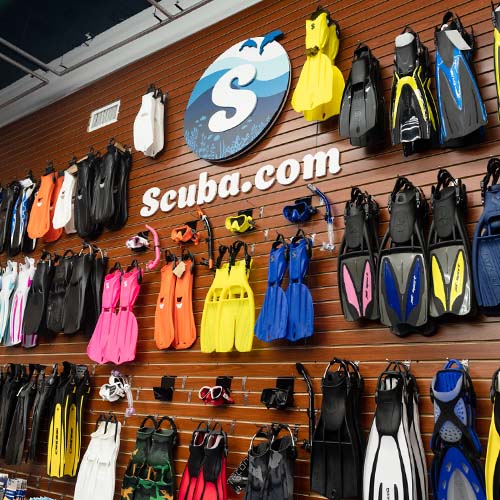
The online store can outfit a first-time snorkeler, a traveling recreational diver, or an underwater photographer. Its catalog spans fins, wetsuits, tanks, dive computers, and packages from brands including Aqualung, Cressi, Mares, and Scubapro. The physical operation addresses a different problem: it is difficult to tell whether a mask seals by looking at a thumbnail. In Manhattan, customers can talk to instructors and divemasters, rent gear, arrange servicing, fill tanks, and enroll in PADI classes. The website can start the relationship. The shop can make the next dive possible.
A sale with an afterlife
The best explanation of Scuba.com’s difference sits in its warranty FAQ. The company observes, with unusual directness, that warranty protection means more when the product supplies your air underwater. That is a useful corrective to the idea that scuba gear is simply another outdoor category. A retailer can compete on an identical regulator’s sticker price. It has a harder time copying a trained person who can inspect it later.
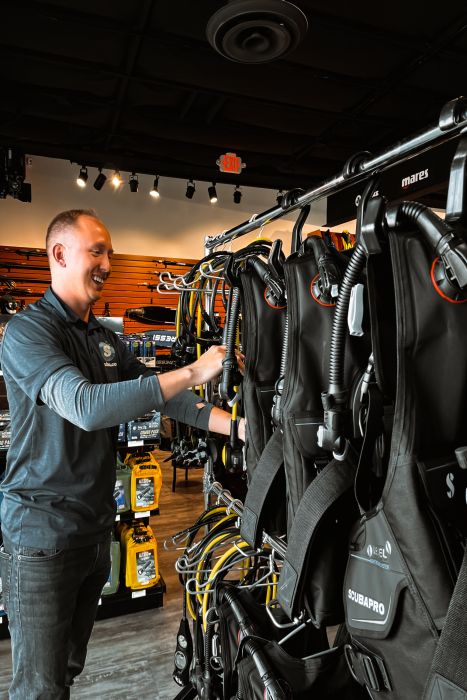
Scuba.com tries to do both. Its best-price policy says it will match a lower eligible price and take another five percent off, but the terms compare the full landed price and require the exact same in-stock item from an established US retailer. That is a specific offer, not a license to compare a new regulator with one from an auction listing. On the service side, the New York center advertises manufacturer-trained technicians and genuine factory parts. It also offers rentals for people who are learning or traveling. A beginner need not buy a complete kit before discovering whether diving becomes a habit.
“The warranty is much more important with scuba gear since you don’t suck air from your steering wheel while 80 feet underwater.”Scuba.com, customer FAQ
There is a practical lesson here for specialist retailers: the most valuable expertise often appears after checkout. Gear needs inspection, maintenance, replacement parts, and eventually replacement. If the merchant handles those moments well, it stops being merely the place where the customer found a price.
The used-gear loop
New gear is expensive enough that the secondhand market is an obvious temptation. But the buyer of a used dive computer or buoyancy compensator wants more than a low number. Scuba.com’s used section says its dive experts inspect each item and assign condition ratings. The company gives used items a limited one-year warranty against manufacturing defects. It also invites customers to trade gently used equipment for cash or store credit. That creates a loop: purchase, use, trade, inspect, resell.
The interesting retail moment is often step three, when ownership turns into maintenance.
This works especially well in a category where equipment has a long life and owners steadily upgrade. A used listing for a dive computer can turn a costly first purchase into a more approachable one, while a trade-in keeps older gear circulating. It also brings customers back through the same door. The constraint is just as clear: trustworthy resale depends on honest condition reports, technicians, and warranty costs that do not swallow the margin. A generic marketplace can list used equipment. It cannot automatically provide the same inspection.
The camera store buys a dive shop
In 2019, Adorama bought Scuba.com. Adorama already owned Leisure Pro, another major online seller of dive equipment. Its announcement described the deal as bringing two of the largest dive retail sites under one parent. The logic is easy to see: broader inventory, shared systems, and an existing audience for photography equipment, including the specialized cameras and housings people take underwater. Scuba.com’s customer accounts and VIP rewards now connect with other Adorama brands.
That ownership also explains why the company’s business is more than a picturesque local dive shop. Online reach brings national and international buyers to a specialty catalog. Shops in New York and Costa Mesa provide places for human help and services. Its New York staff can teach certification classes; its travel arm organizes group trips to destinations abroad. A trip is both a service and the moment when every imperfect fin, mask, and computer choice becomes obvious.
The customer base now includes people whose work, not weekend, takes them into the water. Scuba.com Solutions serves public-safety teams and other institutional buyers. In 2026 the company described a partnership with NPPGov that lets eligible agencies purchase through pre-competed contracts. That is a different kind of dive preparation: the buyer has to navigate procurement rules as well as equipment choices. The service makes sense for a retailer already staffed to advise on specialized gear, though it requires reliable supply and account support beyond a consumer checkout page.
The market has plenty of alternatives. A local dive center may know a customer’s face and equipment intimately. A large marketplace may win on convenience. Specialist online retailers can compete on selection and price. Scuba.com’s position is the overlap: catalog breadth with classes, repairs, rentals, used gear, and trips attached. Each piece makes the next one more useful. The beginner who takes a class may rent first. The renter may buy a mask. The gear owner may come back for servicing. The experienced diver may trade in a computer before joining a trip.
What the first purchase cannot solve
Scuba.com is not trying to erase the local dive shop; it operates one. That is why its story is more instructive than another claim about ecommerce conquering everything. Diving resists pure abstraction. The customer still has a face that a mask must fit, a tank that must be filled, and equipment that must keep working. The company uses the web to make products easy to find, then keeps people and physical services close to the purchase.
There is a modest, copyable idea beneath the scuba tanks. Ask what customers must do before and after they buy. If those steps are confusing, costly, or consequential, the retailer who can help at those moments has something more durable than a full catalog. In diving, the sales receipt comes first. The real verdict arrives underwater.