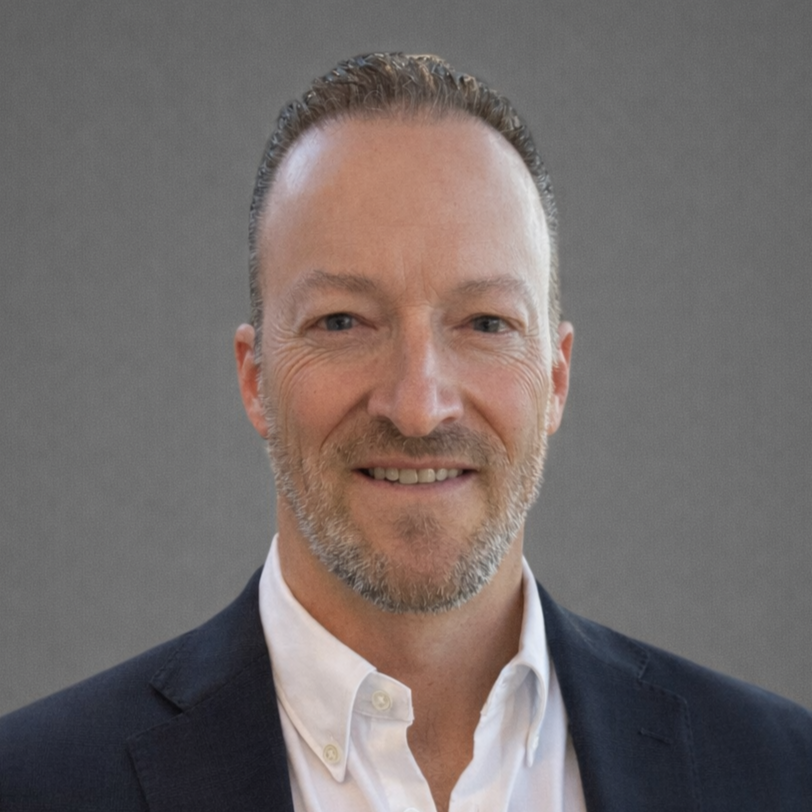
The Prolium Bioscience press release that went out on March 3, 2026 does something unusual for a launch announcement. It tells you the company exists, that it has $50 million, that its lead drug is a CD20xCD3 bispecific antibody called PRO-203, and then - halfway down, past the boilerplate about mission - it mentions that patients have already been dosed. This is the biotech equivalent of a restaurant announcing its grand opening in the same sentence as the review from last week's soft launch.
The CEO who put this together is Scott Requadt. He is 20-plus years into a career that started at Davis Polk & Wardwell, moved to a startup called TransForm Pharmaceuticals, made an unscheduled detour through Harvard Business School (Baker Scholar, top 5%), spent a decade as a partner at Clarus Ventures (later Blackstone Life Sciences), then five years running Talaris Therapeutics as CEO through its 2021 IPO and its 2023 wind-down. He is, by training, a lawyer. By practice, an investor. By employment history, an operator. Prolium is the third company he has been asked to run, and by his own arrangement of announcements, he seems to have decided that the fastest way to prove a biotech is real is to already be treating patients with it.
The drug he is building the company around is not, strictly speaking, his. PRO-203 was originally developed by KeyMed Biosciences and InnoCare Pharma in China, where CD20xCD3 T-cell engagers have been in oncology development for several years. The idea in a bispecific antibody like this one is that two arms grab two different things at the same time - here, a CD20 protein on a B cell and a CD3 protein on a T cell - and force them into a productive collision. In lymphoma, the productive collision is a dead cancer cell. In autoimmune disease, which is what Prolium is going after, the collision is a deleted B cell, and the working theory is that if you can delete enough of them for long enough, the immune system will reboot and stop attacking its own tissue. It is a serious bet with recent supporting data in lupus and scleroderma. It is also, importantly, a bet built out of a licensing deal rather than a lab.
The lawyer-shaped hole in the biotech CEO market
Biotech has an unspoken assumption about who should run its companies: someone who has spent a career at the bench, or a career with a P&L. Requadt has spent his career with contracts. He was an M&A attorney at Davis Polk in New York, representing private equity, pharma and technology clients, before jumping to TransForm Pharmaceuticals as Director of Business Development. TransForm was acquired by Johnson & Johnson. Requadt kept moving. In 2005 he joined Clarus Ventures as a Principal at the firm's Cambridge, Massachusetts office; in 2010 he made Partner; in January 2015 he was promoted to Managing Director.
The point about Managing Director at a life sciences fund is that you are the person who decides which molecules become companies. Requadt spent a decade in that seat and, in the process, sat on the boards of Avrobio (Nasdaq: AVRO), VBI Vaccines (Nasdaq: VBIV), and TyRx, among others. By the time he took the CEO job at Talaris in 2018, he had watched dozens of biotech CEOs from a board seat. There is a version of that story where the board member gets impatient and decides he could do it better. Whether or not that was the story, the move happened.