Dioxycle / Co-founder & CEO
Sarah Lamaison
She grew up surfing the Basque coast. Now she builds machines that eat factory smoke and spit out plastic.
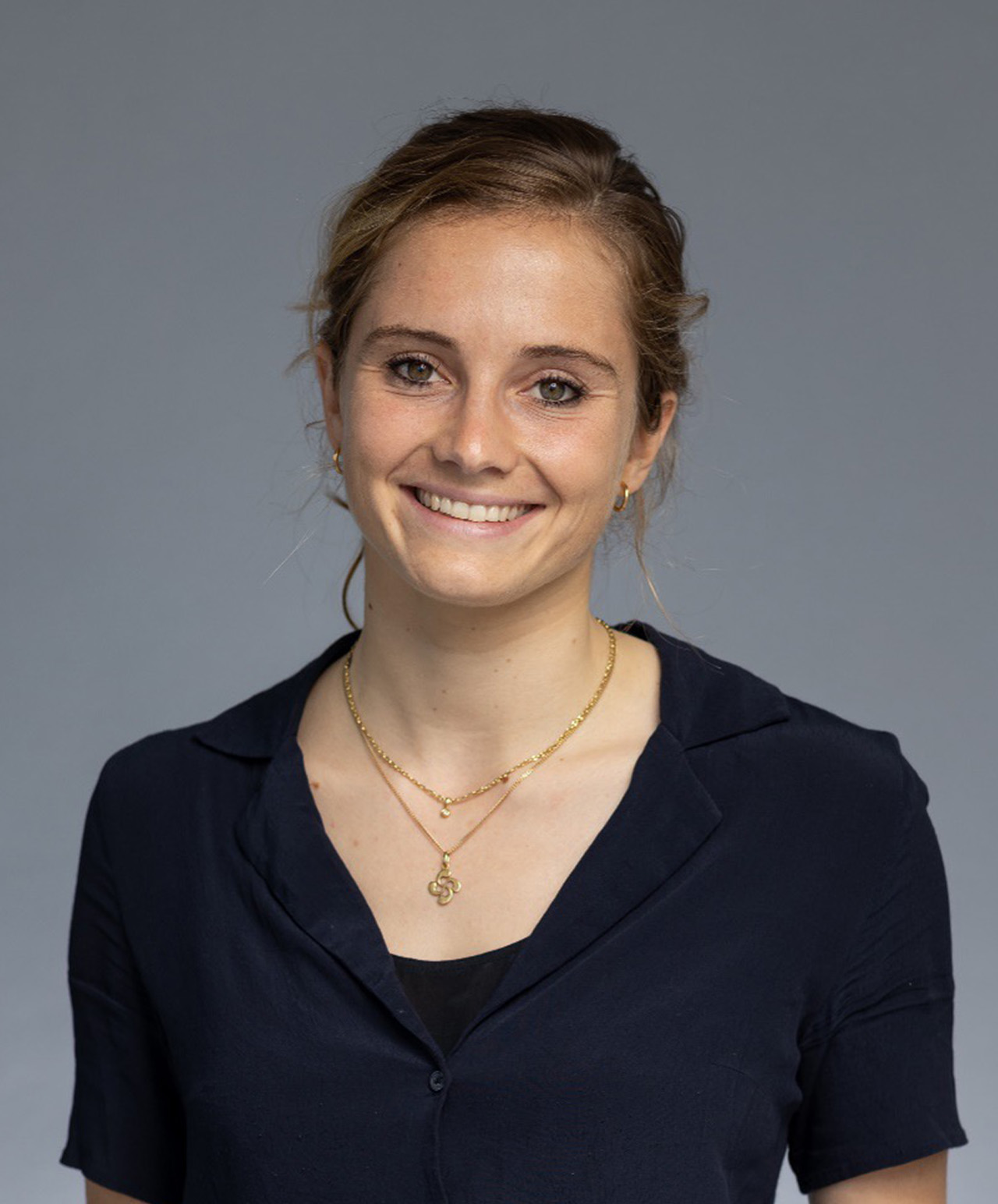
The chemist who put the energy back into CO2.
She grew up surfing the Basque coast. Now she builds machines that eat factory smoke and spit out plastic.
CO2, she likes to point out, is exhausted. A combustion waste with no energy left in it - the ash of the modern economy. Most of the climate world wants to bury the stuff underground and forget it. Sarah Lamaison wants to feed it into a machine, pump in renewable electricity, and watch ethylene come out the other end.
Lamaison runs Dioxycle, the company she co-founded in 2021 with David Wakerley, splitting its life between Paris and the Bay Area. The product is an electrolyzer - a stack of catalytic cores fed water, electricity, and carbon dioxide. Oxygen bubbles off as the only byproduct. Ethylene, the molecule behind a staggering share of the world's plastics, comes out the other side.
Ethylene is usually cracked out of fossil hydrocarbons in some of the dirtiest plants on Earth. In France it ranks third for emissions, behind only steel and concrete. Dioxycle's bet is that you can make the same molecule from waste carbon and still undercut the incumbents on price. Lamaison calls it a "green discount" - the heretical idea that the clean version might simply be cheaper.
That cost obsession is not branding. Electricity is roughly half of what it costs to run the process, which is why the company designs custom catalytic cores from special metal alloys squeezing every electron for efficiency. Decarbonization that loses money, she argues, does not scale. Decarbonization that makes money does.
In July 2023 investors agreed. Breakthrough Energy Ventures and Lowercarbon Capital co-led a $17 million round, with Gigascale Capital joining, to push the first industrial prototype onto a real factory floor. The phrase she keeps returning to: "recycling, on a molecular level."
The principle is borrowed from photosynthesis: a leaf takes CO2 and sunlight and builds something useful. Dioxycle swaps the leaf for an electrolyzer and the sunlight for a wire.
She was raised in the Pays Basque, in the far southwest of France, by the sea. The path into chemistry started there, with a stubborn wish to keep ocean wildlife from being cooked by a warming climate. She still surfs.
The credentials stacked up fast: an engineering degree from Ecole Polytechnique, a master's in chemistry at Cambridge, then a PhD on artificial photosynthesis run across two continents - Marc Fontecave's lab at the College de France and Thomas Jaramillo's at Stanford - followed by a Stanford postdoc.
At Cambridge she met David Wakerley, a chemist from Nottingham who grew up watching the cost of coal mining up close. Lab buddies first, co-founders later. Their shared work on CO2 electrolysis produced patents, prizes, and eventually a thesis worth commercializing.
The pivot from scientist to founder, she says, is less a leap than a symptom. "You go from researcher to entrepreneur when you're passionate about your research's application." She trained for the jump through HEC's Challenge+ entrepreneurship program and started turning prototypes into a business.
She is blunt about the friction along the way - the underpayment of researchers in France, the patchy support for energy-transition startups. And she has a standing message for women talked out of their own ambition by impostor syndrome: "Try anyway. Try even if things seem impossible."
Understand the technology from the smallest scientific detail to the big-picture potential - and then go sell it.
French Young Talent Award for Women in Science, for PhD work on electrocatalytic CO2 conversion.
Co-founds the company with David Wakerley. Named a Breakthrough Energy Innovator Fellow. Wins the French national i-Lab Innovation Prize.
Forbes 30 Under 30. Series A led by Breakthrough Energy Ventures and Lowercarbon Capital. Speaks at Stanford eCorner's Entrepreneurial Thought Leaders series.
Recognized for Dioxycle's carbon-to-chemicals technology.
Part of the Bill Gates-backed cohort betting on hard climate tech.
France's national deep-tech award, shared with David Wakerley.
Most of the climate conversation around carbon stops at capture - pull the CO2 out of a smokestack or the air, then stash it somewhere it can't do harm. Lamaison works on the half that comes after the comma: utilization. Once you have the carbon, what do you do with it that anyone will pay for?
Her answer is to treat CO2 not as garbage to entomb but as a raw material that the chemical industry already needs by the megaton. Carbon monoxide, formic acid, ethanol, ethylene - the small, energy-rich molecules that conventional chemistry currently distills from oil and gas. Dioxycle's electrolyzers aim to make those same molecules from emissions, electrically, on site.
The strategic edge is geography-agnostic and cost-first. The company was born in France but built early to serve clients on both sides of the Atlantic, and the whole pitch lives or dies on a single number: the price of the output. If clean ethylene costs more than fossil ethylene, the world keeps buying fossil ethylene. So the engineering goal is not merely "green" - it is "green and cheaper."
Dioxycle is a two-founder story. Lamaison handles the company as CEO; David Wakerley, from Nottingham, runs the technology as CTO. He had spent the better part of a decade on carbon-dioxide recycling - Marie Curie and Lindemann fellowships, key published papers - before the two turned a body of lab work into a startup.
What they shared was a thesis, not just a friendship: that electrochemistry could be made efficient enough to compete with century-old petrochemical processes. The early proof points - patents, the i-Lab prize, the L'Oreal-UNESCO recognition - were academic. The next ones are industrial: prototypes on factory floors, partners willing to buy carbon-made chemicals at scale.
The investor list reads like a who's-who of hard climate tech. Breakthrough Energy Ventures, the fund anchored by Bill Gates, and Lowercarbon Capital co-led the Series A, with Gigascale Capital joining. These are not patient-capital tourists; they back companies aiming at gigaton-scale emissions, and they wrote the check on the strength of the cost argument.
Ethylene sits third on the country's emissions podium. It is also everywhere - in packaging, pipes, textiles, and the polyethylene that wraps almost everything. Decarbonize it and you move a very big needle.
Relative ranking, illustrative. Source: Dioxycle / TechCrunch, 2023.
At Stanford eCorner's Climate Tech Insights, Lamaison maps where carbon capture is heading - and hands founders the unglamorous advice that actually builds companies.
Across her Stanford eCorner talks, Lamaison keeps circling the same hard-won themes - the ones that separate a lab result from a company.
Her clipped version: "Talk to clients, but don't just talk." Listening is the first engineering input. A chemical nobody will buy is just a science fair project.
She calls it "the curse of complex systems." An electrolyzer is catalysis, fluid dynamics, materials, and economics tangled together - you have to hold all of it at once.
Know the technology "from the smallest scientific detail to the big-picture potential." Founders who can only do one altitude tend to stall at the other.
Her advocacy runs parallel to the company. She has argued publicly for paying researchers better in France and for sustaining support for energy-transition startups past the demo stage. And she keeps a blunt line ready for any woman who has been talked out of trying: the work is too important to be lost to self-doubt. The aspiration underneath all of it is unfussy - make industrial decarbonization pay for itself, so the market does the scaling that goodwill never could.