
Walk into a warehouse club with two children and the enormous boxes begin to look oddly reasonable. Cereal disappears. Berries vanish. Paper towels seem to evaporate. A family of four has enough daily demand to turn a shelf of bulk goods into a plausible budget strategy. But plausible is not the same as profitable.
At the standard prices listed by Sam’s Club in September 2026, Club membership costs $60 a year and Plus costs $120. The first number is less intimidating when divided by 12: Club has to produce $5 of genuine monthly savings to pay for itself. That is the useful threshold. It is also low enough that a family buying several reliable staples can cross it without moving every grocery trip to a warehouse.
For a family of four, Sam’s Club is usually worth testing and often worth keeping. Begin with Club. Upgrade to Plus only when your receipts or repeated use of delivery and shipping prove the extra value.
The fee is the smallest part of the decision
The USDA’s June 2026 food plans put monthly at-home food costs in the hundreds of dollars for each adult and child, varying by age, sex and spending plan. Against a four-person grocery budget, a $60 annual fee is a thin slice. If a household spends $1,200 at Sam’s Club in a year, an average 5 percent advantage over its realistic alternatives would recover the fee. At a 10 percent advantage, only $600 of annual purchases is required.
Those percentages are scenarios, not a promise about Sam’s Club prices. Grocery prices vary by market and week. Supermarket loyalty offers can beat a warehouse unit price. A giant package can also have a low cost per ounce and a high cost per ounce actually consumed. Any calculation that ignores waste is flattering the warehouse.
Annual spend needed to recover a $60 Club fee
A sensitivity test based on the average savings your own price comparison finds.
What families are actually buying
The dependable case for membership is not a heroic monthly haul. It is a short list of fast-moving products: detergent, paper goods, lunch-box snacks, rice, eggs, meat that can be portioned and frozen, and whichever store-brand items pass the family taste test. The exact list is personal. A toddler household and a home with two teenagers barely inhabit the same grocery economy.
Independent reviews broadly agree on the pattern. The Kitchn points to fuel, tires, prescriptions and eyewear as possible sources of value, while warning that a bulk trip can strain a tightly timed weekly budget. Prudent Reviews finds the fit strongest for larger households with storage and a nearby club. Kiplinger’s warehouse-club guidance warns that produce, dips, oils and other perishable or slow-use goods can become false bargains.
A warehouse club rewards routines, not optimism. Buy the household you have, not the household that will suddenly eat a bushel of avocados.
Sam’s Club itself operates on a limited-assortment model. Rather than carry every brand and size, it buys a narrower range in large quantities. That can simplify a trip and support lower prices. It also reduces choice. If a child will only eat one cereal or a family needs small quantities for dietary variety, the warehouse pack may solve the retailer’s economics better than the household’s.
Club first, Plus later
Both tiers include two cards for people in the same household, member fuel pricing, Instant Savings, Scan & Go and curbside pickup. Club pickup is free on eligible orders of at least $50. Plus removes that pickup minimum and adds early shopping, free eligible shipping over $50, free eligible delivery from the club over $50, and 2 percent Sam’s Cash on qualifying purchases.
The Plus reward has a clean starting calculation. The upgrade costs $60 more than Club. At 2 percent, it takes $3,000 in qualifying annual purchases to earn that $60 back. That is $250 a month. But the word qualifying matters. Current terms exclude fuel, alcohol, tobacco, gift cards, milk and certain dairy products, plus direct-shipped and delivered online orders, among other categories. Sam’s Club caps Plus earnings from qualifying purchases at $750 per membership year.
Delivery can change the result sooner. Sam’s Club lists a $12 delivery fee for Club members, while eligible $50 orders are free for Plus members. Five avoided $12 fees equal the $60 upgrade difference. A parent who regularly orders from the club may justify Plus without reaching $3,000 in reward-eligible spend. A family that enjoys browsing in person may value those deliveries at zero.
Club fits when
- You shop in person or place $50-plus pickup orders.
- You want the lowest break-even hurdle.
- You are still learning which bulk items work.
Plus fits when
- You spend roughly $250 monthly on qualifying goods.
- You will use delivery at least several times a year.
- Shipping, early hours or no-minimum pickup saves real time.
Convenience belongs in the ledger
A price-only review misses why some memberships survive year after year. Scan & Go lets shoppers scan and pay in the app. Sam’s Club said in 2024 that adoption had climbed 50 percent in three years and one in three members was a regular user. For a parent managing a cart and two impatient children, skipping a checkout line is not an abstract perk.
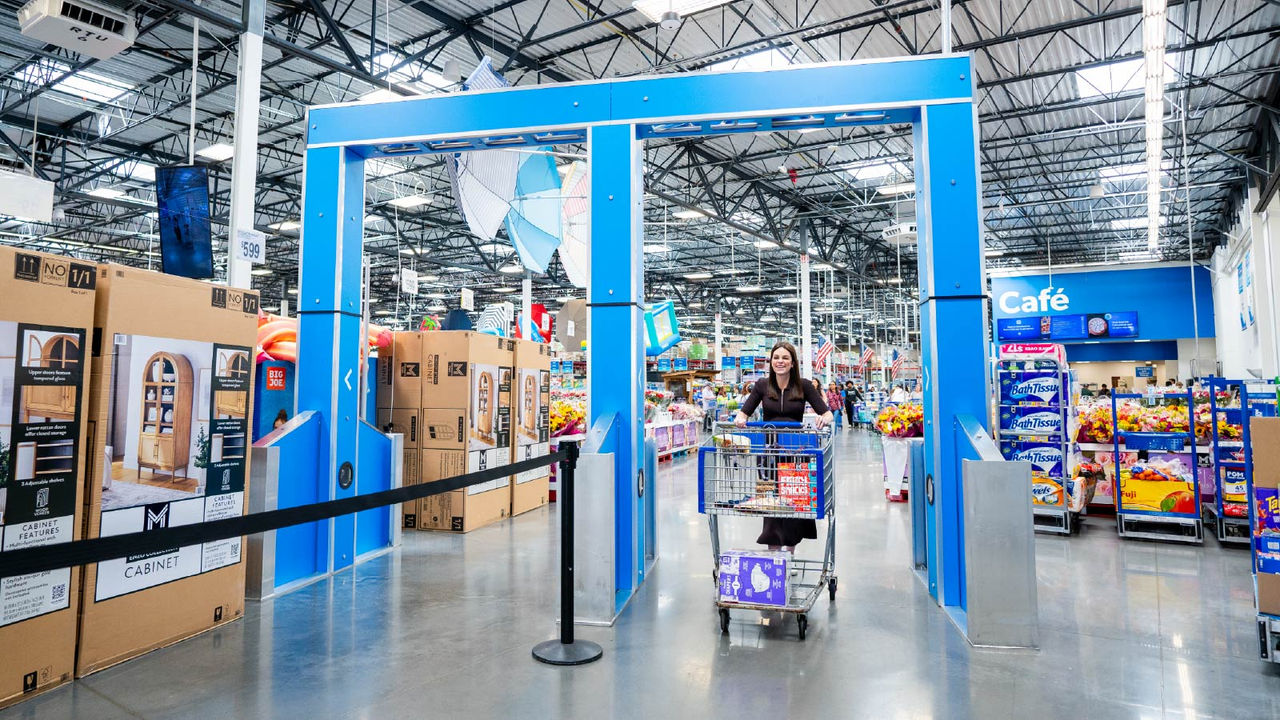
Distance works in the other direction. A special 24-mile round trip consumes fuel and time. A club beside the school run can be useful at lower spending levels than one across town. The same goes for storage. A chest freezer and dry basement turn bulk chicken and paper products into inventory. A small apartment turns them into furniture.
Cash flow matters too. A larger pack may be cheaper per unit but demand more money today. Families balancing bills week by week may reasonably choose a higher unit price and a smaller total. The right calculation respects both annual savings and the timing of the bank balance.
Run a four-week household audit
A generic basket comparison expires quickly and may not resemble your basket. A short, mildly boring experiment produces a better answer. Use current local prices and preserve normal behavior. Do not assume the family will start eating different meals simply because the package is larger.
- Choose ten repeat purchases. Use products that appeared on receipts at least twice last month. Include groceries and household goods.
- Compare usable units. Record price per ounce, count or load at Sam’s Club and at the store you would otherwise use. Adjust for coupons you reliably redeem.
- Price the friction. Add extra mileage, likely delivery fees and any storage purchase. Give saved time a value only if the perk changes your routine.
- Subtract waste. Weigh or estimate what spoils, goes stale or remains unwanted. A quarter of a discarded package raises its usable unit cost by one-third.
- Annualize cautiously. Multiply the four-week result by 12, not 13, to leave room for vacations and irregular months. Keep Club if the margin clears $60 comfortably.
There is a useful safety valve. Sam’s Club’s current terms say dissatisfied members can cancel and receive a refund of the amount paid for the current membership year, with exclusions for some third-party or sponsored memberships and limits on Plus cancellations or downgrades. Read the terms that apply when joining. Introductory offers also change, so judge long-run value at the standard renewal price and treat a promotion as a first-year bonus.
The verdict for four
A family of four starts with an advantage: enough consumption to make many bulk packages sensible. It still needs discipline. The strongest candidate lives near a club, has pantry or freezer space, buys a stable set of staples and can resist the center aisle. The weakest candidate drives out of the way, shops for novelty, loses food to spoilage or needs every grocery bill to stay small.
For that reason, the best first move is Club, not Plus. Its $5 monthly hurdle is modest, the household gets two cards, and the family can learn which products belong in its rotation. After several months, total the purchases that actually qualify for Sam’s Cash and count the deliveries or shipments you would have paid for. If those benefits exceed $60, upgrade. If they do not, the basic tier can still be doing its job.
Sam’s Club does not need to become the family’s only store. Fresh produce may come from a supermarket, spices from a smaller grocer and bulk staples from the club. The winning system is rarely loyalty for its own sake. It is a route through several stores in which each purchase has a reason.
There is one final discipline worth stealing from small businesses: review the inventory before reordering. Once a month, look through the freezer and pantry before opening the app. Move older food forward, build two dinners around what is already there, and delay the next warehouse trip if the household is carrying too much. This habit protects more money than chasing a temporary discount. It also reveals the products that deserve a permanent place on the list. If the detergent always runs out, the children finish the same snacks and frozen portions reliably become dinners, those are working assets. Everything else has to earn its shelf space again.
Frequently asked questions
Is Sam’s Club worth it for a family of four?
Often yes, when the club is nearby, storage is adequate and repeat purchases save at least $5 a month after waste and travel. Test the claim with your own ten most-bought items.
How much are the memberships?
Standard annual pricing shown in September 2026 is $60 for Club and $120 for Plus. Temporary first-year promotions may be lower.
When does Plus pay for itself?
The $60 upgrade is recovered at $3,000 in purchases that earn the 2 percent reward. Delivery, shipping and pickup benefits can make it worthwhile sooner.
Does fuel earn the Plus reward?
No. Fuel is among the categories excluded from the Plus membership’s 2 percent Sam’s Cash under current terms, though members may still receive member-only pump pricing.
Can a member cancel if the math does not work?
Sam’s Club publishes a membership satisfaction guarantee that can refund the current-year fee, subject to exclusions and limits. Check the current terms for the membership and purchase channel.