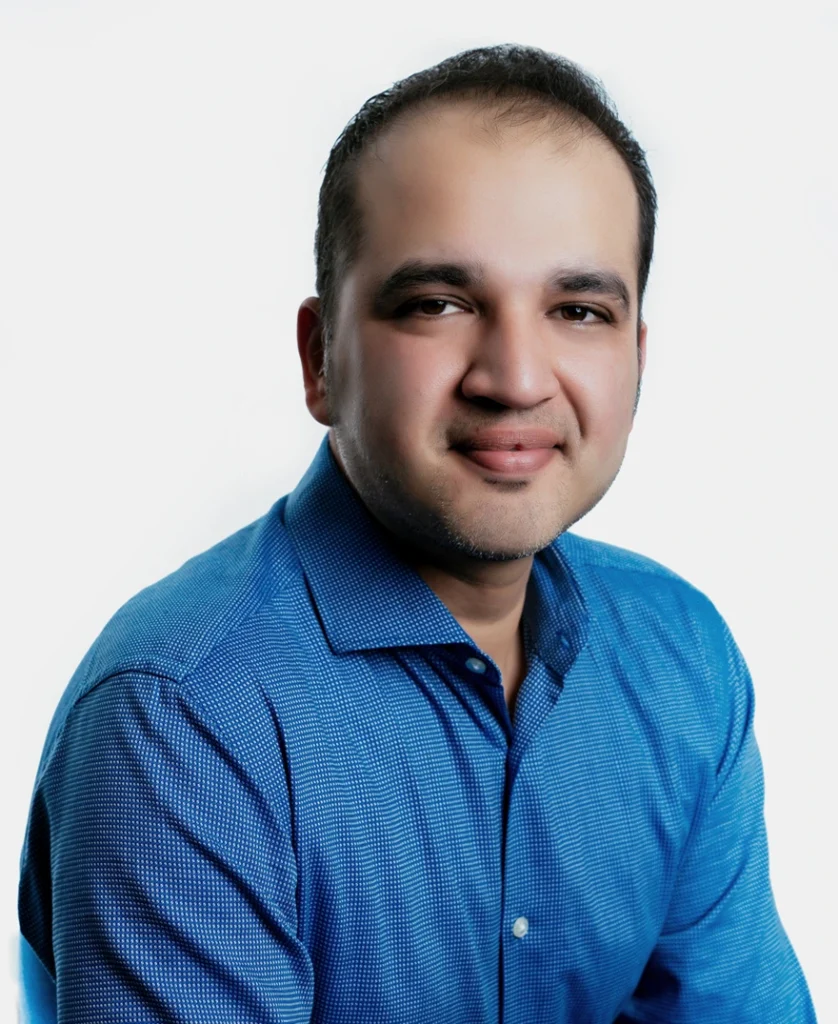
The Fund That Wasn't Supposed to Start Small
Most venture funds start with a number and then go find a thesis. Touring Capital started with a thesis and found itself oversubscribed at $330 million. Samir Kumar, Co-Founder and General Partner, has been working toward that thesis for a long time - longer than most people realize. Before his name appeared on a press release, it was attached to board seats at companies like Netradyne and Syntiant, and before that, to product roadmaps at Qualcomm's corporate R&D lab, where he was running early-stage validation for embedded deep learning before anyone called it AI.
That's the through-line. Not Silicon Valley pedigree. Not a famous firm. A specific, sustained conviction that artificial intelligence would eventually run in every piece of enterprise software worth using - and that the interesting moment would be when companies crossed from promising to proven.
"AI infrastructure is moving beyond single-cloud models. As inference workloads scale, companies need flexibility across hardware, geography, and cost structures. Parasail has built the control layer that makes that possible."Samir Kumar, April 2026
Touring Capital's focus is that inflection point: companies approaching product-market fit in AI-powered software. Not the research bet. Not the Series D. The moment when the question shifts from "does this work?" to "how fast can we grow?"
From Mechanical Engineering to Managing $330 Million
Samir was born in New Delhi and grew up in New York. He studied mechanical engineering at Cornell - a discipline that teaches you to think about systems, constraints, and failure modes before you think about features. That frame stayed with him. He joined Microsoft around 2000, working as a technology specialist before moving into product management for enterprise mobility. Nine years. Long enough to understand how large organizations actually adopt software, which is slower and stranger than anyone who has never sold to IT departments imagines.
Then came Palm, where he ran a product line. Then Samsung, where he was Director of North America Technology Sourcing. These weren't lateral moves; they were a deliberate survey of the hardware-to-software stack at a pivotal moment - smartphones arriving, enterprise mobility fragmenting, and the fundamental question of where intelligence would live inside devices starting to take shape.
Qualcomm's corporate R&D division answered part of that question. As Senior Director for business development and product management, Samir led early-stage product validation and strategy for embedded and on-device deep learning. This was before "edge AI" became a marketing term. He was working on what happens when machine learning models don't live in a data center - when they run on the hardware in your hand or your car. The foundational question that is now the subject of billion-dollar infrastructure bets.
The M12 Years: Learning to Write Checks
M12 - Microsoft's corporate venture arm - is where Samir made the formal transition from operator to investor. As Managing Partner and General Director from 2018 to 2023, he led investments in AI, deep tech, and hardware-enabled software. The portfolio includes names that now look prescient: Applied Intuition, which became one of the defining autonomous vehicle software companies; PsiQuantum, which raised $215 million on its quantum computing thesis; Syntiant, the AI chip company; and Netradyne, which built AI video telematics for fleet safety and would follow Samir to Touring Capital's portfolio.
In 2020, Global Corporate Venturing named him one of its Rising Stars - a recognition of investors who demonstrate unusual judgment before they have a famous track record to point to. The track record came anyway.
Samir backed Applied Intuition (autonomous vehicle software), PsiQuantum ($215M quantum computing raise), Syntiant (AI chips, $25M Series B), and Netradyne (fleet safety AI) - before co-founding Touring Capital and backing Netradyne again from his own fund.
Building the Fund from the Ground Up
In 2023, Samir joined Nagraj Kashyap and Priya Saiprasad - both fellow veterans of M12 and SoftBank Vision Fund - to launch Touring Capital. Three GPs. One thesis. A focus on early-growth-stage companies with AI at the core and product-market fit in sight.
The name is deliberate. Touring, as in going on a journey with founders - not parachuting in for a board seat and a headline. The firm describes its approach as "Authentic Intelligence": grounded counsel from experienced networks, genuine support as a team extension, and what they call steadfast excellence throughout the entrepreneurial journey. That's the kind of language that sounds like marketing until you notice the specific portfolio it produced.
Fund I closed in September 2025 at $330 million - oversubscribed, which tells you something about how LPs read the track record. The plan is 18 to 20 companies, primarily US-based, with secondary focus on Europe, India, and Australia. The check size is early-growth: companies that have crossed from "building" to "scaling," where the AI thesis has moved from speculation to evidence.
A Note on the Agent Risk
Samir is not a techno-optimist who ignores the seams. On AI agents specifically, he has flagged something that most investors prefer not to discuss: "Your agent's behavior can be influenced by what it's hearing from other agents, and that can cause it to do unexpected things." This is not a footnote. It's a thesis about where enterprise AI risk actually lives - not in the model, but in the orchestration layer. His portfolio reflects that: Parasail building the control layer for AI deployment, SafeBase handling trust and security communication, Exaforce on AI-powered threat response.
"Your agent's behavior can be influenced by what it's hearing from other agents, and that can cause it to do unexpected things."Samir Kumar, on AI agents
The Specific Bet
Touring Capital's portfolio is a map of the enterprise AI landscape as Samir sees it. Fleet safety. Senior care. Legal workflow. Financial data. Materials science. Automotive dealerships. The diversity is not scatter - it's a structured view of where AI creates genuine productivity gains in industries that have been slow to modernize.
In April 2026, the firm co-led Parasail's $32 million Series A. Parasail builds what it calls a "supercloud" - an abstraction layer that lets developers run AI inference across hardware, geographies, and cost structures without being locked to a single provider. This is infrastructure betting, and it reflects Samir's deeper conviction: the companies that win the enterprise AI era will be the ones that solve the deployment and orchestration problem, not just the model problem.
Netradyne - which he backed at M12 and again at Touring - uses AI video telematics to make fleets safer. SafelyYou applies AI to senior living care. CuspAI generates materials science discoveries. Daloopa automates financial data sourcing. Pixis runs codeless AI infrastructure for marketers. Every company on the list solves a specific, measurable problem for a specific, paying enterprise buyer. No moonshots. No demos. Products with customers.
The Person Behind the GP
Samir was born in New Delhi and raised in New York. He studied mechanical engineering - a discipline that hasn't visibly left him. His outside interests run toward systems and frontiers: electronic music, flight simulation, amateur astronomy. Star Trek is a cited formative influence on his technological worldview, which explains some things about where he thinks AI is heading. The Federation's technology didn't just improve productivity. It changed the assumptions about what was possible.
His X/Twitter account, @sk121, has been active since September 2007 - before the iPhone had an App Store, before LinkedIn was a verb, before "AI" referred to anything a venture capitalist would fund. He has been watching this particular wave build for a long time.