The most confusing button at checkout, finally solved
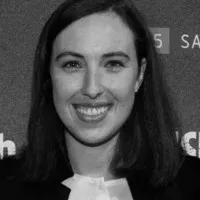
Every year, Americans leave roughly $450 each sitting in their health savings and flexible spending accounts. Not because they don't want the money. Because spending it is a maze of receipts, eligibility rules and letters nobody wants to write. Sam O'Keefe looked at that pile - about $150 billion nationwide - and saw a payment problem hiding inside a paperwork problem.
O'Keefe is the co-founder and CEO of Flex, the San Francisco fintech that describes itself, plainly, as "Stripe for HSA/FSA payments." Flex lets health and wellness brands accept those tax-advantaged dollars at checkout the same way they accept a credit card. One button. No shoebox of receipts. The company launched in 2023 and went through Y Combinator's Summer 2023 batch, and it has spent the years since turning a benefits headache into a line of code merchants can install.
The idea sounds small until you notice who's plugging it in. Therabody. NordicTrack. Balanced Body. Alo Wellness. Omnilux. Dermstore. Equinox, whose membership flow now routes through Flex's checkout. These are not fringe experiments. They are brands that discovered a simple truth: when a customer can pay with money that was going to expire anyway, they buy more, and they hesitate less.
We're building the payment infrastructure for the health economy.
Before Flex, a career spent in the boring parts
O'Keefe did not arrive at payments by accident. The résumé reads like a tour of the least glamorous, most load-bearing corners of tech. At Unit21, the work was fraud, risk and compliance software - the machinery that decides whether a transaction is safe to let through. At Google, the roles ran from Global Head of Startup Programs for Google Cloud to time inside the Area 120 incubator to an operating role at Gradient Ventures. Different logos, one instinct: build the systems that other companies quietly depend on.
That instinct is all over Flex. HSA/FSA payments are, underneath, a compliance problem wearing a checkout costume. Which items qualify? Which need a Letter of Medical Necessity? How do you prove a purchase was legitimate to the IRS without turning the buyer's day into a claims process? O'Keefe's answer was to automate the tedious part out of sight. For "dual-use" products - the ones that need documentation - Flex can generate a Letter of Medical Necessity through an integrated telehealth consult completed in minutes, right in the flow of buying.
It is a founder's version of a magic trick. The hard, regulated, paperwork-heavy machinery runs backstage. The customer sees a button.
It's very exciting to see companies like DoorDash, Instacart, Walgreens starting to roll this out. What it's really doing is increasing awareness for consumers.
Make it as forgettable as PayPal
Ask O'Keefe where this goes and the ambition is almost aggressively unglamorous: make "pay with HSA/FSA" as ubiquitous, and as forgettable, as tapping PayPal. The dream is not a flashy consumer brand. It's a default. A payment rail so ordinary that shoppers stop thinking about it, the way they stopped thinking about entering a card number a decade ago.
The numbers suggest the pitch lands. Flex says its customer base grew 5x over a single year. Retailers using it report average order values climbing about 50%, checkout conversion lifting by as much as 30%, and free trials converting to paid subscriptions about 20% more often. Those aren't vanity metrics; they're the reason a wellness brand picks up the phone. Found money changes behavior.
In September 2025, investors made the same bet. Flex closed a $15 million Series A, co-led by First Round Capital and Core Innovation Capital, with Cameron Ventures, Rethink Impact, Y Combinator and Liquid 2 joining. Total funding to date sits around $18 million. In O'Keefe's framing, the raise was less a milestone than fuel: "Flex is scaling to meet the demand from health and wellness brands who want to drive growth by making HSA and FSA payments simple, compliant and seamless."
The co-founderNot a solo act
Flex was co-founded with Miguel Toledo, whose own path threads through machine-learning infrastructure at Lyft's Level 5 self-driving group, fraud and anti-money-laundering products at Unit21, and monitoring systems at Google Cloud. It's a founding pair built for exactly this problem: two people who spent years making high-stakes, invisible systems behave. Payments that touch healthcare rules and IRS scrutiny are precisely the kind of thing that rewards that background.
Put the pieces together and the story is coherent in a way founder stories rarely are. A builder drawn to infrastructure. A market where $150 billion goes unspent for want of a better button. A co-founder who speaks the same language of risk and reliability. Flex isn't a pivot or a trend chase. It's the obvious next move for someone who has always preferred building the plumbing over decorating the house.
The wellness industry spent the last decade obsessed with the product on the shelf. O'Keefe is betting the next decade is about how you pay for it - and quietly making sure the answer runs through Flex.