At fourteen, Salo Serfati brought a Ziploc bag or a Coke can to school to collect spare change for charity. A container, some coins, a reason to give. It was a small piece of fundraising infrastructure, sufficiently portable to fit into a school day. Years later, he would be working on a rather larger version of the same problem: how to get money from someone willing to give it to an organization ready to use it.
That early effort helped raise $1,547.49 in August 2013. The forty-nine cents give the number its character. Someone had counted the small change. Serfati’s subsequent career has taken him into software engineering, venture-backed payments and the complications of charitable finance. Yet the school collection offers a useful place to begin. Giving requires a practical arrangement. Even a generous impulse needs somewhere to land.
A promise with an administrative department
Born in Caracas and raised in Miami, Serfati attended Scheck Hillel Community School and later the University of Pennsylvania. His Jewish upbringing supplied a recurring obligation: ma’aser, the practice of setting aside a tenth of one’s income for charity. When he graduated in 2020 and began earning, he put that commitment into a separate checking account and tracked donations in Excel.
A spreadsheet is a peculiar companion to a moral promise. It can tell you what you owe, what you have given and whether the numbers reconcile. It also gives every act of generosity a small administrative department. The intention may be personal; the bookkeeping is quite capable of taking over the evening.
With Aaron Kahane and other collaborators, Serfati tried a giving card called MyTenPercent. Chariot’s account of its beginnings calls the product MyTen. The card was designed to help people manage their giving commitment. As the founders explored donor-advised funds, they found a broader payments problem. Money already earmarked for charity could be awkward to use when a donor encountered a cause online. That gap became the business.
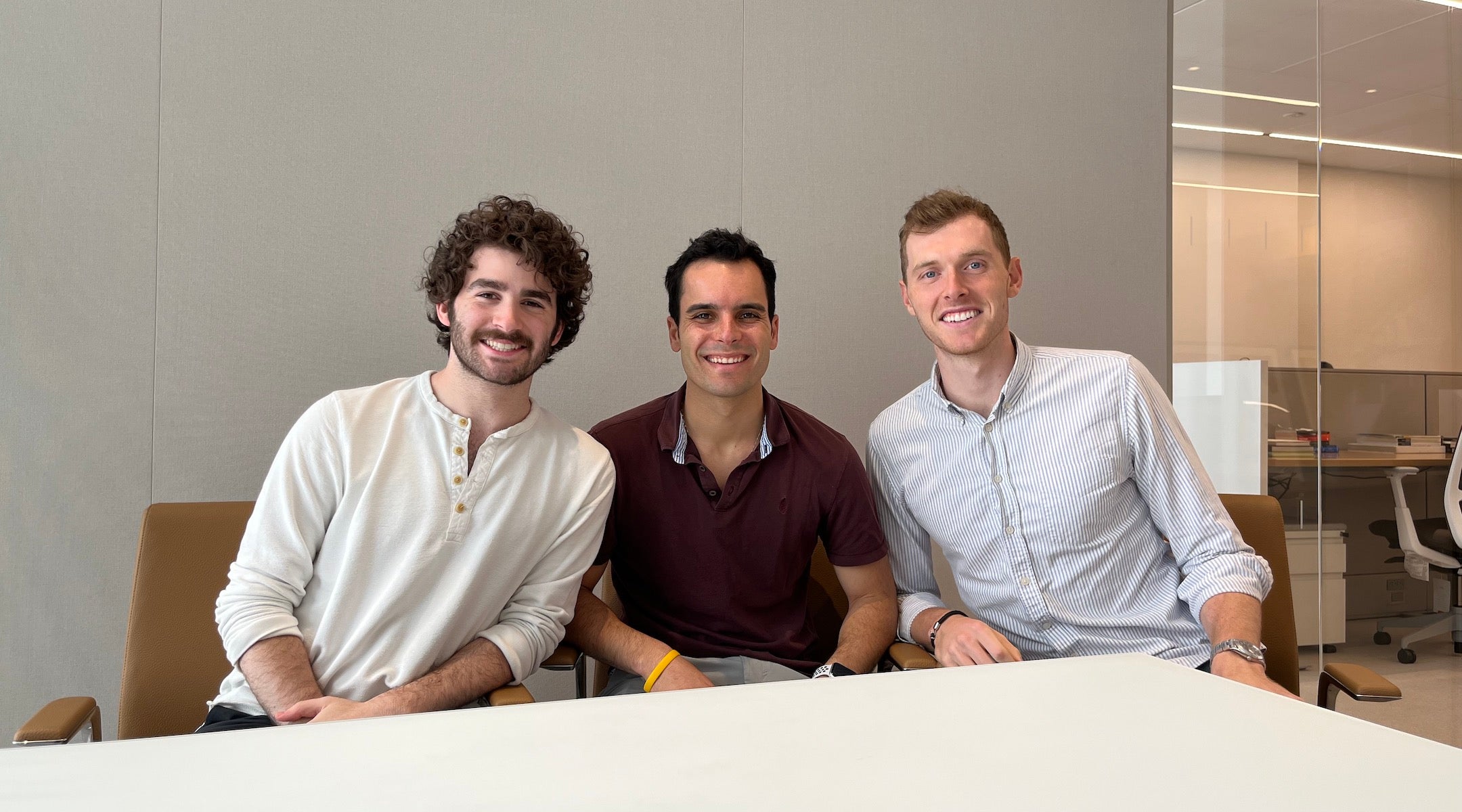
The engineer had already been meeting people
Before Chariot, Serfati worked as a backend engineer at BlackRock and as a founding engineer at Forage, a payments platform for food stamps. These were jobs concerned with what happens behind a screen: the systems that make a transaction possible after someone has decided to act. The charitable checkout problem belonged to familiar technical territory, even if its motivation came from his own giving.
His earlier experiments were social as well as technical. At eighteen, he co-built a college roommate app that attracted more than 5,000 users in two months. His founder biography records five interns, more than fifty brand ambassadors and no customer acquisition spending. Finding a roommate and sending a charitable gift have very different stakes. Both require people on separate sides of a relationship to find a workable connection.
Serfati was also a President’s Innovation Prize finalist at Penn. That distinction belongs to the period before the CEO title, when he was already trying to turn ideas into things people would use. It is easy to describe an engineer through code alone. An app with ambassadors and thousands of users suggests another preoccupation: getting the system out into the world.
A share of income set aside for charity. The commitment preceded the company.
The missing name on the gift
A donor-advised fund, usually shortened to DAF, is a charitable giving account from which a donor recommends grants to nonprofits. Chariot’s DAFpay places that option on donation forms, alongside familiar ways of paying. Serfati’s initial proposition was straightforward: bring the experience closer to using a credit card. A cause should be able to meet a donor at the moment the donor wants to help.
As he explored the problem, he became interested in the information traveling with the payment. In his 2024 essay on bringing DAF payments online, he compared the old experience to receiving an unexpected delivery: a gift arrives, but the recipient may have little idea who sent it or why. The nonprofit has money to acknowledge and a relationship it may struggle to identify.
That observation changes the meaning of a payment button. A completed donation can introduce two parties, allowing an organization to respond while the donor’s interest is fresh. The thank-you becomes part of a continuing conversation. Serfati’s writing returns to those connections because the transaction carries something beyond its dollar amount: an opportunity for the donor to stay involved.
He noticed when the emails stopped
Serfati had experienced the disconnect himself. In a conversation with Scott Harrison, founder of charity: water and a Chariot advisor, he described supporting the organization’s monthly giving community, The Spring. When he paid by credit card, he received monthly emails about the work his gifts supported. When he switched the payment to his DAF, those updates stopped.
The money still represented a commitment. The change in payment method had made that commitment harder for the organization to recognize. It is an unusually concrete example for a payments CEO to bring to an interview: the missing email in his own inbox. It lets the reader see how a technical choice can alter the ordinary experience of belonging to a cause.
Harrison’s interest in Chariot included this problem of limited donor information. The exchange places Serfati in two roles at once. He is asking questions as a founder, and recalling the experience as a donor. When he talks about improving connections, he has a particular interrupted conversation in mind.
Dinner on 56th Street
In October 2023, Mitch Stein went to dinner with Serfati prepared to decline Chariot’s full-time offer for the fourth time in nine months. Stein had been consulting with the company. He liked the founders and the possibilities of DAFpay, but he was concerned about the difficulty of delivering grant payments to nonprofits with the correct accompanying information.
Over dinner at a Greek restaurant on 56th Street, Serfati described a technical discovery that suggested a route into that problem. Stein’s account makes the attraction clear: he saw founders who would keep searching even if their first approach failed. He joined the journey. The original concept did indeed prove unviable, and further iterations followed.
By May 2025, Chariot was introducing Disbursements, extending its work into how grantmakers send payments and nonprofits receive them. The dinner is a revealing episode in Serfati’s career. A technical conversation changed a colleague’s decision. Persuasion came from showing how the work might proceed, with enough persistence to survive an idea that did not work.
“There’s always a new mini game to be played.”
Salo Serfati, on the changing demands of founding Chariot, 2022
Why a database turns up in his business advice
In February 2025, Serfati wrote about finding business ideas through many-to-many relationships. His starting point was a database problem: multiple users may belong to multiple accounts. A join table keeps track of their relationships. He carried that concept into the world of companies that connect people who need one another.
His advice was to notice where participants on both sides repeat the same manual work. That is a useful clue to how he looks at a market. A recurring chore can reveal a connection that has yet to be organized. The spreadsheet from his own giving life fits comfortably into that way of seeing, though a personal inconvenience alone cannot establish a business.
In a later essay, he credited Chariot’s head of engineering, Matt Magaldi, with changing his approach to product development. Serfati used to begin with wireframes, then work toward business logic and the database. Magaldi began by understanding the world and modeling its relationships. Serfati learned to pay more attention to that foundation. The CEO’s public writing includes the moment a colleague improved his thinking.
- 01 Observe the world
- 02 Model its relationships
- 03 Build the logic
- 04 Design the interface
A reading of Serfati’s November 2025 engineering essay.
Responsibility before the reward
Serfati’s interests reach beyond product design. In May 2026, he republished Lucy Hecht’s interview with him about living a good life, saying it contained many ideas he held. Their conversation linked meaning to responsibility. He described faith and the Torah as the framework through which he understands human purpose and the obligations that follow.
It is a personal philosophy with practical consequences for how he describes work. Meaning comes from commitments rather than from the pleasure a person gets out of fulfilling them. In that account, the difficult parts of a responsibility do not cancel its value. The obligation exists before the reward.
Read beside the tenth-of-income promise, the interview helps explain the continuity in his choices. Giving is something he has organized his life around, then examined as an engineer and pursued as a founder. The company grows out of a practice he was already following. His essays give that practice an explicit moral vocabulary.
The higher mountain may begin with a failed quiz
In August 2026, Serfati published an essay about choosing a direction with limited information. He recalled arriving unprepared for a Hebrew vocabulary quiz in high school. Other students were copying answers. He chose to fail and subsequently became more careful about calendars, preparation and checking his work.
He used the episode to explain why principles can guide a decision when immediate evidence points elsewhere. He also described choosing between an idea for a music-IP marketplace and the giving project that became Chariot. The music idea looked like the larger business to him. The giving project had a team he valued and a purpose he cared about.
These are his retrospective explanations of his choices. Their interest lies in the scale of the examples: a classroom quiz, a startup decision, the same question about direction. His advice to businesses is similarly ordered. Begin with the customer’s largest problem, then consider how to earn revenue by solving it.
After the money moves
Chariot’s progress has brought institutional backing to that personal concern. Maveron led an $11 million Series A in 2024. Its DAFpay product now appears on fundraising platforms including GoFundMe and Givebutter. The borrowed office of the early founders belongs to a different stage of the story.
Serfati’s July 2026 essay, “On Closing the Loop,” looks past the act of paying. He asks how a donor can learn what a gift accomplished. Drawing on a lecture by poker player Annie Duke, he considers the danger of confusing a good outcome with a good decision. Giving presents an additional difficulty: the outcome may be distant, diffuse or hard to see.
He describes Chariot’s work connecting donors, nonprofits and platforms as a way toward better feedback. It remains an ambition, with questions still to resolve. The can of coins gave money somewhere to go. The software gives it a route. Serfati keeps returning to what the giver can learn after it arrives.