Forty-five days is a long time to wait for reassurance. In a case study published by Sailotech, a US payment gateway was taking that long to complete a regression cycle: checking that changes to its software had not broken something that previously worked. The client wanted faster delivery, a better test pass rate and less manual intervention. It already had an automation framework. Owning the machinery, apparently, had not settled the matter.
- Sailotech connects enterprise software to the work happening around it.
- Its customers include manufacturers, finance teams and operators of physical assets.
- Its mix is consulting, ongoing support and products such as iKapture, TestEnsure and XaTTaX.
- The telling evidence is in specific workflows: regression tests, warehouse movements and invoice approvals.
The 25 days hiding in a test cycle
Sailotech’s account describes a proof of concept alongside two other vendors. Its team ran 125 test cases over 30 days, reaching an 80% pass rate. It reworked the existing framework, divided tests according to business impact and built a dashboard for daily results and failures. The reported regression cycle fell from 45 days to 20. The case also reports a 50% reduction in quality-assurance costs. These are Sailotech’s published project results, rather than a forecast for every engagement.
That distinction matters. A passing test is useful only if the test is useful. Sailotech’s account puts considerable weight on selecting critical tests and organizing them into core and functional regression suites. The apparent bottleneck was partly in the arrangement of the work. The response was to change that arrangement, then automate it. The competitive demonstration gave the client a way to compare an approach before committing to a larger engagement.
It is an unusually helpful introduction to an IT consultancy. The familiar vocabulary of transformation becomes a question a buyer can actually ask: which part of this process is consuming time, and what would a credible demonstration look like?
The factory already had an ERP
The same question appears in a different costume at Centum Electronics. The Bangalore-based electronics manufacturer used Infor LN 10.4, an enterprise resource planning system. ERP is where a company organizes orders, inventory, production and finance. Yet the existence of a central system does not automatically give a machine operator an easy way to see the next job.
In its Centum case study, Sailotech describes building a digital shop-floor application on the existing ERP. The work included job execution and tracking at kiosks and mobile devices, barcode-enabled warehouse processes, inventory movements, quality inspections and incident management. Production plans and machine status could reach supervisors, operators and maintenance staff where they worked.
The phrase that explains this best is “Point of Use,” from Sailotech’s case study. It means the information has to arrive at the place where somebody can use it. A manager’s dashboard and a warehouse scanner are different doors into the same operation. Connecting those doors is a substantial part of the company’s proposition.
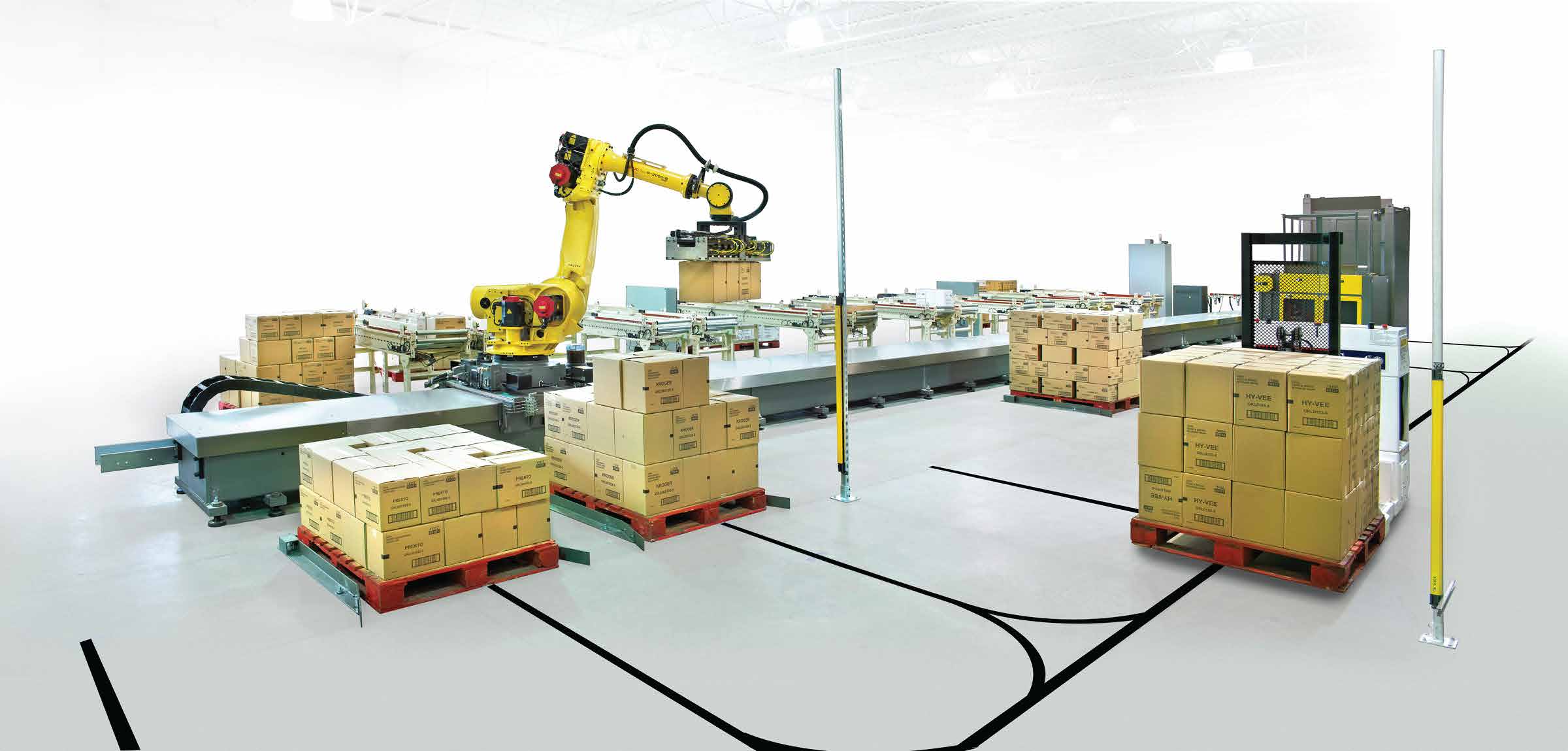
Sailotech’s Integrated Digital Factory offering formalizes that approach through connectivity, production visibility and analytics. Its July 2025 blueprint discusses linking manufacturing execution systems, ERP and IoT, with a continuous trail of information between operations. The practical ambition is modest enough to be valuable: make production data accessible before the person who needs it has finished making the decision.
“Assess, Design, and Co-Innovate”
Sailotech’s stated delivery approach
That places Sailotech in the enterprise integration market, alongside large systems integrators, specialist ERP partners and customers’ own IT departments. Its public materials emphasize a combination of ERP knowledge and applications built around particular operational tasks. The Centum example demonstrates the combination. It also explains why comparing this company solely with a subscription software vendor would miss much of the work being sold.
An invoice has a surprisingly social life
Consider the invoice. Someone sends it. Someone reads it. Someone checks the purchase order, the receipt of goods and the approval. Someone enters it into an accounting system. The document is short; its social calendar is exhausting.
Sailotech’s iKapture combines document capture with accounts payable automation. Optical character recognition extracts data from images and PDFs. The surrounding workflow validates that data, connects it to ERP and gives users visibility into invoice status. The company’s UK service listing describes matching, duplicate checking, approval workflows and a supplier portal. Capturing words is one task. Moving an invoice through the organization is the larger one.
- 01CaptureRead the document
- 02CheckValidate and match
- 03PostCreate ERP record
- 04TrackMake status visible
Simplified illustration of the published iKapture workflow.
Here, unusually, there is a public price worth inspecting. A 2024 G-Cloud 14 document lists an annual iKapture subscription at £15,000 for 300 users and 20,000 invoices, including the supplier portal, hosting, support and regular upgrades. Implementation is separate. The same document lists G-Cloud services such as setup, integration and training at £900 per day. Prices exclude VAT and depend on the final specifications. This is a dated UK procurement example, not a current quote for every customer.
300 users · 20,000 invoices
The economics fit Sailotech’s mixed business model: software subscriptions, implementation projects and ongoing services. Buying the application is one line in a budget. Making it cooperate with an existing accounting environment is another.
The published scope gives that cooperation boundaries. Invoice images must be above 250 dpi; handwritten text is excluded, and email attachments have a 10 MB limit. Longer invoices require review, while extra dashboards and ERP customization can attract separate charges. A buyer can copy a useful habit from these details: bring representative documents to the demonstration, including the awkward ones. Smooth sample invoices make charming guests and poor witnesses.
Another Sailotech product, XaTTaX, addresses Indian GST filing and reconciliation, with e-way bill and e-invoicing capabilities. Its peculiar capitalization is memorable; its purpose is administrative. The common thread is reducing repeated work around enterprise records.
A maintenance request crosses another border
Bhartiya City extends the story beyond the factory. Sailotech’s case study describes a mixed-use development where traditional, manual asset maintenance needed improvement. The implementation brought together Infor EAM, Infor SunSystems, building management systems and IoT devices. Finance and maintenance were being connected as parts of the same operation.
The work included mobile technician access, incident workflows, material tracking, meter readings and billing. Temperature and humidity information could feed condition monitoring. Sailotech reports better visibility for maintenance teams and reduced equipment downtime and major repairs. The interesting detail is the route between physical equipment, a technician’s activity and a financial record. Each belongs to a different department; the asset itself politely declines to care.

Sailotech’s official biography identifies Suresh Babu Inturu as its founder and managing director. His background includes infrastructure management and support for business processes. The company describes an open, performance-based culture built on mutual trust. Its emphasis on assessment, design and joint development is consistent with the operational work in these cases: first understand the routine, then decide what software must change.
Buy the demonstration before the promise
For testing teams, TestEnsure packages reusable test steps, low-code configuration, parallel execution and reporting. Sailotech also publishes libraries of Infor test scripts across finance, procurement, manufacturing and sales. Reusable assets provide a starting point. A customer’s customizations still determine how much further the team must go.
The broader services portfolio spans Infor, SAP, Oracle and Workday, along with migration, application support and managed services. Sailotech announced its Infor partnership in April 2016. Its current Oracle offering includes support for existing E-Business Suite environments as well as cloud services, giving buyers options around systems they already use.
The public-sector route has widened, too. On September 8, 2026, Sailotech announced seven successful G-Cloud 15 offerings: accounts payable automation and test automation, plus Oracle Cloud and four cybersecurity services. That expansion places security and cloud operations alongside the company’s automation work.
A sensible evaluation would follow the logic of the payment-gateway demonstration. Choose a bounded workflow. Establish the starting time, effort or error rate. Test the proposed integration against real inputs and exceptions. Decide who owns the process after launch. This is an inference from Sailotech’s published approach, rather than a promise about the result.
For an organization with repeatable work, accessible data and a clear operational owner, the company’s combination of products and integration services has an intelligible purpose. A bespoke environment or inconsistent documents demand more design and review. The useful test is whether the people doing the work can use the system without embarking on a small expedition. That is where an enterprise software project earns its keep.
Follow the connections
Explore Sailotech, its company blog and digital factory offering. Follow updates on LinkedIn, X and Facebook.
Watch: intelligent data capture demonstration ↗ Watch: ERP test automation implementation ↗