BREAKING SecLogic CEO maps the attack paths hiding in your cloud• SIX-TIME AKAMAI TITAN CLUB WINNER, 2012-2017• CyberQ SHIELD guards the cloud — CyberQ ORO guards the humans• $300K PRE-SEED LED BY SPANACHE.VC• BOSTON × MULTI-CLOUD × ZERO BLIND SPOTSBREAKING SecLogic CEO maps the attack paths hiding in your cloud• SIX-TIME AKAMAI TITAN CLUB WINNER, 2012-2017• CyberQ SHIELD guards the cloud — CyberQ ORO guards the humans• $300K PRE-SEED LED BY SPANACHE.VC• BOSTON × MULTI-CLOUD × ZERO BLIND SPOTS
The founder who'd rather show you the door you forgot to lock than sell you another alarm.
Profile · Cloud Security
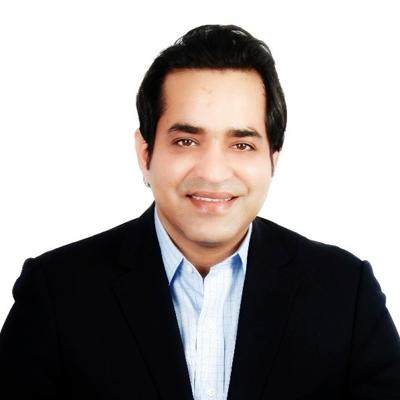
Sachin Johar
He spent twenty years learning how the internet breaks. SecLogic is what he did about it.
Co-Founder & CEO, SecLogicEx-AkamaiBoston, MA
The Story
A map for the cloud you forgot you had
Most security tools shout. They throw alerts at a wall and hope someone's watching. Sachin Johar built a company on a quieter, more uncomfortable idea: the thing that gets you breached is rarely one wide-open door. It's a chain of small, boring misconfigurations - a permission here, a public bucket there, a forgotten container - that nobody ever connected into a single picture. SecLogic exists to draw that picture.
Johar is the co-founder and CEO of SecLogic, a Boston-based cloud security company that he and his partners started in late 2020. The pitch is deceptively plain: give engineering teams and security teams the same view of the same cloud, across AWS, GCP and Azure, and let them see the attack paths before an attacker does. SecLogic calls these "toxic combinations" - individually harmless settings that, stitched together, become a road straight to your crown jewels.
What makes him credible isn't a manifesto. It's the mileage. Before SecLogic, Johar spent the better part of two decades inside the machinery of enterprise networking and security - long enough to watch the cloud go from a cost-saving novelty to the place where companies keep everything that matters, and to watch security teams fall steadily behind the sprawl.
By The Numbers
The receipts
6×Akamai Titan Club 2012-17
~20Years in security
3Clouds covered: AWS GCP Azure
$300KPre-seed raised, 2021
“
You can't secure what you can't see. The cloud's biggest risk is the part you forgot was there.
The Road Here
Twenty years, then a leap
Johar didn't arrive at cloud security by accident. He came up through product strategy and enterprise growth roles - the unglamorous work of figuring out what big organizations actually need and how to sell it to them. Then he spent years at Akamai, the company that quietly keeps a large slice of the internet fast and standing. You don't leave a place like that to start a security company unless you've seen, up close, exactly where it hurts.
By 2019 he'd moved into the investor's seat, advising on cybersecurity and the messy world of IoT, OT and ICS. A year later, he stopped advising and started building.
2003
Enters the technology sector.
2008
Enterprise product & services strategy at Tata Communications.
2011
Head of Product Strategy at Intellisys.
2012
Joins Akamai - growth & expansion across Asia Pacific & Japan.
2019
Venture investment specialist in cyber, IoT/OT/ICS.
2020
Co-founds SecLogic with Mayank Lau and Yashvendra Kashyap.
2021
$300K pre-seed, led by Spanache.vc with India Accelerator.
What He's Building
Two products, one stubborn idea
SecLogic splits the problem the way the world actually breaks - through machines and through people. So there are two products. One watches the cloud. The other watches the humans who can hand it away.
Product 01 · The Machines
CyberQ SHIELD
An AI-driven cloud detection-and-response platform that finds misconfigurations and vulnerabilities, then chases the attack paths they create - and fixes them.
Cloud security posture management (CSPM)
Identity & entitlement management (CIEM)
Kubernetes & container security
Compliance against 15+ frameworks
Product 02 · The Humans
CyberQ ORO
Organization Risk Orchestration. It treats your people as part of the attack surface - because they are - and measures, ranks and reduces human risk before it becomes an incident.
Human risk identification
Organization-wide risk scoring
Employee awareness & resilience
Proactive, not just reactive
In His Own Orbit
A founder who interviews the legends
Johar runs CyberSeed, a conversation series where he sits down with the people who shaped the industry. In one session he interviewed Stuart McClure - the founder of the company behind the original "Hacking Exposed" - to trace how 35 years of the cyber market led to this moment, and where AI and large language models take it next.
It's a tell. The man building a security company would rather ask questions of the people who broke things first than pretend he has all the answers.
The thesis, plainly
Democratize cybersecurity. Give a 30-person company the same centralized visibility a Fortune 500 buys - across every cloud, every identity, every employee.
CSPM++ for the cloud · ORO for the org
Margins & Marginalia
Five things worth knowing
01
Won Akamai's Titan Club six years straight, 2012 through 2017. Back-to-back-to-back is the easy part. Six is a habit.
02
His Twitter handle, @logic_sec, is just SecLogic flipped around. The brand lives even in the username.
03
Stanford for entrepreneurship, IIM Calcutta for global business. One foot in Silicon Valley, one in India.
04
Sits on the GLG council, advising on emerging cybersecurity trends - the founder is also a source.
05
SecLogic runs out of 90 Canal Street, Boston - a US address for an idea with deep roots in Indian venture soil.
06
Co-founded the company with Mayank Lau and Yashvendra Kashyap - three founders, one shared frustration with cloud blind spots.
Where It's Going
Less noise, fewer doors
The cloud was supposed to make things simpler. Instead it scattered every company's most important assets across systems no single person can hold in their head. Sachin Johar's bet is that the winning move isn't more alerts - it's a map. Show people the paths, close the worst ones first, and treat the humans in the building as part of the perimeter. It's not a flashy bet. It's a patient one. The kind you'd expect from someone who already won six years in a row.