The original Ruby Love prototype began with a nuisance so ordinary it had become invisible: pads move. They bunch. They leak. They were designed to stick to underwear that was not designed to receive them. Crystal Etienne, then working in business operations and raising two children, looked at that mismatch and decided the garment should do more of the work.
In 2015, after helping her daughter navigate menstruation, Etienne started testing fabrics and absorbent materials in her basement. She developed underwear with a built-in liner and a mesh pocket capable of holding extra protection. The customer could wear the garment alone, add the company’s reusable double-sided pad, or use a conventional pad, tampon or cup. It was less a declaration of allegiance in the period-product wars than a useful truce.
She called the company PantyProp. Prospective funders did not bite. Emails went unanswered. Etienne quit her job and put $25,000 of personal savings into a small production run in New York’s garment district. Products went on sale in January 2016. The first go-to-market plan was not a celebrity launch or a shelf takeover. It was search engine optimization aimed at mothers of teen and tween daughters.
The customer was already typing the brief
This is the first idea worth stealing. Ruby Love did not need to manufacture anxiety. Parents were already searching for ways to make a first period less frightening, to prevent a leak at school and to let a daughter swim without using a tampon. Search revealed the phrasing, urgency and buyer. Etienne met those queries with a specific product.
The audience widened, but the company kept organizing itself around moments. There is underwear for women and teens, swimwear for pool days, sleepwear for stained-sheet anxiety, activewear for movement, and first-period kits for a family milestone nobody quite knows how to stage. For postpartum leaks and incontinence, it offers absorbent underwear and boxer briefs. Sizes on parts of the range extend to 8X.
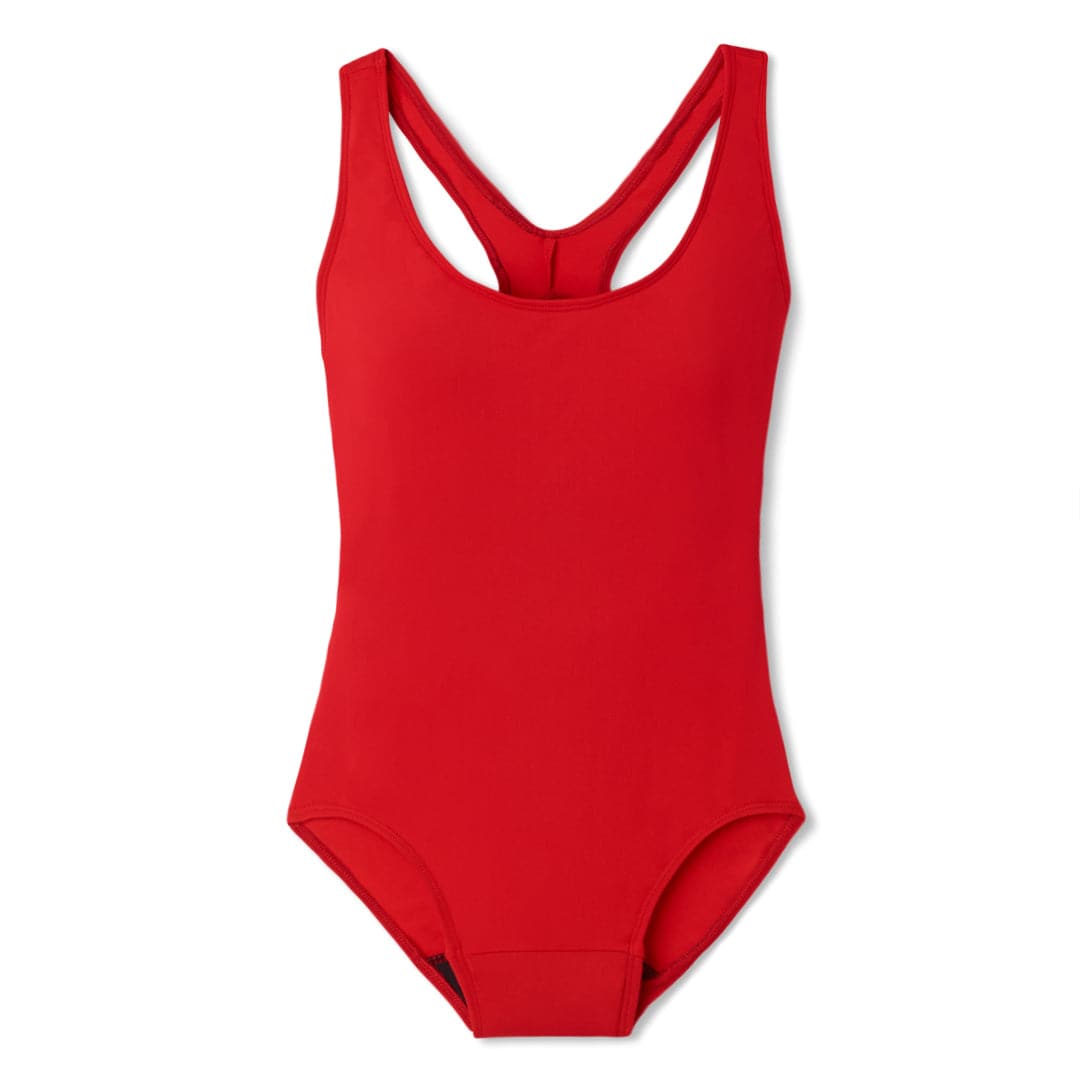
The swimwear is the clearest expression of the brand’s place in the market. Disposable pads are a poor match for water; internal products are not comfortable or suitable for everyone; ordinary swimsuits offer no absorbency. Ruby Love built a reusable garment intended to absorb menstrual flow without swelling in the pool. That is a narrow problem with a vivid payoff: joining the day instead of watching from shore.
A garment that behaves like a system
Competitors including Thinx, Knix, Modibodi, Aisle, Saalt Wear and The Period Company also sell reusable period underwear. Ruby Love’s distinction is not simply that its clothes absorb. The optional pad-locking mesh gives customers a modular setup, while the early move into swimwear, loungewear and first-period kits made the company a closet-wide period-apparel brand. The alternative is not always another startup. It is often a stack of disposable pads, ordinary underwear and a change of plans.
What failed first - and what changed
The first failure was fundraising. Even after Ruby Love reached $1 million in revenue in 2017, Etienne said she learned that the milestone alone was not enough to unlock venture capital. She temporarily stopped chasing the room and returned to the business: learning the audience, sharpening a long-term plan and collecting metrics.
“I realized I needed to take this bigger if I wanted to help more people.”Crystal Etienne
That sentence explains what changed her mind about outside money. The company was profitable, and remaining a smaller operation was possible. It was not the outcome she wanted. Etienne joined an incubator. At a pitch, one interested investor helped attract others. She also reframed the ritual itself. Rather than treating a pitch as a request for belief, she told a story grounded in customer evidence, a defined market and what she described as 400 percent year-over-year growth.
In June 2019, PantyProp became Ruby Love. The old name described a mechanism; the new one could carry swimwear, kits and a larger emotional idea. “Ruby” referred to menstruation and a gem associated with health and growth. “Love” signaled care. A month later, the company announced a $15 million deal with consumer investor The Craftory, including an initial $8 million Series A investment. The money supported hiring, advertising and new products.
By 2020, Inc. reported $25 million in annual revenue and named Etienne to its Female Founders 100. The company says it has now helped more than one million women and teens. Its current model remains centered on ecommerce: single garments, higher-value bundles, first-period kits, a themed monthly teen kit and a rewards program. Selected products also appear on Walmart’s marketplace. Current site prices range from roughly $10 for pads to about $170 for some swimsuits, before discounts.
The merchandising occasionally leaves the screen. At a 2019 “puberty party,” Inc. reported that mothers and grandmothers waited as long as four hours while girls assembled first-period kits and got pampered. The event made the product’s job unusually visible. Ruby Love was not only selling absorbent layers; it was giving a family a softer way to begin a conversation often conducted through embarrassment, euphemism or a hurried drugstore trip.
That community framing later became part of checkout. Through a partnership with the giving platform Beam, shoppers could direct 1 percent of a purchase to nonprofits tied to feminine health, entrepreneurship, menstrual equity and racial justice. Ruby Love said nearly half of customers selected an organization during the first month. In January 2026, a separate donation purchased by the Assertive Kids Foundation brought 60 boxes of Ruby Love apparel to the College of Staten Island Women’s Center. The commercial logic and social logic overlap neatly: reliable period products can remove one small but recurring obstacle from school, sport and work.

A clever product still has to arrive
Ruby Love’s public record contains an uncomfortable second act. Its claimed product impact sits beside a weak current Trustpilot rating and recurring customer complaints about slow shipping, missing items, returns and support. Reviews are anecdotal and experiences vary, but the pattern matters. In intimate apparel, the customer is buying confidence on a deadline: before school, a vacation or a first period. A late parcel does not merely miss a delivery estimate. It misses the use case.
The operating constraint
Trust is the product, the parcel and the refund policy.
Ruby Love proves that an original design can open a category. Its reviews also show that brand equity leaks when fulfillment and service do not match the promise.
There are product limits, too. Absorbency claims cannot decide fit, comfort or flow for an individual. A heavy-flow day may require extra protection or more frequent changes. Reusable underwear needs washing, drying and enough pairs for rotation. Some customers dislike synthetic outer fabrics or bulk. Swim protection works only when the garment fits snugly. The model is less attractive when a customer lacks easy laundry access, needs the lowest possible upfront price or expects one pair to cover every body and every day.
The part a founder can copy
Ruby Love’s playbook is not “launch period underwear.” It is a sequence for products built around private, recurring friction.
- Find the workaround. A sliding pad, doubled underwear or a skipped swim is evidence that customers are already paying in inconvenience.
- Design the interface. Ruby Love improved how the pad and garment work together, not just either item in isolation.
- Start with high-intent language. Search worked because worried parents were already asking precise questions with a purchase close behind.
- Expand by moment. School, sleep, sport, swimming and a first period are clearer merchandising frames than a wall of nearly identical SKUs.
- Raise on proof. Etienne’s funding story changed after revenue, audience knowledge and growth metrics made the opportunity legible.
- Protect the unglamorous layer. Inventory, shipping, returns and support determine whether product confidence survives contact with the customer.
This approach works when the problem recurs, the customer can describe it, the improvement is felt quickly and one trusted product can lead naturally to adjacent moments. It does not work when acquisition outruns repeat purchase, quality varies, the user workflow is burdensome or operations collapse under promotion-driven demand.
Ruby Love belongs at the intersection of femtech, apparel and direct-to-consumer retail. Its most interesting contribution is not a fashionable euphemism for menstruation. It is the insistence that period protection can be designed into what people already wear. Etienne saw an ignored interface, financed the first answer herself and turned customer proof into negotiating power. The next chapter depends on applying that same attention to the parts of the experience that cannot be patented.