He spent his Stanford years hunting for dark matter. Now he hunts for something almost as elusive - a useful answer from a quantum computer that barely works yet.
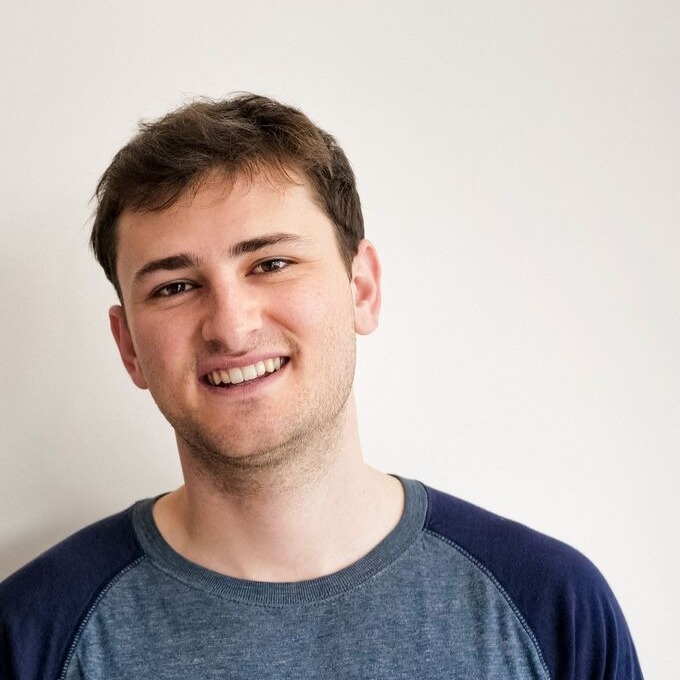
Richard Givhan runs Haiqu, and Haiqu has a strange thesis. Most of the quantum industry is obsessed with building better hardware - more qubits, fewer errors, colder fridges. Givhan looked at all of that and decided the most valuable real estate was somewhere else entirely: the software sitting between the algorithm and the machine.
Quantum computers today are, in his own description, clumsy. They have too few qubits and they are exquisitely sensitive to noise. Run anything ambitious and the answer dissolves into static. The conventional wisdom says wait - wait for the hardware to mature, wait a decade, wait for the fault-tolerant machines. Givhan's company is built on refusing to wait.
Haiqu makes what engineers call middleware. Circuit optimization. Error shielding. Algorithmic subroutines. Orchestration across whichever quantum chip you happen to have. Stack those tricks together and you can run a meaningfully larger application on today's flawed hardware - the company claims at roughly a hundredth of the computational cost. That is the whole game: squeeze useful work out of machines everyone else considers not-ready.
It is not the kind of thing that lands you on a magazine cover. Givhan knows this, and he says it out loud. When Haiqu closed its $11 million seed round in early 2026, his thank-you to investors was almost a confession: "We are grateful to have found investors who recognize the ugly truth: middleware isn't sexy, but it matters." That sentence tells you most of what you need to know about how he thinks.
Too little experimentation happens because quantum cloud costs are prohibitive. Our goal is to change that overnight.Richard Givhan — on why Haiqu exists
The through-line in Givhan's resume is not a single field. It is a temperament. He studied Engineering Physics at Stanford - the degree you pick when you like the math of the universe but also want to build the apparatus. As an undergraduate he did research at the Kavli Institute for Particle Astrophysics and Cosmology, a place where people try to detect the faintest signals imaginable and where dark matter is a daily conversation. Pulling signal out of noise is, it turns out, excellent training for quantum computing.
From there his path zigzagged in a way that looks random until you notice the pattern: each stop was about turning frontier physics into something that ships. He did an engineering stint at COMEX. He spent a year as an Entrepreneur in Residence at Mitsubishi Electric, working on space-enabled mobility systems - satellites and movement, the unglamorous plumbing of how things navigate. Then, in 2022, he walked into Toronto's Creative Destruction Lab and joined its Quantum stream as a founder-in-residence.
That is where Haiqu was born. Not in a lab he'd run for years, but in a remote collaboration that crossed continents. His co-founder, Mykola Maksymenko, was a serious quantum researcher - alumnus of the Max Planck Society and the Weizmann Institute, former head of R&D at the global consultancy SoftServe. The pairing is telling: a physicist-operator who wants to commercialize, matched with a deep-research scientist. One asks "is this true?" The other asks "will anyone pay for it?" Haiqu needs both questions answered at once.
The company grew the way a lot of post-2020 deep-tech grows - distributed by default. The team spans the United States, Ukraine, Canada, Germany, and Switzerland. There is no single headquarters humming with the energy of a foosball table. There is a thesis, a Slack, and a set of very hard problems in linear algebra.
Backers include Primary Venture Partners, Qudit Investments, Alumni Ventures, Collaborative Fund, Silicon Roundabout Ventures, Toyota Ventures, and MaC Venture Capital.
"Middleware isn't sexy." Most founders inflate. Givhan deflates - then dares you to fund the boring truth anyway. Candor as a sales tactic.
The whole industry says quantum is a decade out. Haiqu is a refusal to sit on its hands until the hardware grows up.
Kavli to COMEX to Mitsubishi to quantum - every stop was about turning frontier physics into a product, not a paper.
Haiqu reads like "high Q" - the quality factor physicists chase. The company is named after the very thing it tries to fake in software.
US, Ukraine, Canada, Germany, Switzerland. The team was distributed before it was a buzzword - five countries, one circuit.
He paired with a Max Planck and Weizmann researcher. Operator meets scientist - both questions get asked at once.
"We are accelerating the timeline to practical quantum computing by developing novel software that can extract value out of clumsy near-term quantum hardware."
"Our goal is to change that overnight with a software system that can run larger applications at a fraction of the cost."
"We are grateful to have found investors who recognize the ugly truth: middleware isn't sexy, but it matters."
"We are proud to be backed by investors with remarkable deep-tech ecosystems and a track record of supporting the commercialization of breakthrough tech."
Quantum computing has a credibility problem, and it is mostly about timing. The promises are enormous - new medicines, unbreakable logistics, materials we can't yet imagine - and the delivery dates keep sliding. Every year the useful machine is still "a few years away." Investors get tired. Researchers get cynical. The gap between the hype and the hardware is where good companies go to die.
Givhan's wager is that you don't have to close that gap by waiting. You close it by building the layer that makes imperfect machines punch above their weight - today, on hardware that already exists. If Haiqu's roughly hundredfold cost reduction holds up across finance, chemistry, life sciences, and mobility, then the useful quantum era arrives not with a bang of new hardware but with a quieter revolution in the software wrapped around it.
That is a deeply unfashionable bet. It is also, possibly, the correct one. The history of computing is full of moments where the boring middle layer - the compiler, the operating system, the database driver - turned out to matter more than the silicon underneath. Givhan is betting quantum will rhyme. He'll tell you himself it isn't sexy. He's daring the industry to notice that sexy was never the point.