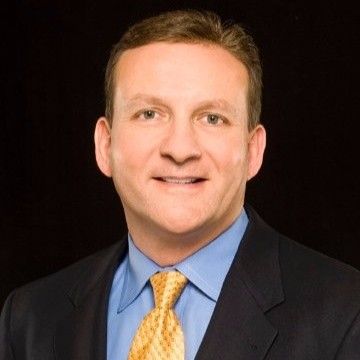
Ray Wolf's LinkedIn headline reads, in full: ".CEO Televero Behavioral Health." The leading period is his. He has not corrected it, which tells you something about how he spends his time. Televero, the company he runs from a low-slung office building on West Courtyard Drive in Austin, was founded in 2020, has 110 employees, and this past summer landed at No. 54 on the 2025 Inc. 5000 list of America's fastest-growing private companies, with a three-year revenue growth rate of 4,962%. That is not the kind of number a virtual psychiatry practice is supposed to post. It is the kind of number an AI startup is supposed to post, and then quietly walk back a year later when the burn catches up. Televero is not an AI startup. It is a licensed medical practice with a provider roster in Texas and Florida, patients ranging in age from five to ninety-five, and Sunday hours.
The interesting question is not why Televero grew. Everyone knows why demand for virtual behavioral care grew. The interesting question is who Ray Wolf is, and why an operator whose resume is heavy on jet engines and enterprise storage is running one of the top 100 fastest-growing companies in America in a category he did not previously work in.
The resume, in reverse
Before Televero, Wolf was a Business Advisor at PracticePath, a firm that consults with medical practices on scaling. Before that, Managing Partner at A2K Partners, helping business leaders digitally transform their operations. Before that, Chief Operating Officer at Redirect Health, where he is credited with cutting self-funded employer healthcare costs by 25% through managed-care redesign. Before that, Senior Vice President of Architecture and Innovation at Lumeris, and roles at Essence Health where he moved the enterprise onto the cloud. Before that, President of OpenSymmetry and CEO of Green Integrated Services. Before that, Vice President of Worldwide Services at Brocade, the enterprise storage networking company. Before that, a director at Dell. And before all of that, a long run at Pratt & Whitney - Director of Program & Business Development, General Manager of Services, Operations Manager - starting in 1986.
You can read that list as a random walk through American industry. Or you can read it as one continuous job: run the services side of a technical business, and the P&L will follow. Wolf appears to read it the second way. Everywhere he has landed, the pattern repeats: take a services-heavy operation, wire in technology, expand availability, cut cost per unit, and keep the customer experience above water. This is not a healthcare skill. It is an operations skill that happens to also be what modern healthcare desperately needs.
Engineer with an MBA
The credentials matter, because they explain the temperament. Wolf grew up on the Sachem High School engineering physics track on Long Island, graduated in 1982, and went across the island to Stony Brook University for a Bachelor of Engineering in mechanical engineering, finishing in 1986. He then completed an MBA in Finance and Innovation at Rensselaer Polytechnic Institute between 1988 and 1992 - the classic pattern of the engineer who realizes, sometime around age 26, that the interesting problem is not the machine but the business around the machine.
Then, decades later and already an executive, he went back to school twice more. In 2013 he did executive education at Harvard Business School - "Leading a Global Enterprise." In 2014, at Stanford Graduate School of Business - "Leading Change and Organizational Renewal." One year apart. Harvard first, Stanford second. Both programs are essentially about the mechanics of steering a large organization through a hard turn, which is a fair description of what Wolf appears to have spent the second half of his career actually doing.
What Televero is, mechanically
The practice serves patients age 5 to 95, in English and Spanish, via virtual sessions with psychiatrists and counselors. Same-day and same-week appointments. Sunday hours. Extended evening availability. Acceptance of most major insurance plans and Medicaid. Partnerships with primary care providers, schools, and employers. The provider roster is licensed in Texas and Florida. On the operational side, the company runs on the kind of software stack you would expect - Microsoft 365, Slack, Twilio SendGrid, Cloudflare, Azure Front Door, a WordPress-driven web presence, and Vero for messaging. There is no exotic technology. There is only distribution and access.
That is more or less the whole thesis. In behavioral health, the constraint has never really been quality. The constraint has been scheduling. If you can get a bilingual psychiatrist on a video call on a Sunday evening to a patient whose insurance actually covers the visit, you have solved 80% of what the market is failing at. Wolf's operational bet is that the last 20% - clinical depth, continuity of care, coordination with primary providers - is a solved problem if you staff and route it correctly. The Inc. 5000 ranking suggests he is at least directionally right.
Three-year growth: 4,962%
Growth like that is not organic in the coffee-shop sense. It is a business that had product-market fit before anyone was looking, hired providers as fast as it could credential them, and picked a category (virtual behavioral health, insurance-covered) where the demand curve had been bent for years by policy changes around telehealth reimbursement. What is unusual is not the growth itself. What is unusual is that Televero landed inside the top 100. Most companies at this growth rate ring the bell somewhere between #500 and #1500. Televero cleared them all.
The turnaround pattern
Wolf's earlier public accomplishments read like a checklist for what a healthcare operator would want on a CV. Reduced Kaiser Permanente operating costs by 20%. Built the first HIPAA-compliant mobile communication tool for physicians, which won an Apple Healthcare award. Increased clinical technology adoption from 15% to over 85% in a prior operating role. Transformed Essence Health into a cloud-based enterprise. Cut self-funded employer healthcare costs 25% at Redirect Health. Every one of those is essentially the same trick applied to a different domain: move a slow, offline, high-friction service business onto a modern operating stack, and let the cost curve invert. Televero is that trick in the behavioral health domain. The public numbers suggest it has worked here too.
What he sounds like
Wolf does not give many long interviews. He has appeared on the Austin Tech Takes podcast to discuss telehealth in Texas and on Thom Singer's show under the headline "Changing the Game in Behavioral Health with Televero Health." When he speaks in press releases, he speaks about access. When Televero announced it was eliminating wait times through same-day, seven-day-a-week scheduling, Wolf's quote was, simply, "By expanding our availability, we are removing barriers to care and ensuring more people can receive high-quality mental health support when they need it most." That is not a founder quote in the modern founder-quote genre. It contains no product name, no metric, no adjective. It is what an operations executive says when the story is not about him.
The geography
Televero is based at 6601 W Courtyard Drive in West Austin, off Loop 360, in one of those low office parks that could be a title company or a family dental practice. It is not South Congress. It is not East Sixth. It is not the part of Austin anyone photographs. This is consistent with the rest of the profile: a company that grew fast in a category that did not draw press attention, run by an operator whose LinkedIn headline includes a stray period, working out of a building nobody has posted a photo of. The Inc. 5000 plaque, presumably, is on that wall now.
What comes next
The company is licensed in Texas and Florida. There are 48 other states. The provider network is 150+ clinicians on some counts, 110 employees by others - the delta is contract providers, which is how virtual practices scale headcount without carrying it. Wolf's public aspiration, if you piece it together from the press releases and the podcast appearances, is straightforward: same-day access to psychiatric and counseling care, in every state Televero can credential providers into, with the language coverage and evening hours to serve the patients most healthcare systems fail to see on time. That is not a mission statement written for a pitch deck. It is a to-do list, and this operator has been working on the same to-do list, in one industry after another, for forty years.