At three in the morning, an alarm is less like a verdict than a badly written clue. A sensor tripped. A camera caught movement. A phone is somewhere near the building. The dog, the delivery driver and the burglar all have plausible alibis. Rapid Response Monitoring lives in the uncomfortable distance between that signal and the siren.
The Syracuse company does not mainly sell shiny security hardware to households. It works behind the companies that do: independent alarm dealers, enterprise systems integrators, commercial fire firms, medical-alert providers and connected-device makers. Those businesses keep their names on the customer relationship. Rapid Response supplies the monitoring specialists, hardened buildings, software, data pipes and emergency workflows that are hard to finance alone and unforgiving when they break.
Russell R. MacDonnell and Jeffrey Atkins founded the business in 1992 after careers in alarm and security operations. Their premise has stayed unusually consistent: people, training and technology belong in one system. The vocabulary has changed from telephone lines and desktop databases to video analytics, presence data and AI. The final task has not. Somebody must decide whether a fragment of information warrants waking a customer, cancelling an event or asking public safety to move.
01 / The hidden productA central station wearing somebody else’s name
Rapid Response’s customer is usually not the person whose smoke detector chirps. It is the dealer responsible for that person. The distinction explains the company’s sprawling menu. Standard intrusion and fire monitoring sit beside video verification, GPS tracking, PERS and mobile PERS, lone-worker protection, IoT monitoring and answering services. Dealer tools such as RapidMobile and RapidWeb expose live histories, tests, recordings and account data. MySecurity Account can be branded for the dealer’s customer. rapidSMS lets users manage an alarm event through messaging without installing another app.
For larger operators, the offer becomes architectural. Central Station as a Service - CSaaS - lets a company place its automation and signal traffic on Rapid Response infrastructure while retaining its own response team. Hybrid options split the work differently. A central-station “sunset” helps an operator leave in-house monitoring altogether. The business model is recurring B2B service wrapped around expensive shared capacity. Public pricing is not posted because account volume, signal types, integrations and migration work change the job.
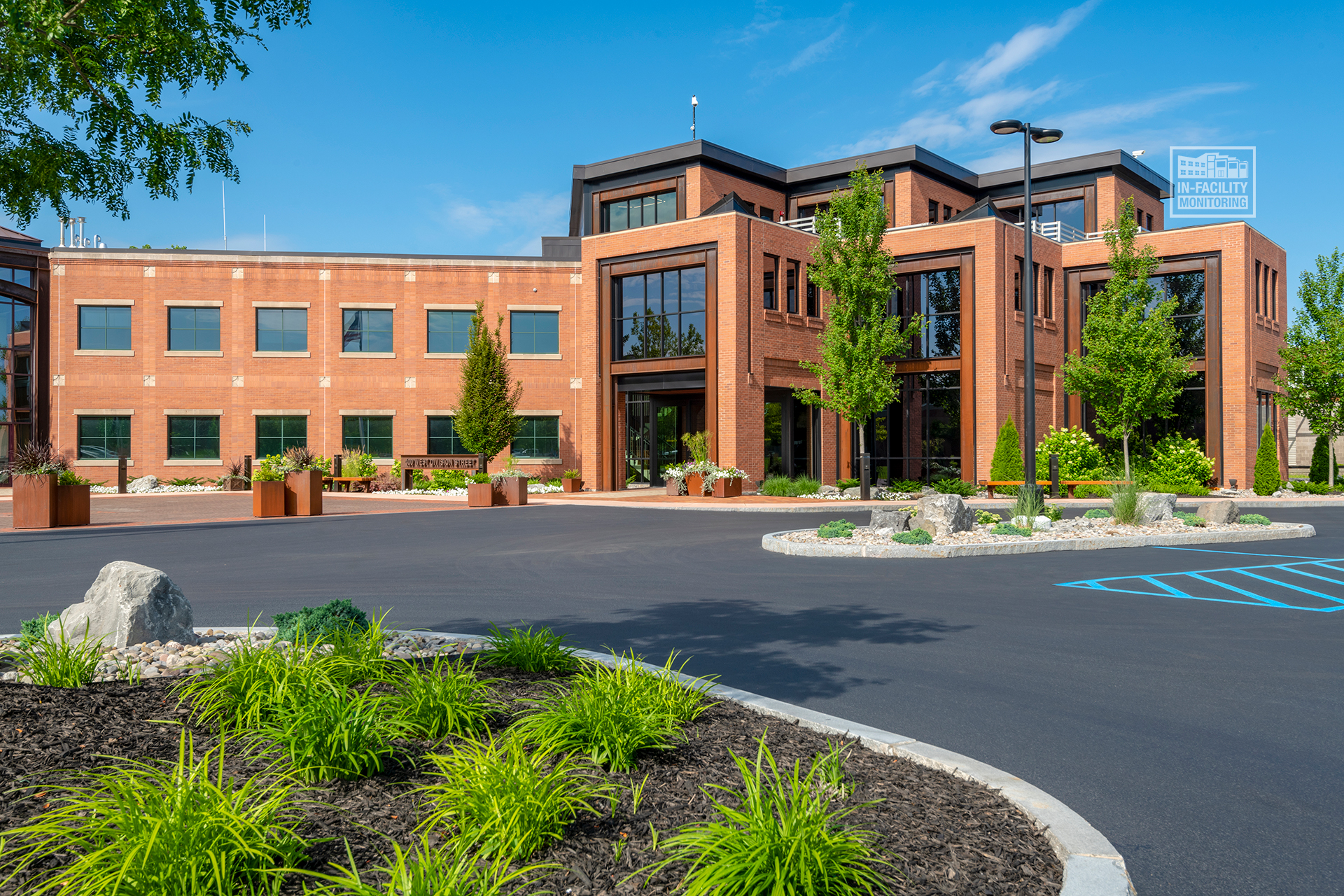
That capacity is the moat and the warning label. A public New York development record described a roughly $26.99 million expansion and equipment program, financed with company equity, bank and equipment loans, and grants. Earlier reporting put a Syracuse construction phase at $11.3 million. Dealers do not buy a share of the bricks. They buy the ability to avoid recreating them.
Build, host or hand it over?
02 / What fails firstThe expensive ambiguity of a false alarm
The earliest failure is often not power or software. It is meaning. Traditional alarm sensors produce thin evidence, and false alarms consume operator attention, annoy customers, generate fines and exhaust police goodwill. Rapid Response has cited industry research showing false-alarm rates commonly above 90 percent. When a jurisdiction stops treating an unverified signal as urgent, every dealer’s product becomes less valuable.
Video verification adds eyes. Two-way audio adds a voice. Customer messaging can cancel a mistake. Presence awareness can indicate whether an authorized person is near the site. The AVS-01 standard gives monitoring centers and emergency communications staff a common five-level language, from Level 0 - no call for service - through Level 4, a confirmed threat to life. This is less glamorous than a cinematic command center. It is also the practical work of sending scarce responders better evidence.
From noise to a dispatchable story
Rapid Response was the first third-party monitoring center to receive a UL-CAVS listing for implementing AVS-01. Its proprietary Triangulum AI system constantly reassesses an event as data arrives. Dynamic Workflow can alter instructions using factors such as time, location, temperature and weather. Presence Awareness contributes who may be at a property. The score is not presented as an oracle. It is a structured briefing for a specialist.
“The alarm signal is only the opening sentence. The product is a credible account of what might be happening.”YesPress analysis
03 / The human systemTraining is not an HR benefit here
Alarm monitoring is customer service with legal, medical and emotional consequences. The company trains specialists in classroom settings, then uses simulated real-time scenarios and apprentice-style supervision. Final certification combines test scores, quality reviews and performance in those simulations. Advanced modules cover fire, two-way communication, medical alerts, GPS, video and SONITROL systems. Rapid Response says more than 90 percent of its senior leadership began in the monitoring center - a promotion pipeline that also preserves operating memory.
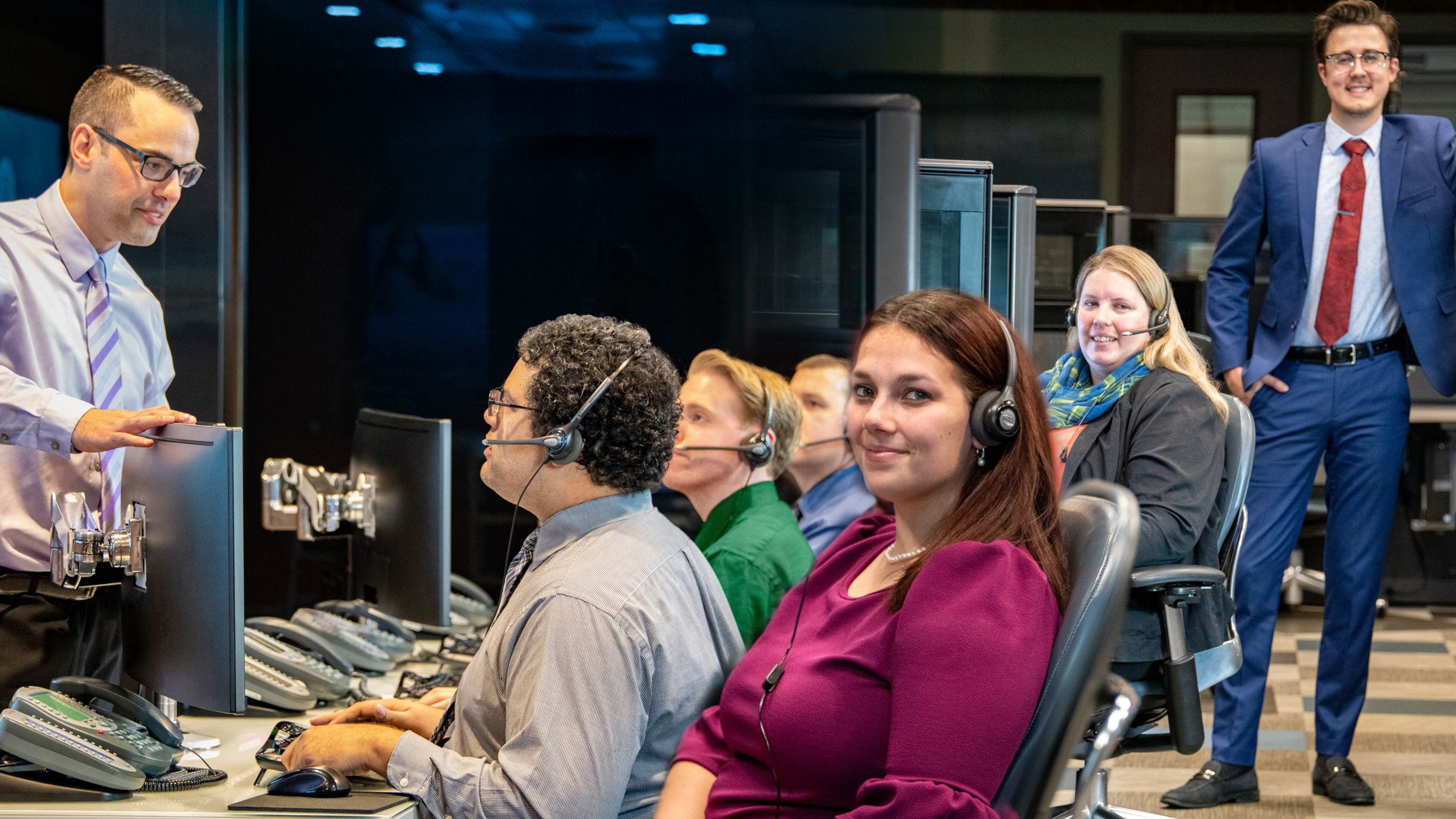
The culture is strict about place. Rapid Response says monitoring specialists work only from its facilities. During the pandemic, it spread operations teams through its buildings, added health controls and kept critical monitoring on site. The experience did not change management’s mind; it hardened it. The company argues that residential power, internet, distractions and data exposure introduce risks that dedicated facilities are designed to remove.
That stance is both an operational choice and a recruiting constraint. In 2021, the company announced a $20-an-hour minimum wage for full-time employees and a WELL Health-Safety Rating at its Syracuse headquarters. Its footprint now includes command centers in Syracuse and Corona, California, plus a hosted customer-care center in Henderson, Nevada. Geographic redundancy helps. It does not make staffing three physical locations effortless.
04 / The ecosystem playIntegrate widely, own the workflow
A dealer cannot rip out every installed panel because a monitoring center prefers a neat stack. Rapid Response instead supports a long list of receivers and video platforms, including integrations around Alarm.com, Bosch, AXIS, Avigilon, CHeKT, DSC, DMP and SureView’s Immix CS. The compatibility work is unromantic and commercially important: installed security equipment can remain in service while the monitoring layer improves.
Partnerships push more context into that layer. A 2024 alliance with 3Si connects tracking and verified crime intelligence used by thousands of law-enforcement agencies. A 2025 launch with Ubiety Technologies and KEYTH Security added downloadable presence awareness through Ubiety Halo. The eero relationship gives dealers a mesh Wi-Fi option for connected-home reliability. DMP has worked with the company around video analytics and two-way audio that can deter a trespasser before a guard or officer arrives.
The differentiation is not one exclusive gadget. It is the combination of broad compatibility, dealer-branded tools, physical redundancy and people trained to interpret the resulting mess. Competitors include large third-party monitoring firms, regional central stations, dealer-owned operations and self-monitoring apps. A dealer chooses Rapid Response when it values breadth and outsourced infrastructure more than owning every operational detail.
05 / The stealable playbookCopy the interfaces, not the generators
The easy lesson would be “spend more on resilience.” That is too vague to use. The sharper lesson is to decide where evidence changes hands. Rapid Response has built interfaces between sensors and specialists, specialists and public safety, dealers and account data, and a wholesale provider and the end customer’s brand. Each interface has a vocabulary, permission model and escalation path.
Five things another operator can steal
- Turn ambiguous events into a small, shared set of priority levels.
- Let partners keep their brand while renting the costly operating layer.
- Train with simulations that resemble the ugly edge cases, not the happy path.
- Make account history and live status visible to the channel partner.
- Use automation to assemble context, then make human accountability explicit.
The model does not work everywhere. A small, low-stakes service may not justify hardened in-facility staffing. A rural labor market may make centralized recruiting fragile. A dealer with unique workflows may resent a provider’s operating rules, and outsourcing can become dangerous when data access, service levels or exit procedures are vague. Presence signals and AI scoring also create privacy and bias questions that contracts alone cannot settle.
The buyer’s checklist is therefore less romantic than the command-center tour. Ask who owns the account data, how migrations are tested, what happens during a regional outage, which events require a human, how false alarms are measured, whether call recordings are accessible and how a dealer leaves. Then ask for the price. Rapid Response does not publish a rate card, so the honest cost is a proposal plus the switching work - compared with the capital, staffing and compliance burden of doing it yourself.
Thirty-four years after its founding, Rapid Response sits in a peculiar market position. Consumers may never know its name; dealers can build part of their reputation on its response. AI can make the alarm richer, but the company still sells a person willing to own the next decision. At three in the morning, that division of labor is the entire point.