Imagine building a weather app and discovering that the least interesting part of the job is also the most demanding. You wanted to design a useful screen. Now you are negotiating with a data provider, reading authentication instructions, and wondering whether “free” means free until Tuesday. Rapid’s proposition begins in that gap between having an idea and getting somebody else’s software to cooperate.
- The job: find an API, try it, subscribe, and put it to work.
- The bargain: less shopping and billing work; providers surrender part of each sale.
- The turn: a $1 billion valuation in 2022, leadership changes and layoffs in 2023, then Nokia’s asset acquisition in 2024.
- The lesson: make the first useful result easy. Count the costs after it, too.
An API, or application programming interface, gives one program a way to request something from another. That something might be a translation, a weather forecast, or a piece of business data. The developer borrows a capability rather than building the machinery behind it. Rapid supplies a marketplace and tools around that exchange. The provider supplies the actual service.
It is an appealing division of labour. A restaurant need not manufacture the oven. A software company need not assemble every ingredient in its application. But somebody must help the buyer find the ingredient, inspect it, and understand the bill. Rapid made that somebody into a business.
The customer arrives before the code
Rapid’s public marketplace gathers API listings into a common shopping experience. Its quick-start guide describes a concrete sequence: search for a service, examine its endpoints, choose a plan where required, and run a request in the browser. Once the response looks useful, copy a code snippet in your application’s language. Discovery and the first experiment share the same counter.
That arrangement serves two customers with different anxieties. Developers want to know whether a service works before rearranging their application around it. Publishers want prospective customers to reach that experiment without getting lost. Documentation, subscriptions, and usage information are part of the product because uncertainty is part of the transaction.
For a small team, Rapid can shorten the search for a missing feature. For an API publisher, it offers a place to list a service and collect payment. For a large organization, the enterprise hub addresses a related irritation: teams cannot reuse an internal API they cannot find. A private catalog can make existing work visible across departments and to approved partners.
These are different markets. Public discovery concerns strangers buying from strangers. Enterprise discovery concerns colleagues and partners navigating permissions and scattered knowledge. Rapid’s expertise sits in the connecting tissue: catalogs, developer access, testing, subscriptions, and collaboration.
A teenager’s idea acquires a tool cabinet
Rapid began in 2015. Iddo Gino was 17; Mickey Haslavsky was among his co-founders. CTech’s account also names Daniel Chernenkov in the original group. The hackathon connection matters because a hackathon makes the cost of unnecessary setup wonderfully obvious. When time is short, nobody dreams of spending the afternoon deciphering a billing portal.
The company bought the Mashape API marketplace in 2017. The seller went on to concentrate on Kong, its API gateway business. Here were two answers to the same expanding software world: help people discover services, or help organizations manage the traffic running through them. An API marketplace and an API gateway can be neighbours without being interchangeable.

Then came Paw. Rapid acquired the API client in February 2021; account migration followed that September. Today the product’s site calls it RapidAPI for Mac. It lets developers compose HTTP requests, inspect responses, generate client code, and describe APIs. The marketplace helps you encounter a service; a client helps you interrogate it.
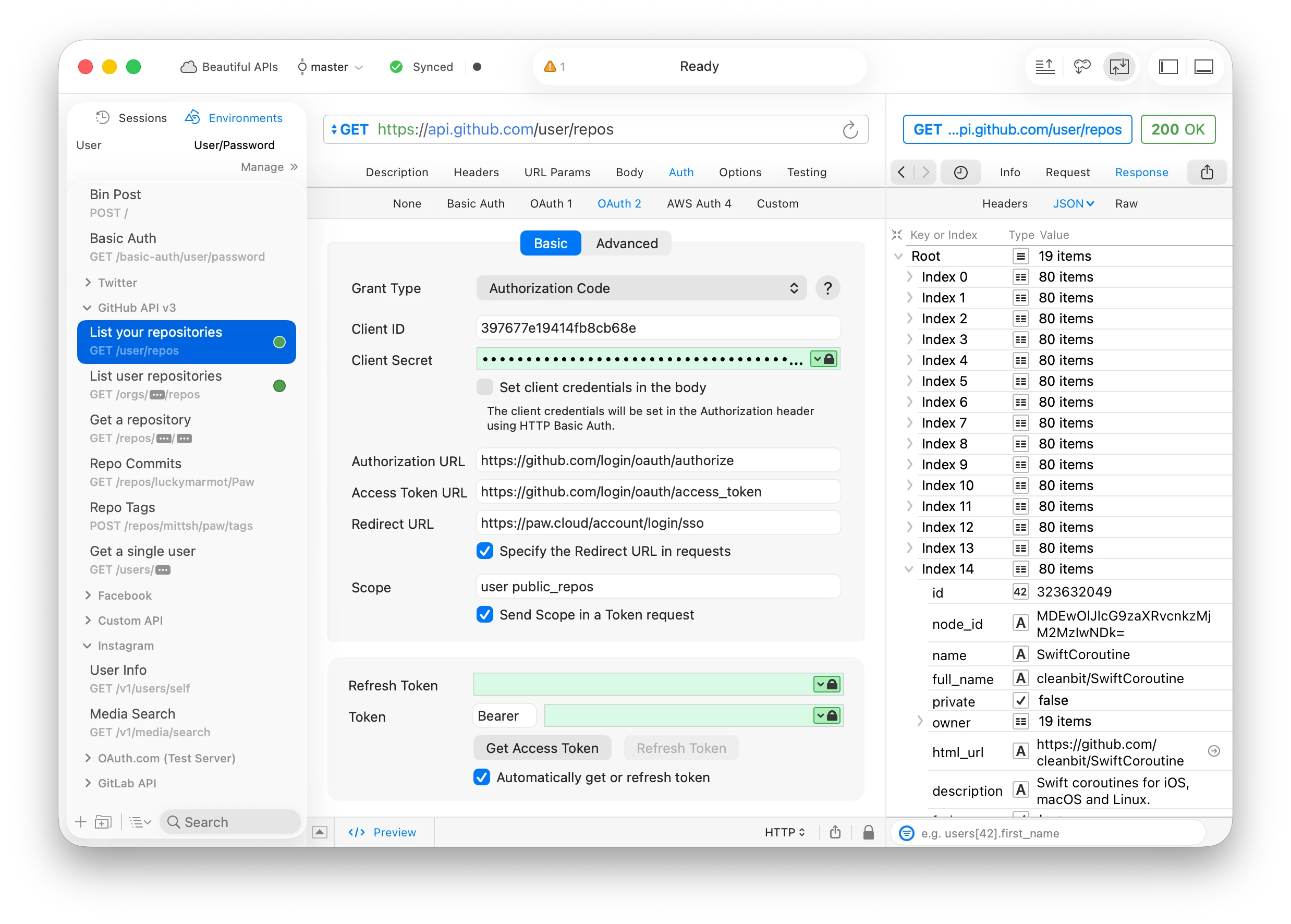
Postman is an alternative for API client and collaboration work. Kong competes in gateway and management territory. A direct provider portal can replace the marketplace entirely when you already know what you want. Rapid’s distinction is the combination of discovery and transaction: the shelf, the sample, and the checkout in one workflow.
The money arrives faster than certainty
In April 2021, Rapid raised $60 million in a Series C led by Green Bay Ventures. In March 2022, a $150 million Series D led by SoftBank Vision Fund 2 valued it at $1 billion. Rapid reported a community of four million developers that month. Those dates belong beside the numbers. A historical community total tells us about reach at a particular moment; it does not tell us how many customers are paying today.
In April 2023, Marc Friend replaced Gino as CEO. Major layoffs followed. The sequence exposes a weakness in the cheerful marketplace story: assembling a large audience and sustaining the organization around it are separate achievements. CTech reported that companies were cutting external spending and were slower to buy Rapid’s internal enterprise system than the growth thesis required.
The commercial assumptions were under pressure. A developer could still find an API useful while an employer postponed an enterprise contract. Interest in the category did not spare the business a reset. Leadership and spending changed together. Rapid’s broader platform ambitions now had to contend with buyers who were scrutinizing their own costs.
Twenty-five dollars leaves the counter
The provider economics are less romantic and more useful. Rapid’s current payout documentation specifies a 25% marketplace fee, effective November 15, 2025. On a $100 sale, $25 goes to the platform and $75 remains before PayPal payout charges. The support example applies a further $1.50 PayPal fee, leaving $73.50. Actual payout charges depend on the applicable terms.
That remaining money must cover whatever it costs to run the API: hosting, data, support, and the developer’s time. The question is whether the marketplace brings enough business, or saves enough administrative work, to justify the deduction. A publisher with an established audience may prefer direct sales. A publisher struggling to reach buyers may value the counter.
The buyer faces a different calculation. Providers set their own plans; there is no universal subscription that makes every API free. Check the request allowance, rate limits, and overage terms before copying the snippet. An inexpensive prototype can become an expensive loop. Sensible use means testing normal responses and failures, then watching consumption after launch.
Nokia buys a way to meet the builders
On November 13, 2024, Nokia acquired Rapid’s technology assets and research and development unit. Its announcement tied the purchase to Network as Code, a platform intended to help developers use telecom network capabilities. The financial terms were undisclosed at announcement. The acquired portfolio included marketplace and enterprise hub technology.
“Operators need a bridge to connect to thousands of developers”
Raghav Sahgal · Nokia · November 2024
For Nokia, the attraction was distribution as well as engineering. Network operators have capabilities to expose; application developers need an accessible route to using them. Rapid had spent years working on the encounter between a service and its prospective user. My reading of the acquisition is that Nokia wanted to apply that experience to a more specific supply of APIs.
Industry partnerships show both the promise and the limits of that approach. Rakuten’s 2018 launch added Japanese and English resources and yen-based pricing for Japan and Asia. It recognized that access also involves language and payment habits. IATA’s Rapid-powered Open API Hub launched in January 2023; IATA decommissioned it on June 17, 2026. A portal requires an ongoing reason for people to return.
Copy the first five minutes
Rapid’s most transferable idea is modest: let someone reach a useful result before asking for a large commitment. Put the documentation beside the experiment. Put the price beside the quota. Make the route from successful test to working application short enough that the customer can follow it.
That recipe helps when the borrowed capability is reliable, its terms suit the application, and the saved development effort exceeds the recurring cost. It becomes less attractive when sensitive data cannot leave your environment, the provider cannot meet your reliability needs, or your usage makes direct integration cheaper. A common storefront cannot make every supplier equally dependable.
The pleasure of Rapid is the possibility of leaving some work to somebody else. The discipline is deciding which work. You may rent the forecast, the translation, or the response. Your user will still hold you responsible when the screen goes blank.
Try the counter
Explore the marketplace, follow the first-request guide, inspect RapidAPI for Mac, or check the current payout terms.
Read Nokia’s acquisition announcement, the 2022 funding report, and IATA’s program update. Browse the Rapid blog and GitHub examples.
Watch Intro to RapidAPI Testing or visit the Rapid YouTube channel. Follow LinkedIn, X, and Facebook.