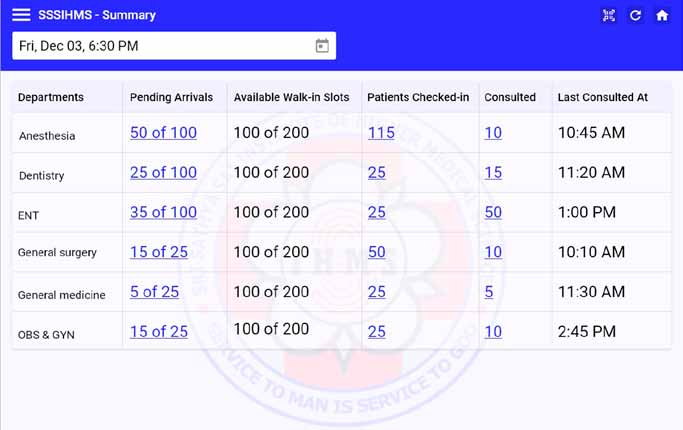
The visitor to the hospital’s IT department had an unusual request. His father had been treated by neurosurgery. Now he wanted to help. Manoj Manghnani, co-founder of Pulse Software Solutions, offered his team’s technical skills. The eventual result was Q-Assist: an Android application that let staff manage outpatient queues without staying beside a desktop computer.
- Custom software for the parts of a business that standard tools do not quite fit.
- Legacy systems, ecommerce, mobile apps and AI integrations under one roof.
- A published promise that clients control their code, data and infrastructure.
The hospital’s January 2023 journal records a prototype demonstration in January 2022, followed by deployment and regular feedback. A tablet connected to the hospital network brought queue information to the people guiding patients. The small detail matters: the improvement was freedom to move.
A glove needs more than a product page
That is a useful way into Pulse, a Denver development company whose history dates to 1998. Its work spans web applications, mobile software, SaaS development, ecommerce, cloud services and digital marketing. The common customer is an organization with an awkwardly specific requirement.
Consider FORCE3, the baseball and softball equipment business. It wanted shoppers to customize gloves online and wanted to move its store from WordPress to Magento. Pulse describes rebuilding the storefront on Magento 2.4 and implementing a glove builder, with inventory and orders managed across point-of-sale and online channels.
The project took three months, according to Pulse’s account. The company reports improved sales and conversion, without attaching a measured percentage. The concrete result is easier to inspect: customers could configure a product, while the business had a shared place to handle stock and orders.
For a buyer, the example offers a sensible test. Write down what the customer must do and what the back office must receive. A configurator has little value if someone still has to reconstruct the order manually afterward.
The visitors changed the brief
RWI Logistics had a different problem. Its website was wordy, cluttered and confusing to navigate, according to Pulse’s case study. Visitors struggled to understand the business. The first failure was communication.
Pulse began with stakeholder interviews and an audit of content and analytics. Mobile devices accounted for the leading source of visits, so the design had to prioritize smaller screens. That finding supplied a reason to change the brief beyond somebody’s preference for a fresh look.
The resulting WordPress site included clearer navigation, contact prompts and carrier registration. Hundreds of pages needed migration. Pulse reports more traffic and inquiries after launch; the practical lesson is the sequence: inspect actual behavior, simplify the routes people need, then move the content.
FORCE3 moved away from WordPress. RWI stayed with it. Read together, the projects suggest a useful buying principle: choose a platform after identifying the job. A familiar tool can be sufficient when the problem is structure, rather than missing functionality.
Give the old system a new job
Pulse also develops time-clock systems for manufacturing and service businesses. An off-the-shelf Android tablet becomes a kiosk or handheld terminal. Employees can log time against projects; managers can see resource use; payroll records can be exported.
Its published integration list includes SAP, Odoo, Visual Manufacturing, QuickBooks and Sage Accpac. The point is the connection between time captured and the systems that use it. A time entry becomes more useful when accounting and production can read the same record.
Its legacy AI service follows a related sequence. Assess the architecture, data quality and workflows, then identify a bounded addition: document handling, forecasting, an assistant or an API connection. Pulse describes keeping human approval where decisions carry higher stakes.
That approach depends on having usable data and a system that can support secure integration. A broken process can produce unreliable answers faster once automated. Buyers should ask which records feed the feature, who checks exceptions and how success will be measured before expanding it.
Buy the work. Keep the keys.
Manghnani’s company biography includes an economics and finance degree from Bombay University and earlier consulting work for Pfizer, Hawkins Cookers and Videsh Sanchar Nigam Limited. It is a background that makes the attention to business processes less surprising.
Pulse describes a delivery model combining U.S. project management with development talent in India. Its ownership policy is especially concrete:
“Clients Own Everything From Day One”Pulse Software Solutions, published ownership policy
The policy covers code, intellectual property, infrastructure, data, domains and related assets. For buyers, that means checking whose account actually holds each asset. Ownership becomes useful when access works in practice.
Development is sold through a proposal after consultation. Pulse’s FAQ ties cost to scope, complexity and technology, and describes timelines ranging from weeks to months. Its offering also includes post-launch troubleshooting, updates and maintenance. The purchase therefore needs a support conversation alongside the build conversation.
Before commissioning similar work, a buyer can make the proposal easier to judge by naming one acceptance test. Can a staff member finish the task without retyping information? Can another developer retrieve the code and deploy it? Who responds when an integration stops? Those questions turn a broad service list into something a customer can evaluate, especially when comparing a custom build with a standard subscription.
One website, many conversations
Intuitina, featured in Pulse’s recent writing, applies the integration idea to customer questions. The chatbot uses business-approved information and supports more than 120 languages. Visitors can ask about products or policies on an existing website. Pulse also explains a boundary: translated pages still matter when a business wants language-specific search visibility.
In March 2026, Pulse announced answer-engine and generative-engine optimization services, extending its marketing offer toward AI search. The work includes organizing content around questions and structured data. Across these services, the buying question stays pleasingly ordinary: which task becomes easier for the person using the system tomorrow?