Riccardo Pisano had built the kind of software business founders are told to want. Growth-X was bootstrapped, profitable and lean. Then a buyer wanted to see the financials. Across American and Israeli entities, cash-basis accounting made the numbers difficult to explain. A promising acquisition offer fell apart. While Pisano concentrated on preparing documents, growth slowed. He eventually sold the company, but the process took two years.
On Greg Head’s Practical Founders podcast, Pisano reduced the lesson to eight words: “I lost millions on two pages of numbers.” It is an arresting advertisement for a company that sells something difficult to photograph: another founder’s perspective before a consequential decision.
- Free interviews unpack the messy mechanics of building software businesses.
- Paid peer groups serve established, bootstrapped B2B SaaS CEOs.
- Membership costs $6,000–$10,000 a year, with an annual commitment.
The room is the product
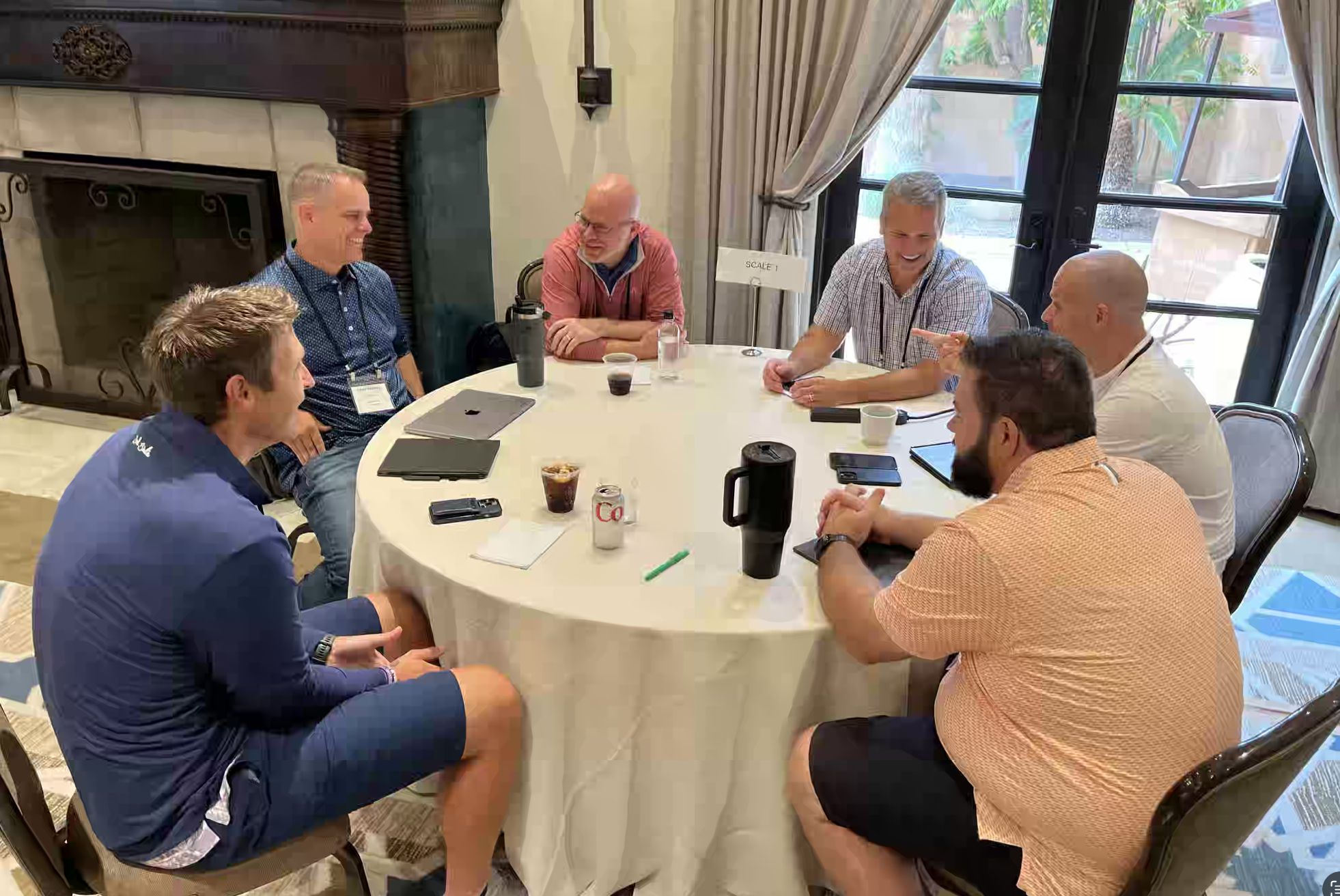
Practical Founders brings eight to ten non-competing software CEOs into a confidential, three-hour Zoom meeting every month. Head curates groups by revenue stage and moderates the discussion. Usually, two or three members bring a live problem. The same people return, so the conversation can pick up where it left off.
That continuity is the useful design choice. A stranger can recommend raising prices. Someone who remembers your last price increase can ask why customers left. Practical Founders reports more than 45 CEOs across five active groups. Its core audience has roughly $1 million to $20 million in annual recurring revenue: enough traction to face expensive choices about leadership, margins and acquisitions.
The group membership includes access to Head between meetings. Founders are expected to attend at least 75 percent of sessions. EO and Vistage provide broader CEO communities; Head narrows the room to B2B software and broadly similar funding circumstances. The promise depends on having peers who understand both the numbers and the constraints.
A different scoreboard
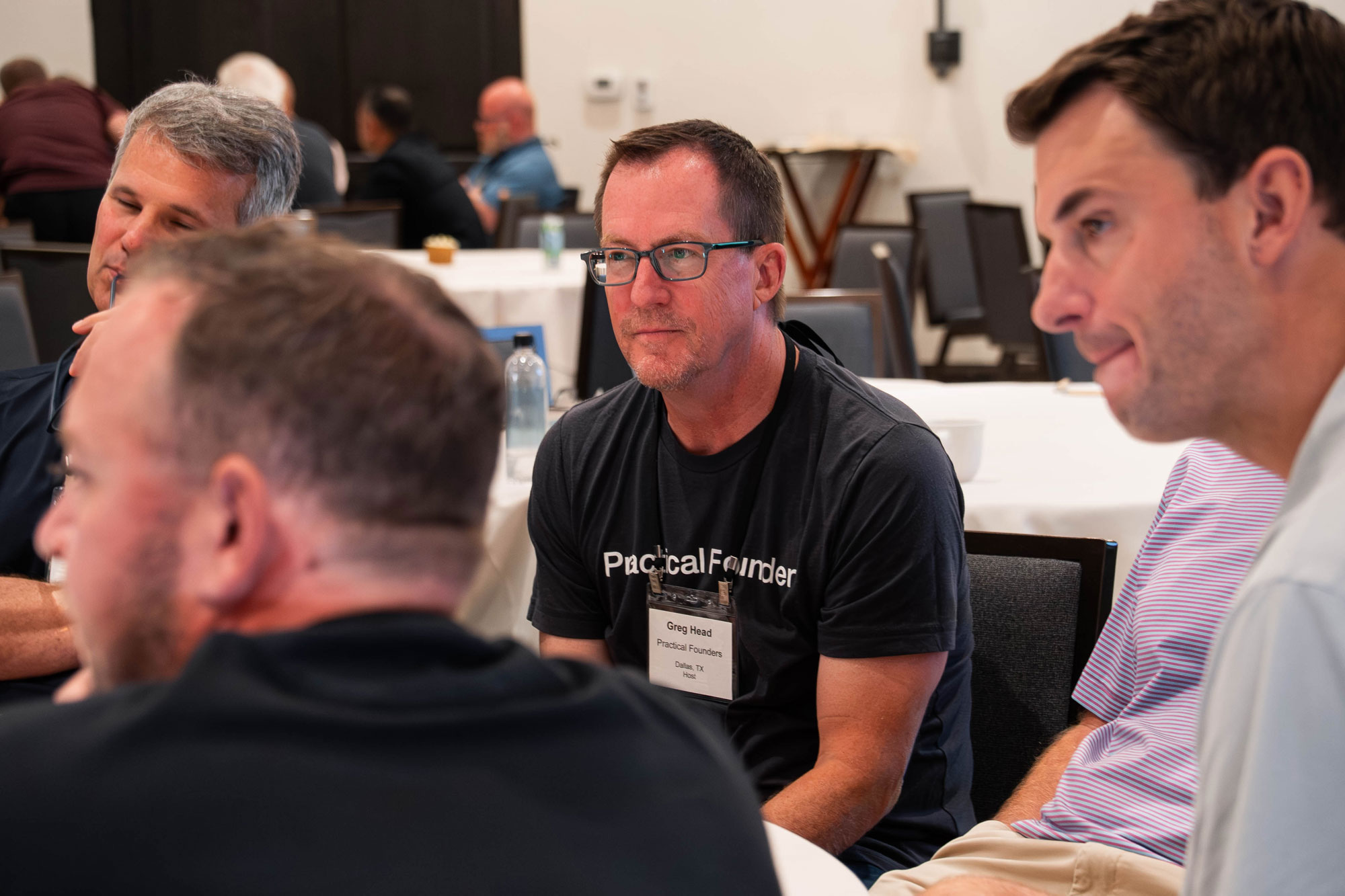
Head’s authority comes from three decades in software, including leadership in businesses that reached $100 million in revenue and one that went public. He has seen the conventional growth machinery from inside. Practical Founders, established in 2022, makes founder ownership part of the conversation about success.
Its central argument is that a valuable software business can be built without a large venture round. Small markets, dependable customers and retained equity can be attractive destinations. That changes the advice: a hiring plan should serve the business the founder wants to own, rather than an assumed fundraising schedule.
It also explains the company’s scale. “I prefer depth over scale,” Head writes in his biography. A business selling familiarity cannot add members indefinitely without changing what members buy. Here, a small recurring group is a deliberate product choice.
The customer who would actually pay
The free podcast gives the wider audience a way into that thinking. Consider Natalie Barbu’s Rella. Its original creator-focused, freemium product generated no revenue. With $25,000 remaining, the four cofounders considered closing. A viral video aimed at social media teams brought paying customers and revealed a different market.
The rebuilt product served those teams. Barbu’s interview describes reaching almost $3 million in annual recurring revenue run rate within twelve months of the relaunch. It also includes the less glamorous financing detail: the founders waited about two years to pay themselves, using creator income and side projects to support their lives.
The transferable move is to test who will pay before adding more product. The viral distribution cannot be ordered from a menu. ScaleGrid’s Dharshan Rangegowda supplies a useful parallel: early enterprise-selling mistakes led him toward developers with urgent database problems. Technical support and search content then helped the business grow. Both stories make customer selection a practical decision, with consequences for how the product gets sold.
Four years before the flywheel
Eran Galperin’s Gymdesk interview puts a price on patience. For four years, customer acquisition failed to work well enough. Galperin took a CTO job and developed the gym-management software on nights and weekends. Organic search eventually became a growth engine.
By the end of 2023, Gymdesk had reached $3 million ARR with sixteen employees and no salespeople. The interview describes low churn, high profit margins and a majority sale to Five Elms Capital in 2024. Those details are more useful than treating the acquisition as proof that every founder should bootstrap.
A reader can copy the questions: do customers stay, does the business produce cash, and can people buy without a sales call? Four years of personal runway is a harder thing to copy. The podcast’s value comes from leaving the waiting period in the story.
“I lost millions on two pages of numbers.”
Riccardo Pisano / Growth-X
Buy perspective. Bring the numbers.
Practical Founders turns this expertise into several commercial offers. Its individual advisory costs $5,000–$7,500 per quarter, including six biweekly ninety-minute sessions and access between calls. The member Summit adds an in-person setting; the 2026 Phoenix event page listed a separate $1,750 founder fee.
Sponsorship is another revenue stream. The company advertises six category-exclusive annual slots, combining podcast exposure, introductions and Summit access. Published episode sponsors include development firms and financing specialists. It is a business serving businesses, with free editorial work alongside paid relationships.
The groups require an established company, candor and time. Pre-revenue founders and those pursuing institutional VC fall outside the stated membership fit. An urgent decision may call for individual advisory. For everyone else, the podcast offers a useful habit: examine a founder’s result alongside the customer, cost and sequence of decisions that produced it.
The latest interview, with goHappy founder Shawn Boyer, complicates any simple anti-investor reading. Boyer has used bootstrapping, venture capital and growth equity. Customers’ requests pushed goHappy from an app toward text messaging; his experience also changed how he thought about speed. He now emphasizes proving assumptions before accelerating. Practical Founders can accommodate that story because its useful question is which financing and operating choices fit the company in front of you.
Start with Pisano. Could you explain your financials to a buyer next week? It is a concrete question you can take back to work today.