A settlement is an excellent ending until somebody asks when the money will arrive. The dispute has been resolved. The legal fee is expected. The firm still has a payroll, an office and a calendar full of commitments. A successful result can leave a surprisingly ordinary problem behind: the cash is elsewhere.
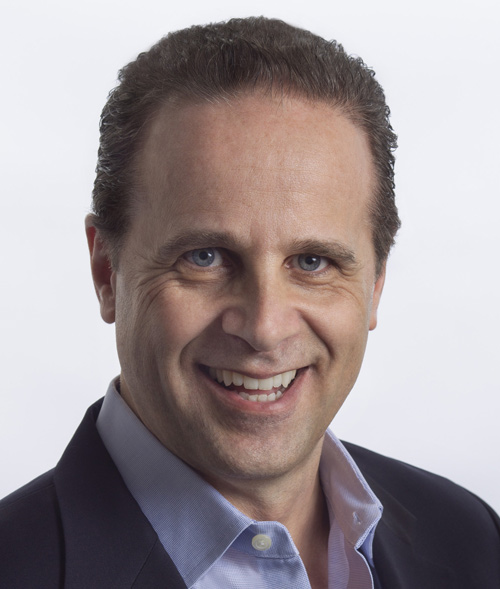
Peter J. Speziale made that interval his business. He co-founded RapidFunds in 2004 after twelve years practicing law and another stretch in dispute resolution. His customers were plaintiffs’ lawyers working on contingent fees, whose revenues depended on successful outcomes and the eventual arrival of payment. He had spent enough of his career among lawyers to understand that an expected fee and an available balance serve different purposes.
There is a pleasing complication to this otherwise practical career. Speziale also writes fiction. His name appears in a literary journal beside a short story called Torn. The executive who helps firms deal with unfinished financial business has spent time constructing endings of his own.
Twelve years on the other side of the desk
Before the funding applications came the legal education. Speziale graduated from Binghamton in 1984 with academic honors and received his law degree from St. John’s in 1987. Between 1988 and 2000, his work took him through New York’s state and federal courts, general and commercial litigation, and real estate transactions. He worked at Kelley Drye & Warren and later in his own practice.
Those settings put different demands on the same professional. A lawyer in a large firm works within an established organization. A lawyer running a practice also has a business to keep operating. Speziale’s eventual company would sell its familiarity with both worlds: the case itself and the firm carrying it.
In 2000, he moved into a national dispute resolution business. Over the following four years he advanced into running operations, developing relationships with plaintiffs’ contingency fee attorneys across the country. He also spoke about dispute resolution before state and local bar associations. His career was moving from handling individual matters toward running a service used by other lawyers.
The interval becomes a company
RapidFunds began in 2004, co-founded by Speziale and attorney Charles S. Brofman. Its premise addressed a familiar difficulty for contingent fee practices. The work can demand substantial resources before a fee arrives. Even when the parties have settled, administrative steps can keep the payment from reaching the firm immediately. Rent, meanwhile, remains admirably indifferent to legal procedure.
The business initially operated as a subsidiary. In 2008, Speziale and his partners formed Modeso LLC, which purchased the RapidFunds subsidiary. That transaction gives the story a second beginning: four years after helping establish the operation, he participated in buying it. He continued as president and CEO through the change.
The core post-settlement arrangement involves purchasing an interest in an anticipated legal fee. RapidFunds advances funds against that interest, and the lawyer transfers the purchased portion when the settlement proceeds arrive. Its description makes the underlying distinction clear: a completed settlement can have value before the related fee is available to spend.
In the company’s account, these purchases are non-recourse if the underlying payer ultimately fails to pay or becomes insolvent. The structure places attention on the settlement, the expected fee and the payer. It also explains why a background in legal work is relevant to understanding what is being funded.
- 01Case settlesA legal fee is expected.
- 02The waiting intervalFunding can bring part of that fee forward.
- 03Proceeds arriveThe purchased portion is transferred.
A business with its own funding clock
Helping other firms bring money forward requires financial capacity at home. RapidFunds’ later financing transactions show another part of Speziale’s role: arranging the resources that allow the company to keep making advances. There are lawyers waiting for fees on one side of the business and capital relationships to maintain on the other.
In 2019, Bryant Park Capital arranged a facility described as totaling up to $70 million, comprising a $40 million delayed draw term loan and a $30 million accordion feature. Those components matter. The headline amount described the financing structure and its expansion feature; it should not be read as a pile of cash distributed to clients in one afternoon.
Another announced transaction followed in September 2023: a $35 million senior secured credit facility with an alternative credit fund. Bryant Park Capital again served as exclusive financial advisor. The deal involved refinancing the existing senior facility and supporting future growth. These were different transactions at different dates, each with its own terms.
Speziale described the 2023 deal as his company’s second transaction with the advisor. The continuing relationship fits the less theatrical side of building a finance business. A founder has to know the customers, but also has to work through the models, diligence and documentation that keep the funding operation supplied.
Senior secured credit facility announced for RapidFunds. A company financing amount, separate from customer advances.
The work after the paperwork
By September 2018, RapidFunds had announced an expansion into case cost financing, extending its offering to help attorneys cover litigation expenses. Speziale linked repeat business to the way the company treated its customers and conducted its work.
“we enjoy tremendous repeat business”Peter Speziale · September 2018
The wording is useful because it locates his pitch in an ongoing relationship. A firm that returns has already experienced the application, the questions, the agreement and the transfer. Repeat work asks a provider to make its process bearable a second time. Lawyers have plenty of paperwork without acquiring it as a recreational activity.
RapidFunds describes a sequence of application, due diligence, agreement and payment. It says some matters can receive funds on the day of application, rather than promising that every matter will. Its emphasis on attorney staff is part of that argument: people familiar with litigation can review a case without requiring the applicant to teach an entire profession first.
The company’s examples make the range of that work more tangible. It describes advancing $65,000 against a California lawyer’s fee in an employment discrimination settlement and $125,000 against an Illinois lawyer’s fee in a civil rights settlement. Another example involves more than $3 million advanced against a national firm’s fee in an employment class action. The matters and amounts differ; the shared question is when an expected fee becomes usable money.
Those examples help explain why Speziale’s audience includes different kinds of practices. A firm settling a few large matters each year has a different rhythm from one resolving many smaller cases every month. RapidFunds explicitly describes serving both. The business has to accommodate those differences while assessing the particular settlement in front of it. For its president, that keeps the work connected to the practice of law, even after his own career moved from representing clients to serving their attorneys.
The resulting uses are practical. A fee brought forward can support a hire, marketing, technology or the cost of taking on further work. The attraction is flexibility during a delay. The firm can consider a decision on its own timetable instead of tying every operational choice to the date a particular payment clears.
RapidFunds now displays company totals of more than 4,000 transactions and more than $336 million funded. These describe the business’s reported activity, rather than Speziale’s personal wealth. They also sit alongside a service proposition that remains specific: understand the lawyer’s position, evaluate the expected fee and decide whether to fund.
A second byline
In spring 2015, a reader opening issue 32 of The Hamilton Stone Review could find Speziale in the fiction contents. His contribution was Torn. The contributor note described a New York attorney who had moved into business and identified a collection of linked father-and-son stories as a project in progress.
That detail gives his biography another scale. A financing facility is measured in millions. A story needs the right sentence. Neither measurement tells you very much about the other, and there is no need to make fiction responsible for explaining every business decision he has made.
His author biography records three semesters of creative writing at New York University. It also reports three publications and two short-story contest awards. Here is a professional interest with actual work behind it: study, submissions and publication. The journal appearance supplies a place where a reader can follow the byline beyond a corporate biography.
There is also a geographical change. After roughly twenty-five years in Manhattan, Speziale moved with his family to Marblehead, Massachusetts, in 2016. His author biography describes dividing his time between New York and Massachusetts. The places connect a long New York professional life with the town where RapidFunds is based.
The next case, the next sentence
Speziale’s career has accumulated several kinds of unfinished work. In litigation, there is the matter still being argued. In attorney finance, there is a settled case awaiting payment. In the literary note, there is a collection still being assembled. Each has an outcome in view and work remaining before it gets there.
RapidFunds grew out of the most concrete of those intervals. A lawyer can have achieved something valuable and still need help with the next month’s business. Speziale built an operation around making that gap manageable. His fiction adds a separate pursuit to the portrait, with its own readers and demands. The next fee and the next sentence give him different reasons to keep going.