Rocky had a complaint, and the neighbors heard it first. The Chihuahua hated being left alone. He scratched, barked, and, according to Petcube’s account of its beginnings, brought his owner close to a visit from the police. Alex Neskin, a programmer in Kyiv, assembled an answer from an Arduino, a webcam, and a laser pointer he could control through a browser. The apparatus let him play with Rocky while he was away. It also suggested a business: perhaps the owner who checks a camera wants to do something after looking.
- Founded in 2012 by Neskin, Yaroslav Azhnyuk, and Andrey Klen, Petcube began with an interactive pet camera.
- Its current range spans cameras, a GPS tracker, a water fountain, cloud video, and a pet care app.
- It sells devices and paid services. Some camera functions work free; tracking and richer care features carry subscriptions.
- The company’s hardest early lesson was physical: factories, molds, and camera modules could wreck a tidy launch calendar.
Neskin’s colleagues Azhnyuk and Klen joined him to form Petcube. In September 2013 they put the first camera on Kickstarter. Their pitch offered video, a microphone and speaker, and a laser in a four-inch aluminum cube. Early pledges started at $99; the planned retail price was about $199. The campaign raised roughly $251,000 against a $100,000 goal. People were willing to pay for a strange little sentence: “I can play with my dog from work.”
The cube met the factory
A prototype can be loved before it can be manufactured. Petcube found this out in public. In a 2014 update to backers, it described rising component prices and the work of producing 18 plastic parts with seven injection molds. Another update reported that cameras coming off the intended production line did not yet meet its image-quality expectations. Shipping slipped.
Then the bad luck acquired a sense of comic timing. A tooling subcontractor went bankrupt; Petcube said two molds were confiscated. The team arranged extra work at the factory. Just before mass production, its camera-module supplier also went bankrupt. A fresh delay followed. The company later wrote that thousands of cameras had finally reached homes, though holiday shipping and customs still slowed the last packages. There is a useful distinction here for anyone selling hardware: a customer’s purchase validates desire, but the factory tests the product.
“Our new estimated shipping date is by the end of November.”Petcube’s 2014 manufacturing update
The visible response was practical rather than grand. Petcube argued over its bill of materials without cutting features, worked around suppliers, and kept telling backers what had happened. Those updates read less like a glossy startup origin myth than a dispatch from a warehouse with bad news arriving by phone. They also explain why the firm’s later expansion matters: surviving the first camera gave it a repeatable platform, a mobile app, and a reason to be on a pet owner’s phone.
From looking to doing
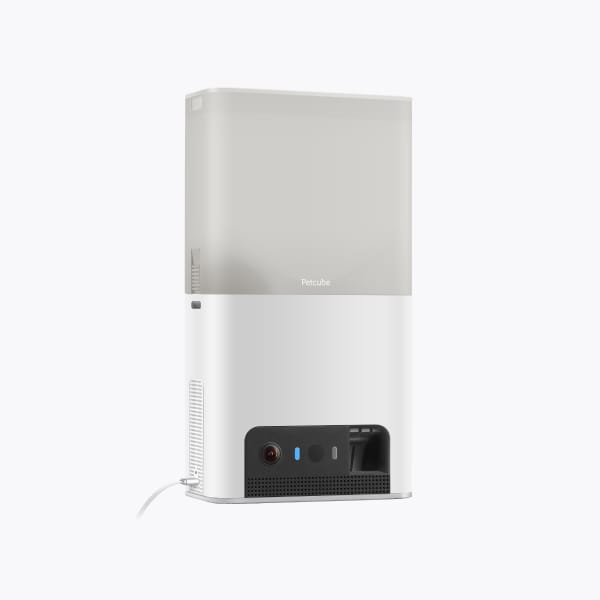
A generic home camera answers, “What is happening?” Petcube built its identity around the follow-up: “What can I do about it?” The original laser could occupy a pet. Play 2 kept the game. Bites added a treat dispenser, so a person could offer a reward from a phone. Today’s Bites 2 Lite pairs the dispenser with 1080p video, two-way audio, night vision, and alerts for sounds or movement. It is a particularly literal version of remote care: speak, watch, toss.
The distinction has limits. A camera cannot cure separation anxiety or replace a person, and a pet has to take to the game. But the product is built for a recognizable customer: someone who leaves a dog or cat at home for work or travel and wants a closer account of the hours between departure and return. The competing choice may be Furbo’s treat camera or an ordinary security camera. Petcube’s case is that pet-specific interaction and the surrounding service are worth the extra attention.
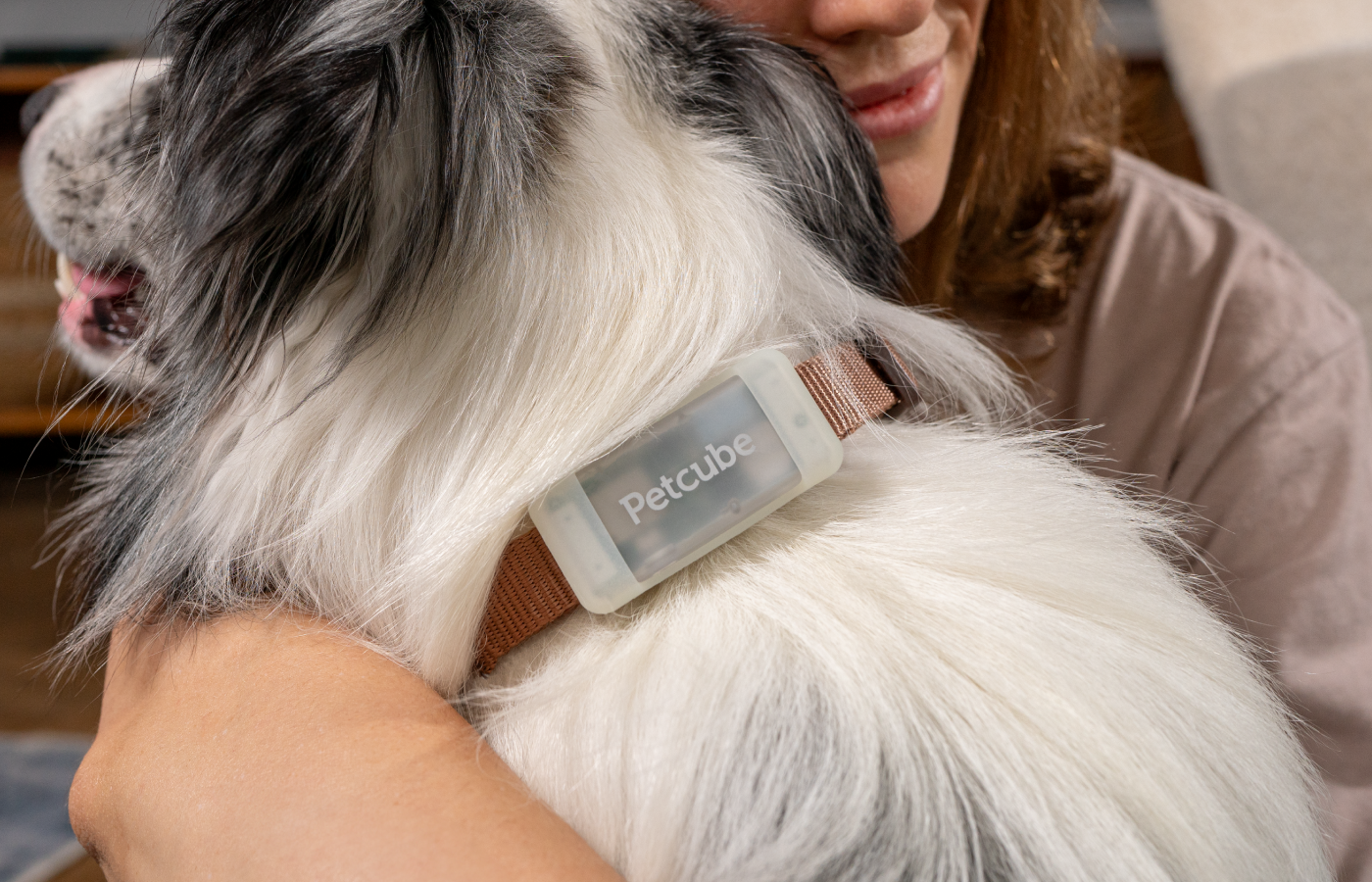
Petcube Care made that service an ongoing business. Cloud video history, smart alerts, and daily summaries turn a live feed into a record. The cameras can be used without a subscription; the more elaborate monitoring features are paid. A GPS Tracker extends the same idea outside the house. It uses LTE for live location, virtual fences, location history, and activity information, and it requires a cellular plan. In a 2024 launch note, CEO Anastasia Kukhar called it a move “out of homes and into the wild.”
The app grows legs
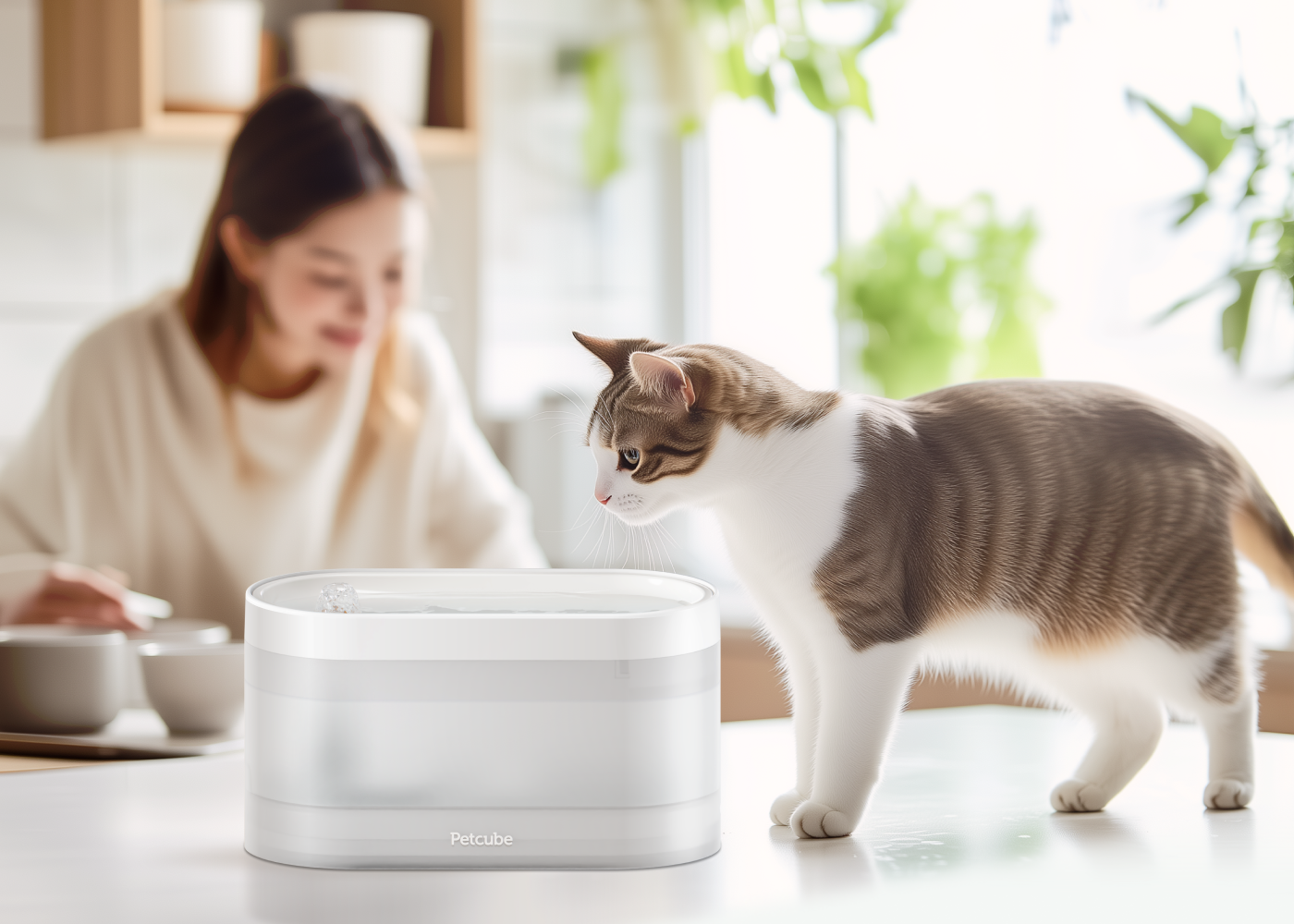
The product line has wandered beyond cameras. Petcube announced a filtered water fountain in 2025, with UV-C light, app reminders for filter changes, and a wireless pump. The claim behind it was hydration; the commercial logic was proximity. If Petcube can be useful around feeding, drinking, walking, and the occasional alarming cough, it has more reasons to be opened than a camera app that waits for a notification.
In March 2026 the company took its clearest step in that direction. Its updated app lets an owner build a pet profile, store medical records, log activities and medication, ask a pet-focused AI assistant questions, and chat with certified vets at any hour. A Petcube device can add live streams and alerts, but the app no longer requires hardware. Petcube listed the guidance and vet access at $9.99 a month or $99.99 a year at launch, with a two-week trial. That price buys advice and organization, not a diagnosis from the camera. It is a different proposition from the $99 Kickstarter cube.
This widening range gives Petcube an advantage and a burden. The company can connect several small, recurring pet-care decisions in one place. It must also make each device and service useful on its own. A location alert is only worth paying for if it arrives when a dog escapes; a vet chat matters when a worried owner needs a real answer; an AI suggestion should know the pet’s history and stay within its competence. The promise has shifted from “stay close” toward “keep a better record, and act sooner.”
What the dog taught the business
The numbers show both the reach and the difficulty of that ambition. Petcube raised $2.6 million in 2016 and a $10 million Series A in 2017. In its Series A announcement it said products were available in more than 18 countries and 5,000 retail locations; a 2023 company post put camera availability at 21 countries. Those are distribution claims from particular years, not a count of active users today. A store shelf is a route to a customer, not proof that a camera stays plugged in.
The copyable part of Petcube’s story is unusually modest. Start with a specific moment of frustration. Build the smallest device that changes what a person can do in that moment. Watch what they return to after the novelty wears off. Then ask whether the next product belongs to the same routine. The dangerous part is equally plain: hardware needs suppliers, quality control, and cash long before its software can learn from customers. Petcube’s own delays are evidence.
Rocky was never a market segment. He was a dog making noise in an apartment. Petcube’s best idea was to take the noise seriously, then to notice the human on the other end of it: absent, curious, and prepared to pay for a small way back into the room.