Pavel Koktyshev’s schoolteacher once suggested that he open his mouth without singing. The class was preparing a Republic Day performance; his voice was changing, and silence apparently seemed the diplomatic solution. He went home and practised while doing the housework. The vacuum cleaner acquired a vocalist. Years later, he still enjoyed singing.
It is a small story, but a pleasing place to begin a career spent encouraging other people to have a go. Koktyshev became an organiser of entrepreneurs, a television presenter, an executive in Kazakhstan’s innovation institutions and a venture investor. Today he is co-founder and CEO of MOST Holding. Much of his work concerns what happens when people who might otherwise remain strangers are given a reason to talk.
There are funds, programmes and job titles in this story. There are also students, mentors, co-founders and neighbouring countries. Follow those relationships and a career that looks unusually varied begins to make sense.
A question he carried out of university
Born in Karaganda in 1990, Koktyshev studied international relations at Suleyman Demirel University between 2008 and 2012. International trade studies at KIMEP followed. The subjects seem apt for someone whose working life would involve a good deal of translation between different professional worlds.
While still a student, he published a paper about Kazakhstan’s university education in the Central Asia Business Journal in November 2009. It considered education in the context of the country’s place in the wider world. Long before the venture-fund vocabulary, there was an interest in how institutions prepare people to participate beyond their immediate surroundings.
His early roles included directing the Institute for Development and Economic Affairs and representing Global Entrepreneurship Week in Kazakhstan. These were jobs concerned with creating opportunities around other people’s work. They also required the unglamorous abilities that a community depends on: arranging programmes, explaining their purpose and persuading people to show up.
In 2014, writing about employment and entrepreneurship, he challenged the appeal of a secure government job as the default ambition for young people. He argued for cooperation among public institutions, financial organisations and the groups that train prospective entrepreneurs. A person needed somewhere to learn before being expected to borrow, build and employ.
“Mentorship is key to successful entrepreneurship, but in Kazakhstan it is not well developed.”
Pavel Koktyshev, 2014
That early argument gives the later investor a useful backstory. Money was already part of his thinking, alongside the preparation needed to put it to work. The question was how to help somebody become ready for the opportunity.
Before the fund, the introductions
MOST’s early history grew out of entrepreneurship gatherings and a business incubator co-founded in 2012. Koktyshev’s partners included Alim Khamitov and Mirat Akhmetsadykov. The organisation would develop into a group covering investment, business support and places for companies to work.
There was a teaching circuit, too. In February 2016, Koktyshev spoke to students at Kazakh-British Technical University and Kazakh National University through the Yessenov Lectures programme. He discussed creative potential, building companies with international ambitions and the help MOST could offer student startups.
It is easy to hurry past university talks on the way to a venture-capital biography. Yet the audience matters. An established founder generally knows that investors exist. A student may still be deciding whether building a company is something people like them can attempt. The invitation comes earlier in the process.
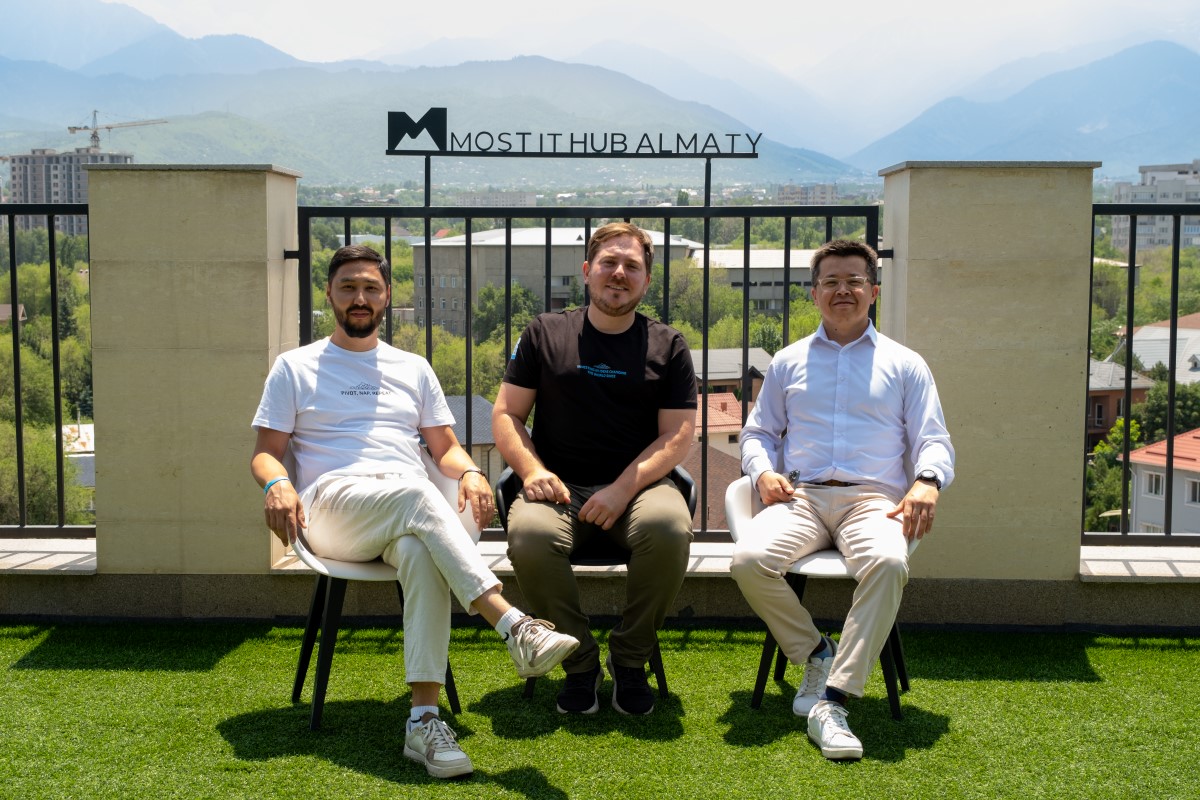
Television belonged to this period of his life as well. Koktyshev presented the programme Leader of the 21st Century. A later, extended nFactorial conversation returned to that chapter alongside the origins of MOST, his institutional jobs and the practical questions young companies ask about financing.
For a career involving so much public conversation, there is an intriguing private qualification: he has described himself as an introvert whose work requires him to act otherwise. It makes the organising seem more deliberate. A person can value the meeting without finding every introduction effortless.
Learning how the machinery works
In March 2018, Koktyshev became deputy chairman of Zerde, Kazakhstan’s national infocommunication holding. His work included coordinating the creation and development of Astana Hub and QazInnovation. The scale had changed from helping an individual founder to working on institutions intended to support many of them.
That shift carries a different set of questions. A founder asks how to start a company. An institution has to consider the environment in which thousands might try. Programmes, rules and coordination acquire practical consequences for people who may never meet the officials involved.
By October 2021, he was CEO of AIFC Tech Hub and acting head of Kazakhstan’s affiliated Centre for the Fourth Industrial Revolution. An online seminar with World Economic Forum specialists brought together discussions of connected devices, data, digital assets and mobility. Representatives from companies and other institutions attended.
The subject matter ranged widely, but the format was familiar: assemble people with different expertise around a shared set of problems. The public-sector chapter added experience of institutions to his earlier experience of entrepreneurship communities.
Co-founder
Deputy chairman
CEO
Registered CEO
In September 2022, he announced an active return to MOST Ventures while retaining responsibilities connected with AIFC. His public note described a US trip intended to build relationships between Central Asian and American investors and startups. It also included a culinary objective: finding a very good taco. Even technological diplomacy must stop for lunch.
The meeting outside the meeting
The first venture forum took place in Almaty in June 2022. It became the Central Eurasian Venture Forum, or CEVF. Koktyshev described its emergence as a response to the community already gathering around MOST: investors, founders and people seeking incubation or acceleration.
One of his remembered scenes explains the appeal. At a previous forum, entrepreneur Yerkin Tatishev sat on a pouffe while several founders discussed their projects with him. There was no elaborate procession to the conversation. The seating was modest; the access was the point.
Koktyshev has described disliking heavily choreographed conferences, where investors and officials are briefly brought to meet founders and then escorted away. His preferred arrangement leaves more room for people to speak as equals. The informal programme therefore deserves serious attention, even when its name suggests a party.
A conference can supply a schedule without supplying much access. The harder editorial choice for an organiser is deciding how people will encounter one another once the scheduled speech ends. Who stays? Who can approach? How long does a conversation have before someone checks a watch?
Those are small design decisions with consequences. They also explain why a person involved in venture capital might spend so much time thinking about the circumstances of a meeting.
A laboratory needs a route to market
On April 3, 2024, Koktyshev and Akhmetsadykov met Akhylbek Kurishbayev, president of Kazakhstan’s National Academy of Sciences. They discussed support for high-technology projects, investment and the conditions needed for scientific work to become entrepreneurial activity. Further cooperation on incubation programmes was agreed.
The interest had been visible in his nFactorial appearance a year earlier, where science occupied its own part of the conversation. For Koktyshev, universities belong inside the discussion about future companies.
The practical gap is substantial. A research team and an investor arrive with different responsibilities, timescales and measures of progress. Putting them together creates a beginning. Turning that encounter into a viable project requires work after everyone has left the room.
By August 2025, his proposals included university venture studios and more flexible arrangements for intellectual property. He was also looking toward deeper cooperation with Asian technology organisations. In his account, the opportunities extended through China, Singapore and South Korea, alongside connections with the United States.
The circle reaches Tashkent
The regional ambition has acquired a concrete Uzbek chapter. In September 2025, Koktyshev joined a discussion at the second anniversary of MOST C-Space Hub in Tashkent. The programme brought together investors and startups and included a cooperation agreement between MOST Ventures and Yoshlar Ventures.
In January 2026, he was named among the experts involved in the Investment Readiness Accelerator in Tashkent. Its emphasis was practical: customers, revenue, investment preparation and the terms on which a young company might raise capital.
A February university appearance in Tashkent returned him to another familiar setting, speaking with students and aspiring entrepreneurs about startups and investment. The geography had widened. The early educational work was still recognisable.
TASHKENT • CEVF 2026 • ORGANISER-REPORTED TOTALS
CEVF held its first Uzbekistan edition in 2026. The published participation figures describe the scale of the gathering; the longer test concerns the relationships that continue afterward. An introduction has value when the next email gets answered.
Koktyshev’s current role at MOST Holding became official in the financial regulator’s register on April 1, 2025. In 2026, he also became an ambassador for Qazaq IT Awards, adding another route for technology businesses to become visible.
Across these changes, the recurring work is easy to recognise. A student needs encouragement. A founder needs a mentor. A researcher needs a commercial partner. An investor needs someone worth backing. Koktyshev keeps arranging places where they might find each other. For someone once advised to mime, he has put considerable effort into making sure the conversation can be heard.