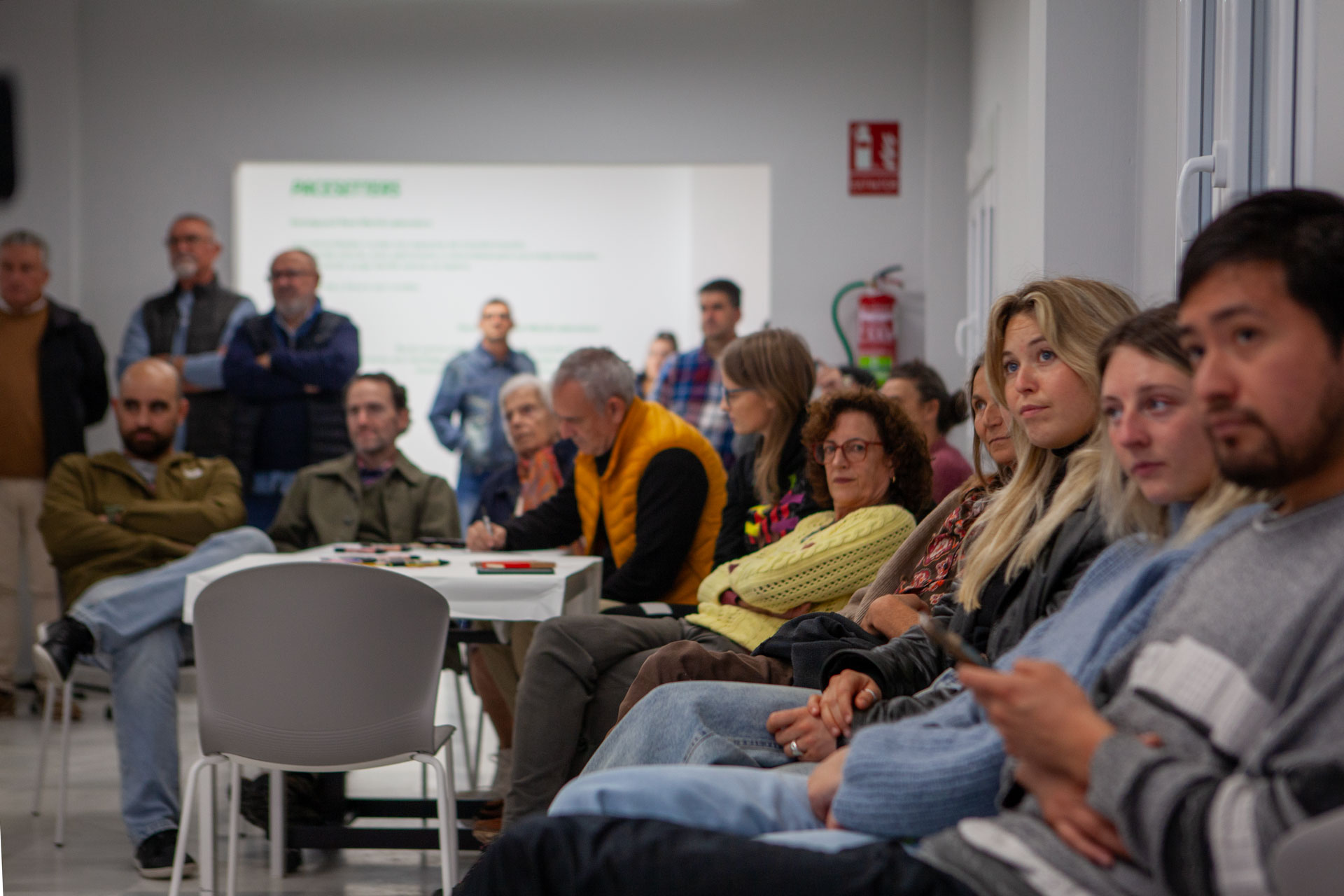
The weather interrupted the climate experiment before the speeches were over. On November 14, 2024, around 100 residents and guests gathered in Genalguacil’s public library, in the mountains of Andalusia, to open a new research laboratory. Storm-related travel restrictions kept government officials away. They appeared by video instead. The people in the room had coffee, cake and a village’s future to discuss.
This was PACESETTERS at work. The European project studies how artistic and cultural activity can help people respond to climate change, then tests ideas with communities. Its rural laboratory began with a familiar Spanish gathering, the merienda. Researchers and residents used the occasion to talk about enterprise, innovation and life away from the big cities. A local working group emerged.
The scene supplies a useful introduction to an undertaking whose vocabulary can become forbidding. Behind the talk of frameworks and collective agency sits an approachable question: what could people build together if artists, local institutions and researchers shared the work? PACESETTERS has three laboratories in which to find out. The answer will have to accommodate both carbon and livelihoods.
A grant with an expiry date
PACESETTERS is a Horizon Europe research and innovation action coordinated by the Norwegian University of Science and Technology, NTNU. The project began on March 1, 2024, and is scheduled to end on February 28, 2027. The European Commission records a total project cost of €3,771,900, matched by the EU contribution. That is the approved project budget; it should not be read as money already spent.
The financial distinction matters. PACESETTERS operates through public research funding. The ventures it hopes to encourage will need their own routes to survival. Its work examines how cultural organisations and creative practitioners can move beyond brief funding cycles toward activities that remain viable financially, environmentally and artistically. Research money buys time to experiment. It does not settle the question of what pays the bills afterwards.
Project coordinator Florian Schneider, an NTNU professor of art theory and documentary practices, brings artistic research into the centre of the undertaking. The consortium’s 15 partners combine universities, research organisations, cultural institutions and networks. Among them are Cambridge, Fraunhofer, Dyne.org and the European Creative Business Network. Their local counterparts give the research somewhere to happen and people with whom to do it.
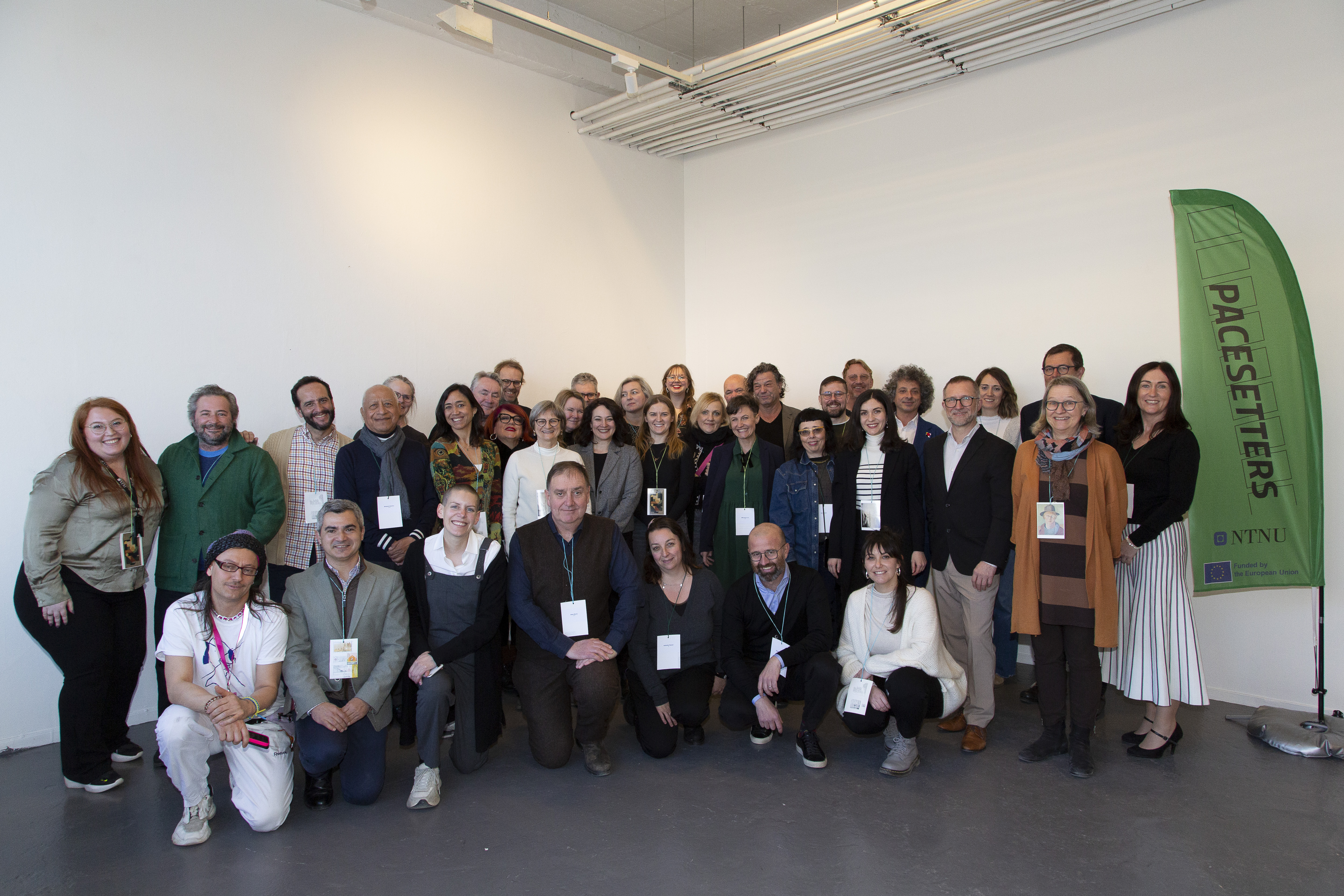
At the March 2024 kickoff, 40 representatives gathered in Trondheim. The programme ranged from climate policy to artistic practice, with a public session of short presentations about ideas including justice, transition and repair. The meeting ended with student and doctoral work at the art academy. A tapestry that incorporated a theremin and purses made from wool scraps shared the occasion. Material experiments were present from the start.
Three places, three different tests
Genalguacil’s laboratory draws on the village’s museum foundation and the wider Valle del Genal. The project describes a place confronting depopulation, pressure from tourism and climate hazards. Its proposition is to examine what rural knowledge, cultural work and shared enterprise can contribute to a viable local economy. This is research with an existing community, including its attachments and disagreements. The village is considerably more than a picturesque venue.
Galway supplies a different problem: the operation of a large arts festival. The Climate Transition Lab launched through activities at the 2025 Galway International Arts Festival. Working with PACESETTERS and sustainability consultancy Climeaction, the festival began its first full carbon-footprint assessment, using 2024 data to establish a baseline. The investigation covers energy, travel, materials and audience participation. It makes the festival’s operational choices part of the research.
The Galway launch also included Funeral for Ashes, by Conor Maloney and John Conneely. The installation used scans of Irish woodland, responsive visuals and generative music to engage visitors with ash dieback. Participants had to coordinate their movements. Here, cooperation became something people physically attempted. The work offers a vivid example of participatory artistic research; its audience response and the festival’s emissions accounting answer different questions.
In Nowa Huta, the former steel district of Kraków, the C. K. Norwid Cultural Centre anchors a Cultural Resilience Lab. Its work involves established residents and newcomers, including people displaced from Ukraine. The research asks how cultural participation can strengthen belonging and cooperation under pressure. That brings the social conditions of adaptation into view: the ability to organise together depends partly on whether people feel they have a place.
The November 2024 opening made that ambition visible. Forty people sat in a circle at ARTzona, a project and exhibition space. UKRAiNATV connected the gathering to online viewers and a hybrid breakfast in Kyiv. Participants made collages, wrote together and talked over breakfast. These are modest activities on their own; the laboratory’s task is to investigate what continuing relationships and capacities can grow from them.
“We understand culture as the way of being in the world.”Jarosław Klaś · Director, Norwid Cultural Centre
From field notes to something people can use
The three laboratories sit within a larger research structure. Twelve creative case studies examine practices across three themes: decentralised architectures, collective intelligences and shared creativity. The case-study method combines interviews, field visits, workshops and research across disciplines. Its purpose is to discover connections between resources, production and the people involved, then test the implications in local settings.
PACESETTERS’ map of challenges makes the scope more tangible. It includes alternatives to petrochemical materials, combinations of heritage skills with digital tools, the indirect environmental effects of large events and the role of documentary practice. The range is deliberately broad. A useful idea might travel between fashion, performance and software, even when the practitioners rarely attend the same professional meeting.
For an artist or cultural organisation, the most direct entrance is the open call. It accepts projects and proposals at different stages, including work that has yet to begin. Contributors can describe their own experience or point to another relevant practice. Selected submissions may receive tailored feedback, enter case studies or connect with a laboratory. The offer is a route into research, expertise and relationships.
The call also invites accounts of failure. That is a sensible editorial choice for a research project: a polished success story can conceal the decisions others most need to understand. Submissions feed a Library of Practice and mapping work intended to connect dispersed practitioners. People can contribute anonymously or register an account to manage their material. Participation itself should not be confused with an award of funding.
The hard part is deciding what counts
PACESETTERS is developing support and evaluation frameworks around preparation, progress, impact, value and trust. That involves a demanding choice: deciding what deserves measurement before settling for whatever data happens to be available. Proposed methods include interviews, focus groups and surveys. Environmental performance matters, alongside forms of cultural and social value that cannot be reduced neatly to a ticket sale.
This gives the project its place among cultural-business support programmes. Its emphasis is on shared action, local context and several kinds of value. The laboratories adapt the pre-accelerator format, which helps people develop early ideas and teams. PACESETTERS’ stated ambition adds shared ownership and ways of distributing risk. The practical challenge is to make those arrangements workable for people whose time and income are already stretched.
Digital trust is another research strand. The project proposes experiments in credentials, authentication and records of creative experience. One concrete connection appears in Dyne.org’s Longfellow-ZK documentation: the foundation says PACESETTERS funding supports its maintenance effort around a community distribution of zero-knowledge proof software. That is a partner’s technical contribution. The wider cultural support system remains an undertaking to develop and test.
A clinic for creative growing pains
In November 2025, the project took its questions to La Térmica in Málaga. The cultural centre occupies a former hospital, a detail the summit organisers put to work. Their Polyclinic of Creative Practice divided activity into seven departments, including rural innovation, collective entrepreneurship and impact investment. Participants came to discuss problems and develop approaches across fields.
The programme gave the metaphor some substance. Sessions addressed independent digital infrastructure, audience research and performance indicators. Pre-accelerator design sprints explored support and investment models, with a field trip to Genalguacil extending the conversation beyond the venue. Norwid Cultural Centre subsequently reported its staff’s participation. The summit belongs in the project’s record of completed activity, alongside continuing research.
The first periodic report, published in March 2026 and covering work through August 2025, describes an emerging portfolio of business ideas. It also records a finding with consequences for the approach: local consultation brought gentrification and depopulation into focus. The implication is that cultural development needs to consider who can stay, participate and benefit. More activity in a place is an incomplete measure of its success.
What travels beyond the three labs
A reader can borrow the sequence before borrowing any technology. Begin with an institution people already know. Identify a problem with the people affected. Bring relevant expertise into the room, run an experiment and agree how to judge it. Keep records of the awkward parts. This is an interpretation of PACESETTERS’ method, and its appeal lies in making cooperation practical enough to inspect.
The conditions deserve equal attention. Such work depends on a credible local host, time for participation and support that lasts beyond a launch. PACESETTERS itself acknowledges that precarious working conditions and short project cycles require effort beyond its research grant. A community organisation seeking an immediate funding cheque or a finished emissions tool would need a different offer. These laboratories are places for developing and testing approaches.
Back in Genalguacil, the storm interrupted the travel plan; the gathering continued. The coffee-and-cake format was small enough to recognise and useful enough to begin a conversation. PACESETTERS’ harder task is to turn such beginnings into arrangements people can maintain. Its February 2027 deadline puts a date on the research. The communities will still have work to do the following morning.
Step into the work
Explore the project website, contribute a practice, or browse the map of challenges and summit programme.
Follow LinkedIn, X, Instagram, Facebook or Lemmy. Watch the kickoff recordings and visit the YouTube and PeerTube channels.