In July 2019, Fred Wilson downloaded an app and picked out a painting. The work was Kehinde Wiley’s Saint Jerome Hearing The Trumpet Of Last Judgement. Wilson, a venture investor whose firm backed Otis, wrote that he intended to buy a share when the offering opened. There was something wonderfully odd about that sentence. A painting, normally a single object with a single owner, had acquired a release date and a share price. A collector no longer needed a wall.
- Otis sold fractional interests in art and collectibles through an investing app.
- It handled the object; investors held a financial stake.
- Public acquired the company in 2022. Resale still depended on demand.
The collector who did not need a wall
Michael Karnjanaprakorn had already co-founded Skillshare, an online learning community. Otis, incorporated in 2018 and launched in 2019, brought another expensive, intimidating world within reach. Art and rare collectibles required money, connections and somewhere to keep them. An app could lower the first barrier and arrange the others. The customer could be someone who knew sneakers better than securities, or an investor curious about assets beyond stocks.
The appeal was personal. In a 2019 interview, Karnjanaprakorn described users’ desire to own culture and support artists. “The financial side is just like an added bonus.” It is a revealing distinction: attachment could bring people through the door before a spreadsheet did.
The object stayed whole. Ownership did not.
Otis offered securities linked to individual assets. Its filings described series limited liability companies, with assets held for the relevant series. Investors bought interests in those structures. Nobody cut up the canvas. Nobody mailed out a fraction of a shoe. The paperwork divided the financial interest while the collectible remained intact.
That required expertise well beyond building a pleasant screen. Someone had to source an object, investigate it, arrange storage and insurance, prepare an offering and administer ownership. Public’s later explanation of the process describes a company holding the asset and offering securities after SEC qualification. Qualification did not make the investment a guaranteed winner. It made the offering possible.
A gallery with a release calendar
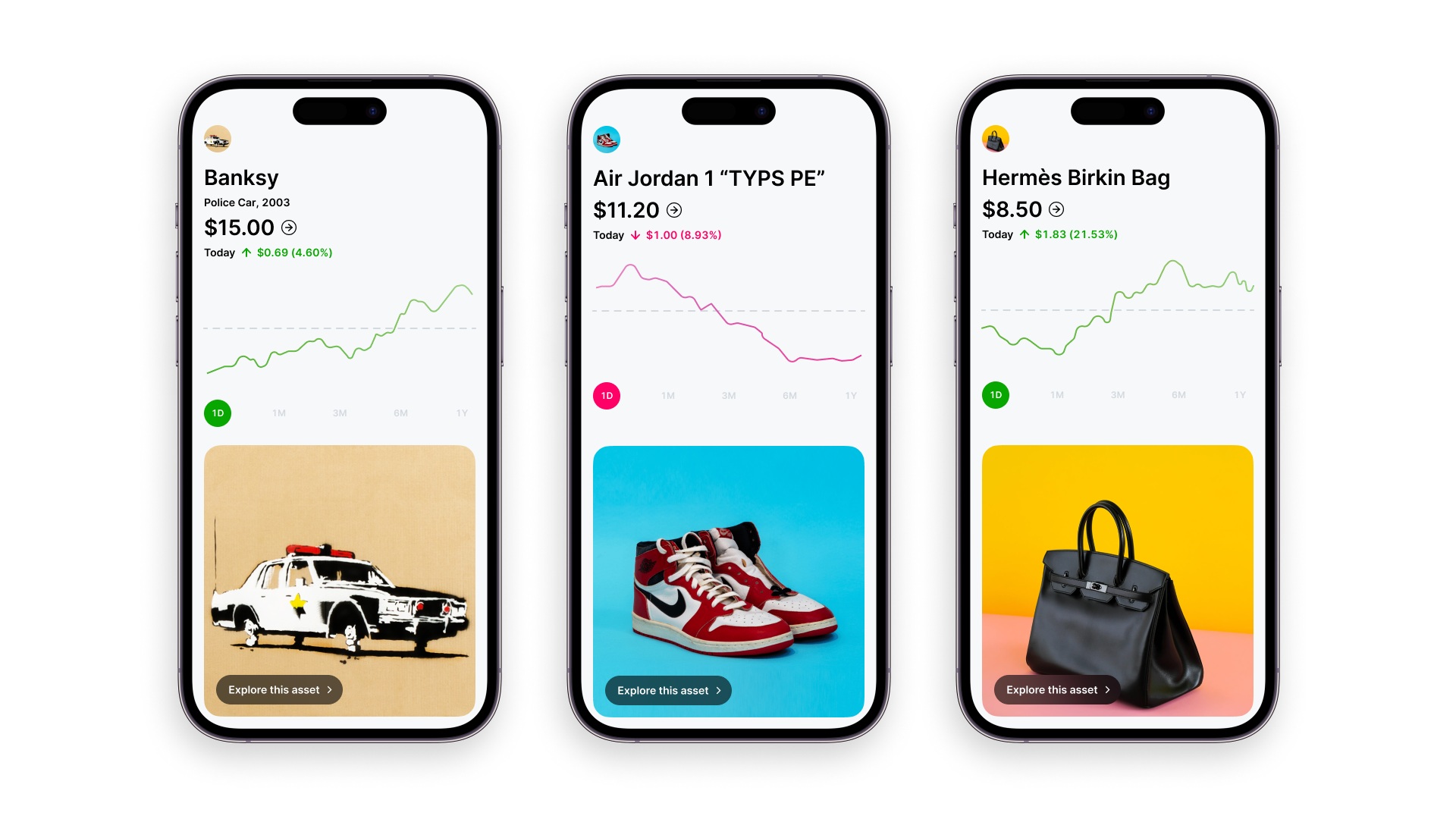
Otis borrowed a familiar ritual from streetwear: the drop. New offerings gave people a reason to return, with the object’s history supplying the conversation. Art, comics and sneakers could sit in the same app because the common thread was cultural significance. Rally also offered fractional collectibles; Masterworks focused on art. Otis’s particular pitch was the meeting of collector enthusiasm and investment access.
The MSCHF collaboration made that pitch unusually concrete. For Medical Bill Art, the collective turned medical bills into artworks and worked with Otis to offer shares. Karnjanaprakorn reported more than 400 participants. Here was an audience responding to the creator and the story, as well as the possibility of ownership. The offering connected financial participation to a piece of social commentary.
Small ticket, substantial machinery
Making an expensive object accessible did not make the operation free. Maveron said Otis’s $11 million Series A closed in November 2019, alongside existing backers including Union Square Ventures, NextView and Kindred. Capital supported the company behind the offerings; it was separate from the money investors committed to particular collectibles.
Fees mattered, too. Public’s November 2022 disclosure described an initial markup of 0-10%, averaging about 5%, and a 2.5% fee on each side of secondary trades. Some assets also carried management or profit fees. Terms varied by asset. At that trading rate, buying and selling $100 of shares at an unchanged price costs $5 in trading fees alone. An object could remain fashionable while its investor lost money.
2.5% buy + 2.5% sell. Uses November 2022 disclosed rates; excludes other charges and price changes.
A token with something in the vault
In December 2021, Otis introduced a different product, Otis House. A collector could submit a physical collectible valued at $5,000 or more. Otis would authenticate, insure and vault it, then mint an NFT representing ownership. The token could change hands while the object stayed put.
The owner could redeem the token for the physical item through a process that destroyed the NFT. This differed from the fractional app: a redeemable token linked to a whole object, rather than a small security interest. The initial selection included a Bob Ross painting and vintage games. Digital ownership, in this version, came with a very physical storage problem already arranged.
Why Public wanted the collection
On March 9, 2022, Public announced the acquisition. Its stated rationale was distribution: bring Otis’s curation and fractional-asset capabilities to Public’s community of more than three million members. For an investing platform, collectibles added another reason to open the app. For Otis, an established investing audience offered a route beyond people who arrived specifically for culture.
Otis reported 100,000 users and 125 listed assets at the sale. The acquisition price was undisclosed. Later that year, its offerings reached Public’s app. The change was a larger home for the idea, with art and collectibles joining a broader investment experience.
The buyer on the other side
The unresolved difficulty was liquidity. Public’s December 2022 explanation says initial-offering shares must wait for sellout and administrative closing before resale. Even afterward, insufficient demand can prevent a sale at a fair price, or any sale. A button labelled “sell” cannot supply the person willing to buy.
A small entry ticket does not make a collectible liquid.Editorial observation
That is the condition under which the proposition loses its charm: money needed soon, an uncertain valuation, or a thin market after fees. Founders can still borrow Otis’s audience insight. Start with something people already care about, remove a specific obstacle, then explain what remains difficult. Otis made ownership easier to enter. The other half of the bargain depended on who wanted to enter after you.