BREAKING Across AI exits stealth with $5.7M seed round co-led by Cota Capital + Village Global PROFILE Berkeley professor swaps tenure for a product team THESIS Agentic memory over RAG QUOTE "Trust, reliability, transparency" BACKSTORY Sharif University to Stanford to Across AI BREAKING Across AI exits stealth with $5.7M seed round co-led by Cota Capital + Village Global PROFILE Berkeley professor swaps tenure for a product team THESIS Agentic memory over RAG QUOTE "Trust, reliability, transparency" BACKSTORY Sharif University to Stanford to Across AI
Human-Centered AI / Builder

Nilou Salehi

She spent a decade studying when people should trust machines. Then she left the lecture hall to build them.

Co-founder & CPO, Across AI  //  Assoc. Professor (on leave), UC Berkeley  //  San Francisco

Nilou Salehi
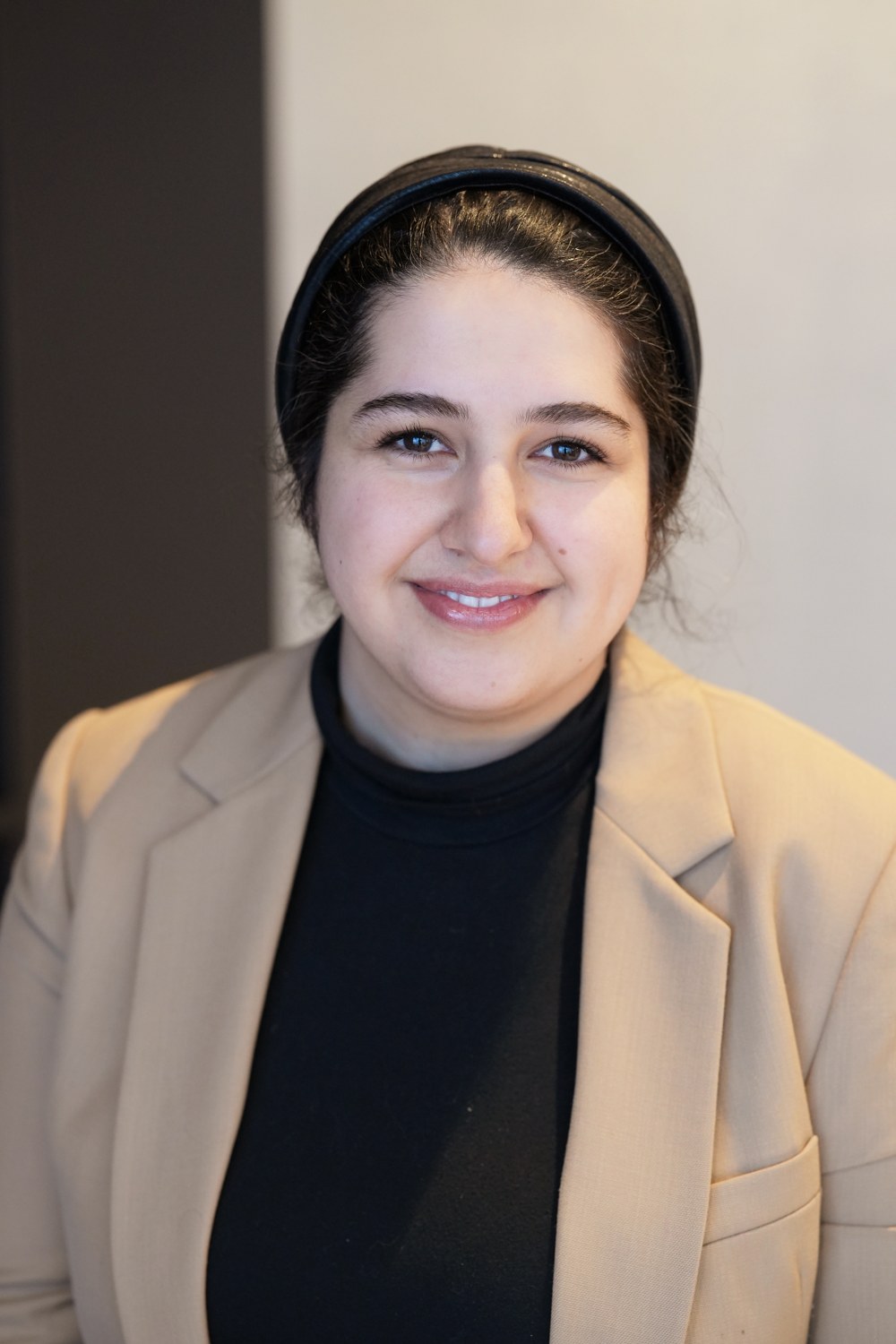
Niloufar Salehi. The researcher who turned a thesis about trust into a startup. Photo: UC Berkeley School of Information
$5.7M
Seed Round
2024
Across AI Founded
3
Co-founders
2018
Stanford PhD
The Dispatch

A product mind shaped in a research lab

In December 2024, a startup called Across AI walked out of stealth with $5.7 million and an unusual claim: enterprise AI doesn't need to be smarter. It needs to be reliable. The person who built that claim into a product is Nilou Salehi, and she arrived at it the long way.

Salehi is Across AI's co-founder and Chief Product Officer. The company sells "agentic memory" to enterprise sales teams - software that reasons over a company's own data, holds onto what matters, and quietly drops what's gone stale. The pitch is aimed at chief revenue officers and the reps under them who burn hours updating pipelines and researching accounts. Across wants those hours back.

What makes the venture worth a second look is the resume behind it. Salehi isn't a growth-hacker who discovered AI when it got hot. She is an associate professor at the University of California, Berkeley's School of Information, affiliated with the Berkeley AI Research Lab and the EECS department, and a published authority on human-computer interaction. She studies the seam where people and algorithms meet, and whether the algorithms can be trusted there.

To build Across, she did something professors rarely do: she paused the tenured career. She is on leave from Berkeley, leading a product team of ex-Google people, UX researchers, and designers. The lecture on human-centered AI became the spec sheet.

The co-founders complete the triangle. Steven Mih, the CEO, carries 18 years of quota-carrying sales experience and once sold his startup Ahana Cloud to IBM. Afshin Nikzad, the CTO, holds a dual Stanford PhD in algorithms and machine learning and is, by reputation, a competitive-programming gold medalist. Salehi is the bridge between the salesperson's instinct and the algorithm's logic.

"My vision for Across AI is to be the place that cracks the code on how to make AI agents useful and reliable for people."
- Nilou Salehi, to UC Berkeley School of Information
The Backstory

From organizing Turkers to organizing memory

Long before agentic memory, there was Dynamo. As a doctoral researcher at Stanford, Salehi helped build an organizing platform for the invisible workforce behind Amazon Mechanical Turk - the people who label data and answer surveys for cents. Her 2015 paper "We Are Dynamo" studied how to spark collective action among workers who never meet. It is a strange thing for a computer scientist to study, and that is the point.

She also built Hive during her PhD: a system that sorts a community into small teams and then rotates the membership using an optimization algorithm, so viewpoints keep mixing instead of hardening. Mozilla picked it up to improve Firefox accessibility. The throughline of her work is not the code. It is the question of how software changes the way humans cooperate.

Her path to that question started in Iran, where she studied computer engineering at Sharif University of Technology, one of the country's most competitive programs. From there to Stanford for the PhD she finished in 2018, then straight to Berkeley as faculty.

At Berkeley the research kept widening: equity in San Francisco's school-assignment algorithms (work that made her a W. T. Grant Foundation Scholar), restorative-justice approaches to online harm, anti-Muslim hate speech, and reliable machine translation for high-stakes settings, the last in collaboration with Timnit Gebru. The translation work won an Outstanding Paper Award at EMNLP 2023 and asked exactly the question Across now sells an answer to: when should a person trust what the model just told them?

That medical-translation project is the clearest tell. Her team built quality-estimation models and interface designs meant to help a professional spot the moment an AI output should not be trusted - the moment to slow down and check. It is a deeply unglamorous problem. A mistranslation in a hospital is not a benchmark score; it is a person. The lesson she carried out of that work is that the model's raw accuracy is only half the system. The other half is whether the human on the other end can see what the machine did and decide whether to believe it.
The Product

What "agentic memory" actually means

Most enterprise AI tools answer a question and forget it. Across is built to remember the right things and forget the wrong ones, on purpose.

The standard way to feed a company's data into a model is retrieval-augmented generation, or RAG: when you ask a question, the system fetches relevant documents and stuffs them into the prompt. It works, until the fetched document is six months out of date and the model answers with total confidence anyway. In a sales context, that is the difference between a warm follow-up and an embarrassing one.

Across positions its agentic memory as the next step past that. The system reasons over a company's own enterprise data, continuously adapting what it holds: retaining the information that still matters to a deal and discarding what has gone stale. The promise is contextually accurate insight that keeps pace with a live pipeline rather than a snapshot of one.

The buyer is the enterprise sales organization - chief revenue officers and the account executives who report to them. The complaint Across is built around is a familiar one. Steven Mih, the CEO, frames it from experience: deep product and account knowledge always gave him an edge in prospect conversations, but assembling that knowledge took an enormous amount of time. Across is the attempt to compress that time without compressing the accuracy.

This is where Salehi's academic spine becomes a product advantage rather than a footnote. A founder who has spent years studying when humans should trust algorithms is exactly the person you want designing a tool whose entire value rests on a salesperson trusting it in front of a customer. Her insistence on control and transparency - that a user must be able to see what an agent did and steer what it does next - is not a compliance checkbox bolted on at the end. It is the design premise.

The Ethos

A human-centered ethos, on a deadline

There is a tension in what Salehi is attempting, and she does not pretend otherwise. Academic HCI moves at the speed of peer review. A seed-stage startup moves at the speed of payroll. She has chosen to drag the patient discipline into the impatient arena and see if the values survive the transfer.

Her stated ambition is unusually specific for a founder. She does not talk first about market size or revenue. She talks about leaving a mark on the industry defined by trust, reliability, and transparency - about being at the forefront of a human-centered AI ethos. In a field where "agentic" too often means "autonomous and unaccountable," she is arguing for agents that show their work.

The bet underneath Across is that this is not a constraint on the business but the business itself. Capability is becoming a commodity; every vendor has access to similar models. What is scarce is the boring, hard-won trust that lets a professional act on what the machine says. Salehi spent a decade studying that scarcity. Now she is selling the cure.

It is early. Across came out of stealth at the end of 2024 and is hiring engineers across San Francisco and Vancouver. The thesis is unproven at scale, the market is crowded, and the leave from Berkeley is, for now, a leave and not a resignation. But the shape of the wager is clear, and it is the rare AI pitch that gets more convincing the more you learn about the person making it.

Project / Dynamo

Workers, organized

A platform that helped Amazon Mechanical Turk workers act collectively. HCI research that became real labor organizing.

Project / Hive

Teams that rotate

An optimization system that reshuffles small teams to keep viewpoints mixing. Adopted by Mozilla for Firefox accessibility.

Project / Translation

Knowing when to trust

Reliable machine translation for high-stakes settings, with Timnit Gebru. Outstanding Paper, EMNLP 2023.

In her own words

The thesis, stated plainly

The contrarian bet

Most AI sales tools chase capability. Across chases reliability. Its agentic memory is built to outdo retrieval-augmented generation by continuously adapting - keeping what's relevant, discarding what's outdated - so a rep isn't handed a confident answer built on a dead fact.

That distinction is academic until you've watched a deal die on bad context. Salehi's decade of research is essentially a long argument that the interface and the trust matter as much as the model. Across AI is the field test.

The Timeline

How she got here

Sharif University
Undergraduate in computer engineering, Iran.
2013 - 2018
PhD in Computer Science at Stanford; builds Dynamo and Hive.
2018
Joins UC Berkeley School of Information as faculty.
2020
NSF grant on restorative justice and social-media conflict.
2022
Begins translation-reliability work with Timnit Gebru.
2023
Outstanding Paper Award, EMNLP. Joins NVIDIA's generative-AI advisory board.
2024
Co-founds Across AI; company exits stealth with a $5.7M seed round.
2025
On leave from Berkeley, leading product at Across AI as CPO.

Things that don't fit the bio

01

Her backers run through a serious network: Village Global is chaired by Reid Hoffman and counts Eric Schmidt and Mark Zuckerberg among its supporters; Cota Capital is led by early Dropbox investor Bobby Yazdani.

02

Her CTO co-founder, Afshin Nikzad, is a competitive-programming gold medalist with a dual Stanford PhD - on leave from a USC professorship to build Across.

03

Her research has been covered in Wired, The Guardian, and VentureBeat - rare reach for academic HCI work.

04

She advises on generative AI at NVIDIA and has been a faculty advisor to Berkeley's AI Policy Hub - one foot in industry, one in governance.