There is a species of executive who arrives with a slogan. Neal Singh arrived at Zenoti with a brick. In November 2023, announcing a new job as president and chief operating officer, he wrote that he had finally accepted something about himself: he was a builder at heart. His ambition for the next chapter was measured accordingly. He would make his contribution “one brick at a time.” It was an unfashionably patient image for a software business, which generally prefers rockets, flywheels, and other objects that move too quickly to inspect.
The brick fits Singh better. His career has been spent on the load-bearing parts of technology companies: product development, engineering, implementation, customer success, cloud operations, security, and support. These departments appear as separate boxes on an organization chart. Customers experience them as one thing. A booking either works or it does not. A contract becomes useful data or remains an expensive attachment. A platform scales cleanly or acquires the creaks and drafts of a hurried extension.
At Zenoti, Singh's domain reaches across that entire experience. The company makes the operating software used by salons, spas, medspas, barbershops, and fitness businesses. Its platform handles appointments, payments, marketing, inventory, staff, and customer relationships for more than 30,000 businesses in over 50 countries. It is a wonderfully human industry supported by an astonishing quantity of machinery. Somewhere between a guest deciding on a haircut and a stylist being paid, the software must remember nearly everything and make itself nearly invisible.
Four industries, one recurring problem
Singh's route to a salon software company was anything but cosmetic. He spent more than a decade at Microsoft, where he helped build the Dynamics enterprise resource planning portfolio and eventually served as a partner general manager. ERP is the unromantic skeleton of a large organization. It keeps finance, supply chains, manufacturing, and other essential functions attached to one another. To work on it is to discover that a clever feature is only as valuable as the complicated company willing to trust it.
In 2012, Microsoft and GE created Caradigm, a joint venture intended to bring large, scattered data systems together. Singh joined its founding executive team as chief technology officer and senior vice president of engineering. Four years later, after GE became the sole owner, he was promoted to president and CEO. The move enlarged his view from the product itself to the institution required to deliver it. He was still building software, but now every wall connected to his office.
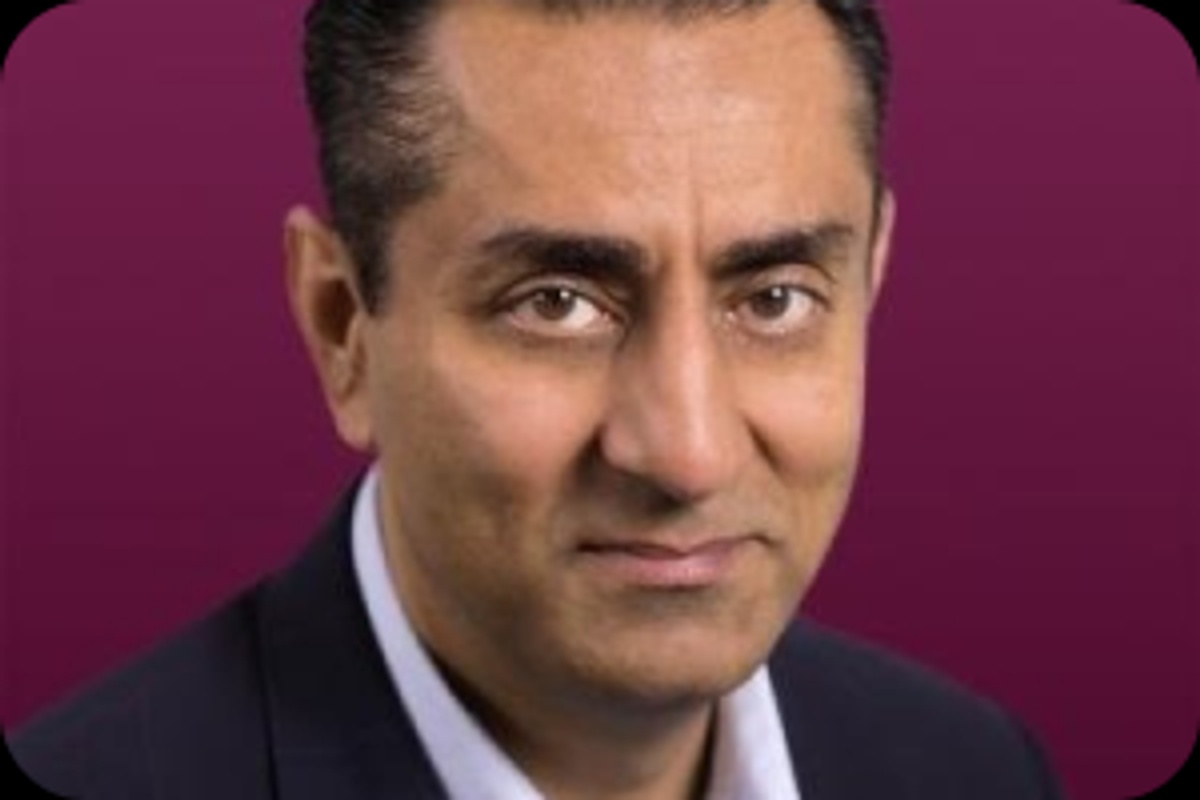
Then came Icertis in 2018. The company organizes contracts, those documents that contain nearly every commercial promise and are nevertheless frequently filed as if no one will ever need to read them again. As chief operating officer, Singh owned product definition, development, professional services, customer success, and cloud operations. Icertis expanded rapidly and reached unicorn status during his tenure. The valuation made news; the more revealing detail was the span of his job. He was again responsible for the long journey from code to customer consequence.
The operating route
One small Icertis story catches his style. The company wanted more employees and partners to complete its product certification, but people often finished the training and postponed the exam. Singh suggested a global certification day. The organization coordinated schedules, cleared room around releases, and turned an individual chore into a collective event. It was not a grand strategy. It was a piece of friction noticed, named, and removed. Operations, on its good days, is applied empathy with a calendar.
“I am a builder at heart. It gives me the greatest joy.”Neal Singh, on joining Zenoti
The beauty of an appointment book
When Singh moved to Zenoti, he crossed from horizontal enterprise systems into vertical software, a platform designed around the peculiar details of one field. The details are where the charm and difficulty reside. A salon appointment has a service duration, a preferred provider, a room, a product requirement, a possible upsell, a reminder, a payment, a tip, and a reason for the guest to return. Multiply that sequence across locations and brands, and the appointment book begins to resemble a living ERP system with better lighting.
Zenoti co-founder and CEO Sudheer Koneru said the company wanted Singh to integrate its product and delivery functions and help customers improve revenue and profit. Singh's own explanation was more architectural. He was drawn to a company that had deeply adapted enterprise tools to its industry, then extended them into payments, financial technology, and the supply chain. He saw a familiar job in unfamiliar clothes.
That job begins with the customer rather than the org chart. Zenoti describes Singh's remit as global operations, including product development, engineering, implementation, customer success, and support. Innergize, the company's industry event, has described an even wider span that includes international subsidiaries, information technology, security, cloud, revenue, and professional services. The breadth is not executive decoration. It reduces the number of seams at which responsibility can politely disappear.
more frequent visits among customers in membership programs, according to Singh's discussion of Zenoti benchmark data in 2025. The statistic explains why he describes membership as a relationship model, not merely a recurring charge.
In 2025, discussing membership programs, Singh pointed to Zenoti data showing that enrolled customers tended to visit 30 to 40 percent more often. His interesting move was to treat membership not simply as revenue but as a relationship strategy. That is the operator's eye again. The payment is one event. The pattern of return visits is the system.
Intelligence needs somewhere to work
The current chapter is artificial intelligence, though Singh's career makes the phrase feel less like a rupture than a continuation. Microsoft Dynamics organized business processes. Caradigm connected data. Icertis made the contents of contracts more usable. Zenoti is now placing specialized agents inside workflows for calls, leads, marketing, scheduling, and other recurring tasks. In each case, intelligence matters because it has somewhere specific to go.
Zenoti launched its AI Workforce in September 2025, training the system on patterns across its business network. Singh shared the launch as a way to help businesses scale more intelligently while letting staff concentrate on judgment, creativity, and guests. This is a practical division of labor. A receptionist should not have to choose between the person standing at the desk and the telephone ringing beside them. Software that answers the second demand creates more room for the first.
There is, of course, a difference between an agent that performs neatly in a demonstration and one entrusted with a Tuesday afternoon. Singh's professional history sits almost entirely inside that difference. Enterprise systems must handle exceptions, permissions, integrations, security, and the thousand habits no product team anticipated. A useful AI strategy therefore looks rather like an operations strategy: narrow the distance between the system's decision and the customer's result, then watch what happens.
Singh has also spoken inside Zenoti about psychological safety. His phrasing is telling: trust and confidence allow people to be creative and vocal without fear of judgment. For an executive charged with connecting many functions, candor is infrastructure. Engineers must be able to say a deadline is dangerous. Support teams must be able to report that a polished feature confuses customers. A company cannot fix what its hierarchy prevents it from hearing.
Outside the corporate brief, his public record includes long service with fundraising efforts for Seattle Children's, time on Boston University's Parent and Family Association Board, and an ambassador role with the RoundGlass Foundation. The common thread is not a claim to sainthood, which would be embarrassing for everyone. It is participation: boards, guilds, teams, institutions. Singh appears most at home inside structures that ask people to make a contribution and leave the whole thing sturdier.
The next brick
A career can look inevitable when compressed into a biography. Microsoft led to Caradigm; Caradigm led to Icertis; Icertis led to Zenoti. Real careers are messier. Industries turn, companies reorganize, technology acquires a new vocabulary, and the executive must decide which knowledge travels. Singh's durable knowledge is that product and delivery are not separate stories. Nor are cloud and customer success, or culture and execution. They are rooms in the same building.
This is why “builder” does more work than the usual executive adjectives. It suggests sequence, weight, and consequences. It allows for ambition without pretending that ambition removes gravity. Zenoti's world may now include predictive systems and AI agents, but the test remains agreeably concrete. Does the call get answered? Does the guest return? Does the employee have the information needed? Does the business know what happened?
Singh has built his career around making those answers less accidental. The work rarely comes with the theatrical satisfaction of a ribbon cutting. Most days, the highest compliment is that the system held. Another customer arrived. Another appointment was made. Another brick took the weight.