The security chiefs had just been sightseeing in Jerusalem when the world they were paid to protect began coming apart. It was June 2017. Team8 had gathered them for its first CISO Summit; a tour of the Via Dolorosa was on the itinerary. Then NotPetya struck. A meeting of people accustomed to anticipating trouble suddenly had trouble on the line.
Nadav Zafrir later described how the people in that room exchanged recovery strategies. The useful thing about their gathering was suddenly obvious. People who trusted one another could share information while it still mattered. A conference had become a working network. The lesson he drew was practical: cooperation needed to continue after everyone collected their luggage. An annual reunion could hardly be scheduled to coincide with the next attack.
That episode runs through Zafrir’s career like a connecting wire. He has commanded an intelligence unit, helped build a venture group and taken charge of Check Point Software. Again and again, his work comes back to arranging people so that they can learn faster together. For someone in the business of keeping intruders out, he spends considerable energy getting people into the same room.
A career with several changes of uniform
Zafrir was born in Kiryat Anavim and spent much of his childhood in Latin America. He returned to Israel in 1988 to enlist. His military service began in combat units and eventually carried him into technology and intelligence. The journey lasted 25 years, rather longer than the usual youthful experiment with a career.
He joined Unit 8200 in 2005 and commanded it from 2009 to 2013. A signals intelligence organization presented a particular management puzzle: how do you supervise young recruits whose technical knowledge may already outrun yours? Seniority provides a chair at the table. It does rather less to explain a programming language you have never encountered.
His answer emphasized how quickly people could learn. Screening for a fixed collection of skills made limited sense when the eventual assignment might involve technology that was still changing. Young people also received substantial responsibility early. He described people in their early twenties leading dozens of others. The approach depended on adjusting the institution around talent, including its habits of command and control.
That history matters because it complicates the easy picture of a former commander importing military discipline into business. Zafrir’s public account of the experience repeatedly returns to the limits of hierarchy. A rank can settle who is responsible. It cannot guarantee that the person wearing it has the most useful idea.
The company that began with a problem
In 2014, Zafrir co-founded Team8 with Israel Grimberg and Liran Grinberg. It combined research, venture creation and investment. The starting point was a problem worth solving. Researchers and industry specialists would develop a thesis, examine possible answers and help turn an answer into a company. Capital arrived with a substantial amount of homework.
At its public launch, Team8 announced $18 million in investment from backers including Cisco Investments, Bessemer Venture Partners and Innovation Endeavors. Strategic partners were involved early, allowing the builders to test their thinking against organizations that might eventually use it. The structure brought commercial questions into the conversation before a product had acquired the reassuring polish of a sales presentation.
The company-building model made Zafrir’s role unusually hands-on. In 2020, he described helping founders with the unglamorous work of recruitment, including competitive hiring situations. His formulation was that Team8 worked for the entrepreneurs. Advice was useful; getting the right person to join could be more useful still. Even a good idea has to persuade someone to come to work on Monday.
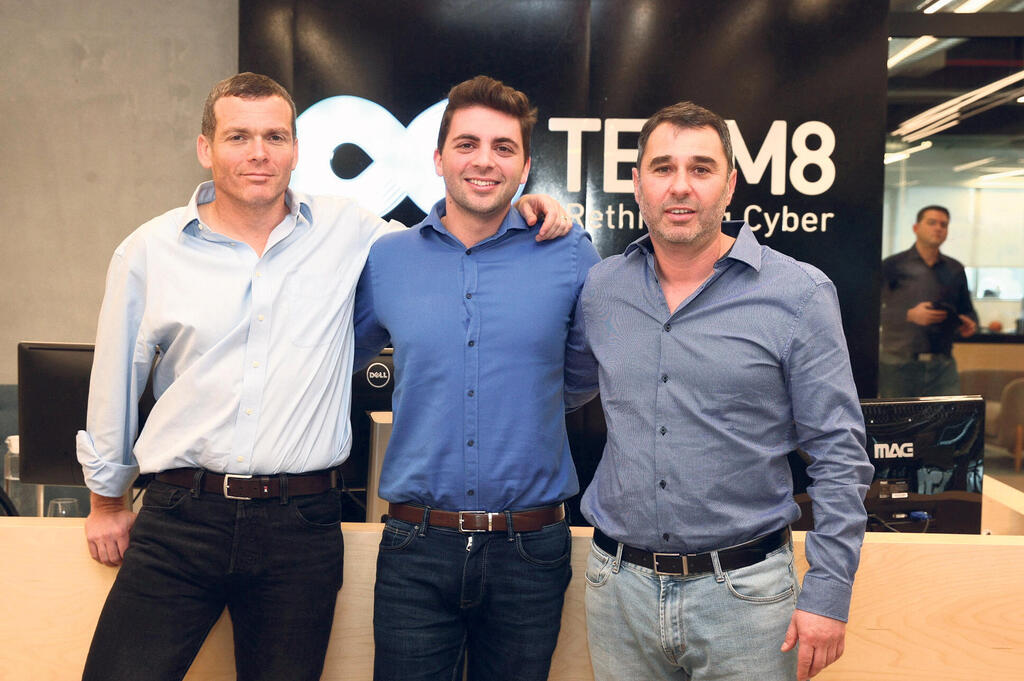
There were concrete outcomes. Sygnia was acquired by Temasek in 2018; Cisco acquired Portshift in 2020. Those transactions gave the foundry model something more persuasive than a diagram. Building companies remained uncertain work, but Team8 had demonstrated that its method could produce businesses other organizations wanted to own.
Zafrir’s interests also extended beyond the startup’s front door. In 2019, Team8 partnered with New York City’s Economic Development Corporation on its Cyber NYC initiative. Zafrir joined its advisory board. The collaboration covered talent development, the local cybersecurity ecosystem and ideas emerging from academia. It was another attempt to connect the institutions that supply people, problems and customers.
Permission to be wrong
By 2021, Zafrir was speaking openly about the difficulty of tolerating failed experiments. Saying that a team may fail is easy. Supporting people when a serious attempt actually goes wrong is a more expensive managerial habit. He argued that leaders had to set conditions in which talented people could discover their own routes through unfamiliar problems.
There is a distinction here between an organization that allows suggestions and one that allows initiative. Suggestions can wait politely for approval. Initiative requires someone to surrender a little control. Zafrir’s account places the burden on the leader to provide the environment, resources and culture that make that surrender productive.
“I like to work at the edge of chaos.”
Nadav Zafrir, 2021
The line is revealing partly because of its modest qualification: the edge. Complete disorder offers few advantages to a customer trying to protect a network. Zafrir’s preference suggests movement inside a structure that still holds. It is also a useful description of a venture foundry, where several unfinished businesses can coexist without any of them enjoying the comfort of certainty.
A founder’s chair, a successor’s job
On December 16, 2024, Zafrir became Check Point’s chief executive. Gil Shwed, who had led the company since its founding in 1993, became executive chairman. The transition put a successor in charge of a business that had spent more than three decades closely identified with its founder.
Zafrir publicly thanked Shwed as a partner and mentor. Their arrangement gave the new CEO access to the person who knew the company’s history from the inside. It also made the assignment more interesting than a straightforward changing of the guard: the founder was still at the table, with a different title and continuing responsibilities.
He arrived with experience spread across many smaller businesses. Check Point’s leadership biography credits Zafrir and his Team8 partners with building and investing in more than 40 companies, and him with chairing more than a dozen cybersecurity companies. He had also chaired SolarEdge’s board. The new job concentrated that portfolio of experience into the daily responsibilities of one public company.

The unexpected item on the agenda
Four months into the job, Zafrir supplied a welcome detail about corporate life: the parties had surprised him. Check Point held user conferences in Vienna, Bangkok and Las Vegas, and the evening entertainment had exceeded his expectations. Firewalls, it appeared, did not require everyone to go to bed early.
His assessment of the business was less playful. He acknowledged the challenge of growth lagging competitors and said the company needed to speak more clearly about what it did. He also wanted to retain its technological depth. For a successor, deciding what deserves preservation can be as demanding as deciding what deserves alteration.
The same conversation captured his attraction to unfamiliar assignments. “My hobby is to get out of my comfort zone,” he said. A large public company offered ample scope for that pastime. Curiosity, however, would now be judged alongside quarterly results, product adoption and the performance of a global sales organization.
Two growth rates, one assignment
By July 2026, the numbers showed why that assignment required patience. Check Point reported second-quarter revenue of $674 million, up 1 percent from a year earlier. Security subscription revenue reached $333 million, up 12 percent. One business could contain markedly different speeds.
Q2 2026. Subscription revenue is included in total revenue.
Zafrir said the company was expanding sales capacity and improving commercial execution. Those are operational commitments, far removed from the romance of a new technology. Customers must understand what is on offer, decide that it fits and be able to buy it. Technical ability needs a route to market.
The figures also resist a tidy ending. Subscription growth provides evidence of demand in part of the business; the slower total revenue growth leaves the broader task visible. A leadership philosophy can explain how a CEO approaches change. It cannot, by itself, certify that the change has worked.
Another room full of people who know things
In March 2026, Check Point announced an executive advisory board spearheaded by Zafrir and co-chaired by NightDragon founder Dave DeWalt. Its remit included product strategy, innovation and global expansion. The announcement came during an executive gathering of more than 50 security chiefs. The habit of assembling people with relevant experience had survived the move into the CEO’s office.
His argument about AI also depends on connections. In a Davos conversation with Daniel Newman, he described three tasks: reassess existing defenses, understand the risks created by new AI deployments, and use AI to improve security itself. That requires following what customers introduce into their businesses and what attackers learn to do with it.
It is an iterative assignment. New tools change behavior; changed behavior exposes different weaknesses. Zafrir argues for an ecosystem in which customers, partners and security companies keep learning from one another. The ambition is to make AI adoption safer while allowing enterprises to keep moving.
The Jerusalem gathering offers a useful way to understand that ambition. A room full of knowledgeable people became valuable because they could act on what they knew together. Zafrir now has a larger organization, public shareholders and a different set of obligations. The question underneath the job remains familiar: how do you make shared knowledge useful before the next problem arrives?