General Partner • Spark Capital
Nabeel Hyatt
The VC who makes two bets a year - and whose bets tend to become things you can't imagine the internet without.
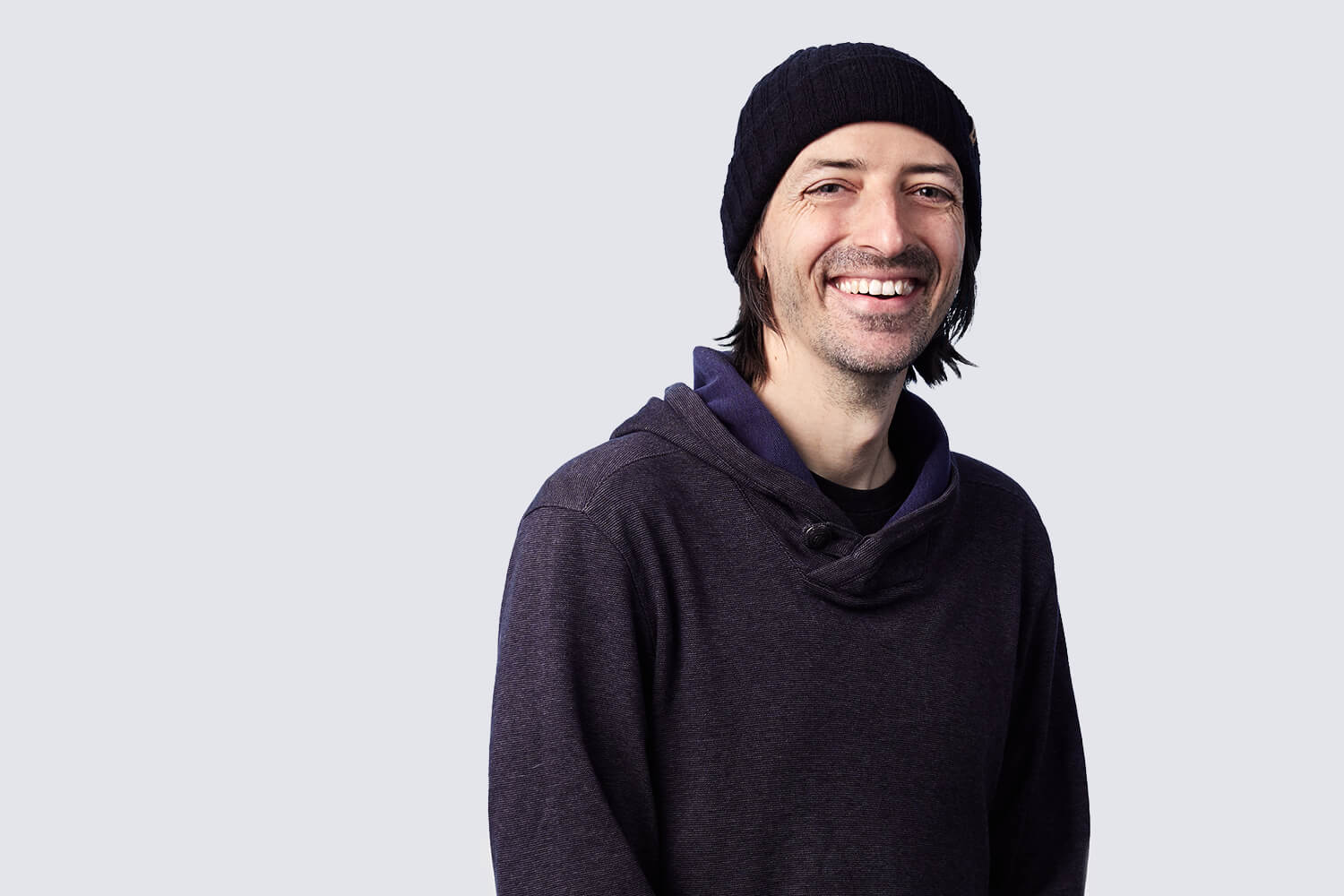
SF • Since 2012
The VC who makes two bets a year - and whose bets tend to become things you can't imagine the internet without.
By the time Nabeel Hyatt found the product that convinced him to back Postmates, his son had a 101-degree fever and he was stuck at home. He pulled out his phone, ordered Tylenol from a company with 10 employees, and watched it arrive in 20 minutes. That was enough. "That's product," he'd say later. He wrote the check.
This is how Nabeel Hyatt operates. He is not looking for the largest TAM or the tidiest pitch. He is looking for the moment a product makes you feel something - surprise, relief, a small private astonishment. He calls these "Japanese toilet" products: unexpected solutions to problems you didn't know needed solving, presented with a simplicity that hides enormous engineering underneath. Cruise, Discord, Descript, Anthropic. The pattern holds.
Hyatt is a General Partner at Spark Capital, the Boston-founded firm behind Coinbase, Affirm, Warby Parker, and Twitter. He joined in February 2012 as the first partner to set up shop on the West Coast - a role that came with a blank calendar and an open question about what Spark could be in San Francisco. Thirteen years later, his answer is a portfolio of companies that reshaped how people talk to each other, move around cities, and think about artificial intelligence.
Before venture, he was a founder twice and an operator once. The first founding, Conduit Labs, was a social music game company he built in Cambridge, Massachusetts, in 2007 - before social gaming had a name people recognized. Zynga acquired it in 2010, and Hyatt stayed through the chaos of Zynga scaling from 200 to 2,000 people and then its IPO in December 2011. He ran Adventure World there, a browser-based exploration game that peaked at 16 million monthly users. He knows what it feels like to build something, to break it scaling it, and to see the number go from nothing to everywhere.
Even earlier: at Ambient Devices, an MIT Media Lab spin-out that embedded live internet data into physical objects - lightbulbs that changed color with the weather, umbrellas that glowed when rain was forecast. The New York Times named it among their "Ideas of the Year" in 2002. Hyatt was nominated for MIT Technology Review's Top Innovators Under 35 for his work there. The idea that technology should feel invisible, ambient, delightful rather than demanding - it is a thread that runs through every investment he has made since.
And before that: at 16, he built his first technology company. He participated in his first IPO - Teamtalk plc, an online sports content platform he ran as COO - before he turned 25. He was not a late arrival to any of this. He was a kid who understood how networks worked before most people understood that networks were coming.
"Product comes first, and everything else follows."- Nabeel Hyatt
His investment framework at Spark is built around deliberate scarcity. He makes approximately two bets per year. His reasoning is structural: a startup CEO can manage eight or nine direct reports meaningfully - beyond that, the edges get fuzzy. Hyatt applies the same logic to board seats. "In a venture world that has gotten increasingly transactional," he has said, "I try to do fewer, meaningful deals." Each portfolio company gets a meaningful version of him, not a scheduled version.
The depth of that commitment is visible in the outcomes. He led Cruise Automation's Series A. GM acquired Cruise for over a billion dollars roughly a year after that check cleared. He backed Discord early and has been on the board since. Discord is now the connective tissue of the internet's subcultures - the place where communities live that don't fit anywhere else. He invested in Postmates when it had 10 employees. Uber absorbed it a decade later.
These are not flukes. They share a signature: a product that does one specific thing with uncanny grace, presented simply, running on technology the user never has to think about. Japanese toilet, every time.
B.A. in Design
Computer Science (studied)
Co-hosts a podcast with Fraser Kelton (ex-Head of Product, OpenAI) on AI product trends. 41+ episodes. The conversations sound like a hallway conversation you wish you were overhearing.
Apply raw horsepower. Use the right framework. Map the market. The answer is knowable if you have the data. You can model it.
You have to go on the journey. The answer isn't in the spreadsheet. You feel your way toward it. It requires going alongside the founder, not ahead of them.
Hyatt argues that AI investing has entered the "mystery phase." The variables that determined winners in the previous era - market size, timing, team pedigree - are still relevant but insufficient. The products that matter now feel different. They surprise you. They do something that wasn't on your roadmap of what software was supposed to do.
He backed Anthropic early. He was bullish post-DeepSeek when others were recalibrating. In early 2025, he appeared on The Twenty Minute VC to explain why: "The underlying technology can be complex, but what matters is whether it's presented as a simple, magical experience to the people who use it." This is the Japanese toilet criterion, restated for the age of language models.
His most recent confirmed bet was Granola - an AI-powered meeting notes app - in May 2025. The pattern: ambient intelligence, hidden complexity, obvious usefulness. You use it once and stop thinking about it as a tool. That's the tell.
"Puzzles are this thing that you can use raw horsepower to solve. And mysteries are you have to go on the journey."- Nabeel Hyatt, on why AI investing requires a different kind of conviction
"If you are managing a firm that needs to be very drastically reshaped for this new age, LPs find instability very disconcerting."
"Even in a three-minute experience that you're having with somebody, there is a thing that excellence feels like and we can't confuse short with great."
Two bets a year, every year, since 2012. This is a partial map of where they landed.
Hyatt came into venture capital from the one industry that has always understood engagement loops better than any other: games. At Conduit Labs, he built Loudcrowd, a social music game that combined casual gaming with social networking in 2007. The social gaming category was nascent. Facebook was still finding its footing as a platform. The App Store did not yet exist.
When Zynga bought Conduit and he took over Adventure World, he saw at scale what makes people come back to something. Retention is a design problem. Delight is an architecture choice. The daily active user curve is a product decision made six months earlier. He carried all of it into venture.
When Hyatt evaluates an AI product, he is not primarily asking about model benchmarks or infrastructure costs. He is asking: what is the engagement loop? Where does the delight happen? Does this product create a behavior change that makes the user's life slightly different the next day? These are game design questions. They are also the right questions.
He has described the best investments as feeling like a mystery rather than a puzzle - something you have to sit with, to experience yourself, to understand from the inside. The Postmates investment happened because he lived it at midnight with a sick kid. The Discord investment happened because he understood what it felt like to need a place that wasn't Twitter and wasn't Facebook.
The most recent chapter in Nabeel Hyatt's story is a room full of board games in Berkeley, California. Tabletop Library opened in early 2026: a physical club where people pay to come in, browse an curated collection of games, and play with strangers or friends. He co-founded it with Andrew Mason - the man who started Groupon - and David Chen.
The operational infrastructure is built almost entirely on AI. Claude (Anthropic, a Spark portfolio company) wrote the business plan and the financial model. They built a custom "Dewey Decimal" system to categorize games using machine learning. An n8n-powered concierge handles game night coordination. The club is, in miniature, an argument about what AI-assisted small business operations look like.
But the more interesting detail is the meta-layer: Hyatt is an investor in Anthropic. He ate his own cooking in the most literal way possible - he handed Claude a blank document and a business concept and asked it to help him figure out if the numbers worked. He appears to have found the experience useful enough to open the doors.
He is also building a card game with his children. He is a "full-time geek" by self-description. He does not post on Instagram even though he has an account. He co-hosts a podcast that sounds like the hallway conversations at AI conferences that people quote afterward.
None of this is inconsistent. It is the portrait of a person who has always cared about play - what happens when humans interact with systems designed to surprise them. He has just been doing it in different rooms for thirty years: a scrappy Cambridge gaming startup, a Zynga office during a scale-up that will never be repeated, a Spark Capital partner meeting where someone pitches a self-driving car or a meeting notes app and he has to decide if it feels magical enough. It usually has to feel like a Japanese toilet. The bar is what it is.
You did not know you needed a toilet with a heated seat, a built-in bidet, and ambient lighting until you used one in Tokyo. Then you wondered how you had managed without it. The technology was complex. The interface was intuitive. The experience produced something you did not expect: delight. This is what Nabeel Hyatt is hunting for - in consumer apps, in AI products, in delivery startups with 10 employees. The category does not matter. The delight does.
"Product comes first, and everything else follows."
"My son broke a 101-degree fever, and I couldn't leave to get Tylenol so I used Postmates. The Tylenol appeared in 20 minutes."
"Puzzles are this thing you can use raw horsepower to solve. And mysteries are you have to go on the journey."
"Even in a three-minute experience, there is a thing that excellence feels like and we can't confuse short with great."
"In a venture world that has gotten increasingly transactional, I try to do fewer, meaningful deals."
"It's really the journey of trying to get to know another person and trying to figure out what their superpowers are."