Before Mitchell Trager became the tax lawyer in the room, he was the boy listening to one. His father practiced tax law at a major New York firm, and at home in Brooklyn the work arrived as conversation: problems, people, the peculiar pleasure of rules that refused to remain simple. Trager’s father died when he was a teenager, but those talks had already done their quiet work. Tax was no longer an abstraction. It was a way of examining how businesses moved and why decisions became difficult.
This origin story has none of the usual glamour, which is precisely why it fits. Corporate tax is a profession of accumulated judgment. Its dramas often happen under fluorescent light, in conference rooms where a sentence in a regulation meets the inconvenient shape of an actual company. Trager learned early that the interesting part was not reciting the rule. It was understanding the operation well enough to make the rule useful.
He studied accounting at Queens College, then earned both a law degree and a graduate tax degree at the University of Bridgeport School of Law. During his first year, he clerked and worked with Lawrence H. Cooke, then chief judge of New York’s highest court. The résumé soon acquired familiar names: Peat, Marwick & Mitchell, now KPMG; Grant Thornton; Joseph E. Seagram & Sons. Yet the formative detail from Seagram’s is not a triumph. It is bewilderment.
The education of a difficult problem
As a young tax lawyer, Trager was asked to understand part of a large DuPont issue for an IRS audit. He found it enormously frustrating. The stakes were substantial; the material sprawled. The assignment taught a lesson that never really ends: tax questions can become complicated faster than confidence can keep up. A young professional needs technical skill, certainly, but also colleagues willing to explain how a department thinks.
At Seagram’s, veterans took him under their wings. Sometimes they even let him tag along to lunch. It sounds like a throwaway memory. It is closer to the blueprint for his later leadership. Knowledge travels through memos, but judgment often travels across a table. Someone is invited. Someone asks the question they were afraid to ask. Someone older admits that the answer is messy.
“When you couple [tax law] with helping to understand your business’ operations, you realize what an incredibly rewarding field corporate tax can be.”Mitchell Trager
In 1989, Trager began what became a 33-year run with Koch companies, most visibly as senior tax counsel at Georgia-Pacific. Longevity of that kind can calcify a career or deepen it. His account suggests the latter. Georgia-Pacific had more than 250 operations in the United States, and he valued visiting them, meeting people in the field and seeing the physical businesses that tax analysis was supposed to serve. A credit was not merely a line on a return. It might be attached to equipment, a facility, a capital decision or jobs in a town.
A career measured in long relationships
A campaign with several beginnings
While his corporate career lengthened, so did his involvement with Tax Executives Institute, the professional association for in-house tax people. Trager held leadership roles for more than three decades. He did not glide to the top. Before becoming international president for 2021–2022, he endured what he described as three or four unsuccessful campaigns. Eli Dicker, the institute’s former executive director, encouraged him to stay in the race. Past presidents guided him. His wife, Larissa, supplied the durable confidence of someone who had already been beside him for four decades.
When the presidency arrived, it came during an awkward hinge in professional life. People craved rooms and handshakes, but organizations had learned that screens could bring in members who could not travel. Trager’s TEI agenda treated the hybrid world as something to shape, not lament. He pushed for stronger chapter connections, greater visibility with chief tax officers, better sponsorship relationships, expanded digital education, and a renewed focus on diversity and inclusion.
The most revealing part of his program concerned younger tax professionals. Invite them, he argued. Give them reasons to participate from the chapter level upward. Make them feel included, and they will volunteer, contribute and eventually lead. In other words, belonging was not the reward for proving oneself. It was the condition that allowed proof to begin.
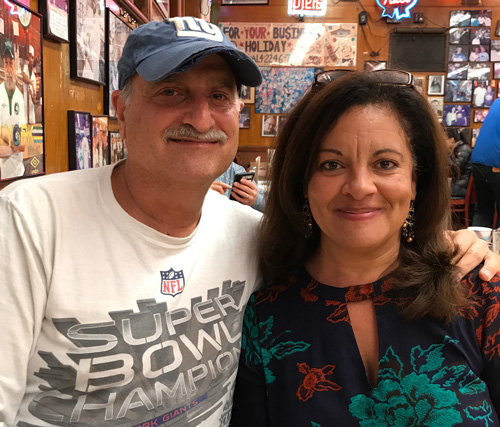
His presidential letters sound like the person making that case. They are thick with names, thanks and exclamation marks. There are warnings about gift-card scams, praise for event staff, updates on online courses, and a joke that the office does not even guarantee an extra cookie during conference breaks. At the end of a goal-setting letter, the lifelong Giants fan offered his one certainty: Tom Brady cannot beat the Giants in a Super Bowl. A tax institute had elected a president; it had not elected a marble bust.
Crossing the table
Then came the unlikely move. In 2022, after almost four decades in private industry and 33 years with Koch companies, Trager left the in-house ranks. He joined Dixon Hughes Goodman just before its merger with BKD created FORVIS, later Forvis Mazars. He was ending his TEI presidency a little early, changing the vantage point from which he had built nearly his whole career, and doing it at an age when many people prefer familiar furniture.
The hinge · 2022
One career ended with advice received inside the company. The next began with advice delivered to many companies. The connective tissue was implementation: approvals, operations and what happens after a recommendation leaves the slide deck.
The logic becomes clear when viewed from the client’s chair. Trager had spent decades navigating the approval, implementation and follow-up that turn a tax idea into a completed project. His work had covered federal audits, fixed assets, research credits and indirect tax issues. In advisory practice, focusing on incentives and credits, he could speak as somebody who knew what happened after the consultant packed up. The clever answer still had to survive budgets, operations, internal skepticism and the next meeting.
He is now a Director of Incentives and Credits at Forvis Mazars, working from the Atlanta area with public and private clients. His public schedule shows a profession built on motion: tax updates, chapter meetings, state-and-local-tax panels, conferences, credits-and-incentives sessions. His LinkedIn dispatches often begin with a city and end with a roll call of colleagues. “Where’s Mitch” became a natural frame for a man whose network is both his route map and his subject.
That network is not ornamental. In 2023, Trager was among the people involved in relaunching TEI’s dormant New Orleans presence as a broader Gulf States chapter. By 2026, his itinerary included a state-and-local-tax update in Houston, the institute’s midyear gathering in Washington and regional meetings around the country. The recurring pattern is almost comic in its consistency: airport, meeting room, group photograph, extensive thank-you list, next city. Yet repetition is how an association becomes an institution. National organizations live locally, through the chapter officer who reserves a room, the speaker who agrees to travel and the member who decides the event was worth leaving home for.
Trager seems unusually alert to this backstage labor. His posts name organizers, colleagues and hosts with the diligence of closing credits. The habit can look exuberant on a screen. In context, it is a form of bookkeeping every community needs. Tax professionals account for value in their working lives; Trager keeps a parallel ledger of the people who create it.
The pastrami theory of expertise
There is another Mitchell Trager, visible whenever the technical one relaxes his tie. This one wants New York-style pizza during busy season. He follows Springsteen, the Mets and the Giants. He fishes, cruises and hunts for coins with a metal detector. Asked what job he would take outside tax, he chose the pastrami line at Katz’s Deli. Asked what he would do with a large refund, he chose a beach house on Florida’s Gulf Coast.
The answers are funny because they are specific. They also fit the larger career. A deli line is practical, social and judged by the customer standing directly in front of you. There is a craft, a queue and no hiding behind theory. Credits-and-incentives work is admittedly short on mustard, but Trager’s approach has the same impatience with abstraction. Understand what the person needs. Know the operation. Deliver something that can actually be used.
“There will never be anything to replace the connections you make when you are able to meet in person.”Mitchell Trager
The thread from Brooklyn to Atlanta is therefore not simply tax. It is transmission. His father made the work imaginable. Senior colleagues made the department navigable. Mentors kept him campaigning when an elected role remained out of reach. Trager, in turn, made younger professionals part of his institutional agenda and carried in-house memory into advisory practice.
Rules change. Firms merge. A title that once looked like the summit becomes a line in a biography. What lasts is the small social machinery around expertise: the invitation to lunch, the colleague thanked by name, the young professional given a seat, the client spared a mistake because the adviser remembers making decisions from the other side. Mitchell Trager walked through that other door in 2022. He brought the room with him.