For three hours in Hong Kong, Miranda Qu stood in a queue to buy something. History does not record the object, which may be fitting. The item vanished into ordinary life; the waiting remained useful. Around her were Chinese travelers doing what Chinese travelers abroad often did: arriving with room in the suitcase and returning with rather less. What they lacked was not appetite. It was reliable intelligence. Which shop? Which product? Which local recommendation deserved the luggage space?
Most people leave a long retail queue with a receipt and a grievance. Qu left with a product brief. In 2013, she walked away from her marketing career and, with Charlwin Mao, began collecting advice from local shopping experts. Their first creation was not an app, a marketplace or a grand theory of the consumer internet. It was a set of thick PDF shopping guides. The name Xiaohongshu, Little Red Book, described those guides before it described a company.
This is the appealingly unfashionable beginning of a technology platform: two people editing practical information. No infinite scroll. No creator economy. Just the old journalistic question, asked with commercial intent: what does the reader actually need to know?
She learned to read a crowd before she built one
Qu grew up in Wuhan and studied international journalism and communication at Beijing Foreign Studies University, completing her bachelor's degree in 2006. The training matters. Journalism teaches that people reveal themselves in particulars, and that a good editor turns a noisy pile of particulars into a path someone else can follow. Her early career took her to Bertelsmann, where she led marketing for a publishing business. From 2008 to 2013, she managed business units in Shanghai and Wuhan for a Norwegian-owned cultural company.
She met Mao in a Boston shopping mall. The future co-founders discovered a shared hometown, Wuhan, and a shared observation about travel and consumption. They imagined a kind of Lonely Planet for overseas shopping. It was narrow enough to explain in one breath and useful enough to spread.
“E-commerce business was not part of our original plan.”Miranda Qu, 2018
The readers, inconvenient creatures that they are, soon wanted more than reading. They wanted to share their own finds. A static guide became a community of notes and reviews. After checking shopping information, people wanted to buy the product without beginning another scavenger hunt. The company added commerce in 2014. Qu later admitted that retail had not been in the original plan; users made the next move obvious.
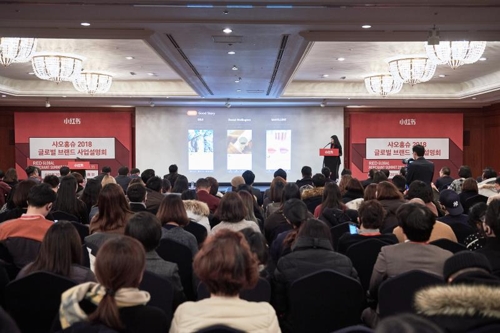
Within four years, the platform had 50 million users. By 2018, when Qu visited Seoul to court Korean brands, Xiaohongshu had more than 75 million registered users. Daily sales had crossed 1 million yuan soon after shopping launched, then monthly revenue reached 100 million yuan within a month. The humble guide had acquired warehouses, merchants and a large logistics problem.
A company that kept revising its own first draft
Xiaohongshu is often explained with a tray of Western analogies: Instagram's photographs, Pinterest's discovery, Tripadvisor's practical reviews, an online shop within reach. The comparisons are tidy but miss the behavioral center. People arrive while deciding. They are choosing lipstick, a restaurant, a hiking route, a book, a camera angle or a neighborhood to visit. The platform's raw material is advice attached to lived experience.
Qu likes the Chinese expression tingquan, which means listening to advice. It captures a community in which the asking goes both ways. Users seek recommendations; shop owners ask how to attract customers; replies become a public body of practical taste. It is a friendlier phrase than “consumer decision infrastructure,” and rather more revealing.
The platform widened with the decisions. Shopping led to fashion and beauty, then food, travel, books, hobbies and the untidy catalogue of daily life. By 2024, it claimed 300 million monthly active users, about three quarters of them women and half born after 1995. The reported year-end figure passed 350 million. The audience had become intergenerational, while the premise remained recognizably close to those first guides: one person telling another what is worth the trip.
The influence now escapes the screen. A pretty sign in Hong Kong's Kennedy Town can acquire a queue because someone posted directions. A snack shop can become a destination. Visitors may arrive unable to explain the fashion beyond four words: it was on Xiaohongshu. The platform does not merely document taste. It concentrates attention until taste becomes foot traffic.
Iteration, without the cheerful euphemism
Qu speaks about change without pretending it is painless. “Every company undergoes twists and turns,” she has said. Xiaohongshu's turns included the hard work of keeping a community credible as money entered the conversation. Fake accounts, undisclosed sponsorships and unlicensed sellers tested the promise of authentic recommendation. In 2019, the app disappeared from Chinese app stores for two months during what the company called a comprehensive investigation and rectification of content.
There is no charming founder anecdote that makes moderation easy. Scale makes trust both more valuable and more fragile. Qu's formulation of iteration is stern: do not become content with past achievements; stay open-minded when challenges arrive; switch between long-term strategy and short-term results; do the truly right things, which are usually tough to do. It is less a celebration of pivoting than an acceptance that yesterday's successful system may be today's editing assignment.
“Iteration has been the source of Xiaohongshu's development in the past, and it will continue to be so in the future.”Miranda Qu
Her definition of success begins with strategy. Xiaohongshu bet that life in China would become more varied, and that consumer aspiration would not remain confined to a few mass-market symbols. Her second factor is organization: design the structure and mechanisms that gather capable minds. She compares the organization of the future to a sports team's starting lineup, a formation chosen for conditions rather than etched forever in the club constitution.
That is a revealing metaphor from an executive whose remit sprawls across management, strategic partnerships, new business, external affairs, planning, investments and acquisitions. She is not the loudest public character in Chinese technology. Her influence is visible instead in how the company has repeatedly rearranged the formation while preserving the game's basic rule: a recommendation is valuable only if someone trusts the person making it.
The editor becomes a director, then an adviser
Recognition followed the growth. Qu was named among the Most Creative People in Business in 2019 and selected as a Young Global Leader in 2020. She received the Shanghai May Fourth Youth Medal in 2021. She ranked No. 60 on the first Most Powerful Women Asia list in 2024, then No. 15 in 2025. Her stake in Xiaohongshu has placed her on international billionaire rankings, although the company remains private and any such number moves with estimates of its value.
Her work has also moved into other rooms. Qu serves as an independent director of electric-vehicle maker XPeng, chairs its compensation committee and sits on its nomination and corporate-governance committees. In February 2026, she joined the advisory board of Kering CRAFT, a residency created with Shanghai Fashion Week to support emerging Chinese designers through work in Shanghai, Milan and Paris. The assignment includes vision, selection and mentoring. It is easy to see the continuity: finding talent, interpreting taste and helping local knowledge travel.
For Kering CRAFT, Qu offered a sentence that could double as a compact theory of Xiaohongshu: “Craftsmanship and ingenuity woven into everyday life, creating moments of happiness.” It trades the language of disruption for the language of making. The distinction suits a founder whose product began as careful compilation rather than spectacle.
The three-hour queue has long since dispersed. New queues form in places surfaced by the platform, sometimes to the bafflement of the people standing in them. That is the comic circle of consumer influence: one person's waiting inspired a guide that now tells millions where to wait next.
Yet Qu's durable idea is not the queue, the PDF or even commerce. It is attention. Watch what people are trying to do. Notice where the present product stops helping. Invite the people with experience to speak. Then revise the guide. The first draft was small enough to download. The current one is being edited by hundreds of millions.