She lets bankers blow up imaginary loan portfolios - a trillion ways to crash - so they never do it with your money.
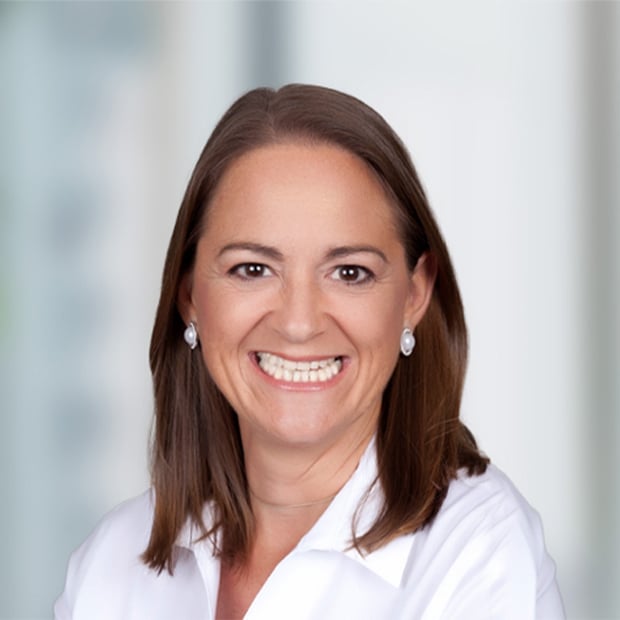
Co-founder & CEO, BankersLab and PortfolioQuest. The smile of someone who has watched a thousand simulated banks fail on purpose.
Michelle Katics runs two companies built on a quietly subversive idea: that the most expensive lessons in finance should be free to fail. At BankersLab and PortfolioQuest, the SaaS platforms she co-founded and leads as CEO, bankers do not sit through slide decks about credit risk. They run a synthetic bank. They set lending rules, watch a fake economy turn against them, and lose imaginary fortunes - which, it turns out, is the cheapest tuition in the industry.
She calls them flight simulators for bankers. The analogy is exact. Pilots do not learn to handle an engine fire by reading about engine fires. PortfolioQuest's simulation contains more than a trillion possible outcomes, which means a trainee can crash the same portfolio a hundred ways and still find a hundred-and-first. The platforms have trained banks, credit unions, lenders and credit bureaus in more than 45 countries.
Today she works between Singapore, where she has been based since 2002, and Chiang Mai, Thailand. The company is registered out of Mill Valley, California. It is a small team punching far above its weight - the kind of operation where four people can serve banks on five continents because the product does the heavy lifting.
What makes her credible is not the software. It is the twenty years before it. She has stood inside the rooms where real banking risk is priced, and she got tired of watching smart people learn the hard way.
The premise sounds obvious once you hear it, which is the surest sign it was not obvious before. Banks spend fortunes on training that amounts to telling people what happened to someone else. A junior credit officer can sit through a hundred case studies and still freeze the first time a real portfolio sours, because reading about a fire is not the same as feeling the heat. Katics' wager is that judgment is a muscle, and muscles are built by repetition, not by lecture. Her platforms turn the classroom into a cockpit, and the trainee into a pilot who has already survived a dozen crashes by lunch.
There is a second, quieter argument underneath the first. The banker of the future, in her telling, is not the one who memorizes the policy manual fastest. Automation has already eaten that job. What is left is the part a machine cannot do: weighing a messy, moving situation and deciding. So the simulation does not drill procedure. It rehearses doubt - the small, repeated act of choosing under uncertainty and living with the result.
The best credit risk mitigation is to optimize your customer sourcing. It's your secret weapon.
She grew up working class with a child's ambition to drive an 18-wheeler. The truck never happened. What happened instead was a career that read like a tour of finance's nerve centers. At the International Monetary Fund she forecast a sovereign debt crisis in 1993. At Fair Isaac - the company behind the FICO score - she built the first mortgage credit scoring models for Fannie Mae, the math that quietly decides who gets a home loan.
At Standard Chartered Bank she built the bank's first internal ratings-based models and led a successful IRB waiver application, the regulatory equivalent of convincing the referees to trust your own scorecard. Somewhere between the spreadsheets she also traveled overland through Burma, Thailand, Laos and the Himalayas, which is not the usual resume line for a credit risk modeler.
Being a young woman in those rooms was its own simulation. Older, credentialed men did not hand her authority; she had to build it. Her trick was narrative - sharing hard stories in the Royal We, turning her own near-misses into shared lessons. It worked. The skill she names as her superpower, connecting the dots, is the same one her software now sells.
The international stretch matters more than a resume can convey. She has worked with financial institutions in more than 30 countries, across the gap between mature Western markets and the fast, improvisational lending of emerging economies. A scorecard that works in Chicago can quietly fail in Jakarta, because the data, the regulations and the borrowers are nothing alike. That fluency - knowing that risk is local even when the math pretends to be universal - is exactly what a one-size training deck cannot teach, and exactly what a configurable simulation can.
It also explains why she built the company where she did. Most fintech founders chase Silicon Valley. Katics planted herself in Singapore in 2002 and stayed, close to the Southeast Asian banks that were leapfrogging straight to mobile while the West argued about branches. She became a fixture of that scene - a mentor, a finalist, a name on the regional power lists - and ran a global business from the part of the map where the future of consumer lending was actually being written.
At the IMF, forecasts a sovereign debt crisis.
At Fair Isaac (FICO), builds the first mortgage credit scoring models for Fannie Mae.
At Standard Chartered, builds first IRB models and leads a successful IRB waiver application.
Relocates to Singapore, anchoring her work in Asia.
Co-founds BankersLab to teach risk by simulation, not lecture.
Selected as a Mentor for the Founder Institute.
Demos BankersLab at FinovateEurope; closes a $750K seed round.
Women in FinTech Power List; MAS FinTech Award Finalist; one of 52 Singapore FinTechnopreneurs.
Contributes a chapter to The REGTECH Book (Wiley).
PortfolioQuest is built for the banker of the future, which is to say the banker who has to think instead of follow a checklist. The platform rewards the higher-order skills that no policy manual can teach: critical thinking, forecasting, and problem solving under a moving economy.
The genius is in the dials. Trainees adjust risk appetite, customer sourcing and lending strategy, then live with the consequences as the simulated market shifts beneath them. The co-founder's simulation algorithms have been refined for over a decade. The result is a sandbox where the only thing you cannot do is run out of second chances.
Notice where she puts the weight. Of all the levers a lender can pull, she keeps returning to one: who you lend to in the first place. The best credit risk mitigation, she insists, is to optimize your customer sourcing - your secret weapon, the move made before the loan is even priced. It is an unfashionable thing to say in an industry that loves the drama of collections and recovery. Her point is that by the time you are chasing a bad loan, the mistake is already months old. The simulation lets a trainee feel that truth in fast-forward, watching a sloppy sourcing decision metastasize across a synthetic portfolio while there is still time to learn the lesson for free.
A good leader reads and really listens.
When you get knocked down, come back up swinging!
Any good business is successful because they understand their customers. And half of our population is women.
Any great product comes from a collaboration of diverse viewpoints, diverse backgrounds, and everything just gets better.
The world is not a place where you can just say yes or no and shut shop, it's a matter of being dynamic.
The best credit risk mitigation is to optimize your customer sourcing. It's your secret weapon!
For someone whose product is built on cold portfolio math, Katics is unusually blunt about the human side of the ledger. Any good business succeeds because it understands its customers, she says, and half the population is women - a sentence she delivers less as activism than as accounting. A lender that misreads half its market is not being progressive or backward. It is being wrong about its own risk.
She extends the same logic to how products get built. Any great product, in her view, comes from a collaboration of diverse viewpoints and backgrounds, and everything just gets better for it. Coming from a founder who has been the only woman in the room more times than she can count, it reads as hard-won rather than aspirational. She built credibility the slow way, and she is not romantic about the cost.
Her advice to younger founders carries the same texture. Find your tribe - the mentors, colleagues and friends who will stand with you. And when you get knocked down, come back up swinging. It is the philosophy of someone who has done both, repeatedly, and decided the second part is the only part that matters.
A good leader reads and really listens.
Named to the 2017 list recognizing the sector's most influential women.
Finalist for the Monetary Authority of Singapore's 2017 FinTech Award.
Recognized among 52 founders for Singapore's 52nd birthday.
Selected in 2014 to mentor early-stage founders.
Contributing author to the 2019 Wiley handbook on financial regulation tech.
Recognized on the Southeast Asian fintech festival circuit.
She spent twenty years pricing risk for real. Now she sells the chance to get it wrong safely - over and over - until you get it right.