The first office was downstairs. Michael Margiotta put a server in the basement of his home in Hilton, New York, connected it to a secure T1 line, and began a business. His first employee was his brother-in-law, Loreto Barbone. Before there was a headquarters to announce or a workforce to count, there was a piece of equipment in a room beneath the house.
“I set up a secure T1-line and a server in the basement of my home in Hilton.” Margiotta’s recollection has the appealing specificity of a startup before anyone has polished its origin story. The machinery is identifiable. So is the relative. You can almost measure the enterprise by the stairs.
That business became eHealth Technologies. Margiotta co-founded it with Ken Rosenfeld, and served as chairman and chief executive. His career would eventually include other companies, a consulting launch, a federal conviction and a separate securities settlement. The basement belongs in the account. So do the invoices and the investor promises. A life in business can accumulate several kinds of evidence.
The loss he wanted to remember
Years before the server, Margiotta played defense. He transferred from SUNY Morrisville to Herkimer College, where coach Paul Wehrum gave him an unusually direct welcome: leave the field and go back to Morrisville. Margiotta stayed. He later explained that the coach had been testing whether he would quit.
He earned a starting place. His team reached the national final in 1991 and lost. Asked later about his favorite college memory, Margiotta chose that defeat. He remembered how it drew the players together, and how they returned for an undefeated 1992 season and a national championship. The interesting part of his answer is the selection. Given a victory and a defeat, he chose to explain the defeat.
He carried Wehrum’s challenge into the stories he told about work and family. Persistence was part of his own explanation of himself: stay on the field, earn the position, come back ready. That is an athlete’s account of ambition, with effort at the center and the coach supplying very little cushioning.
“Luckily, this is my second time around, so the path is a little easier to follow.”
Michael Margiotta, on starting another venture, 2015
At St. John’s, the record becomes wonderfully economical. The university’s all-time lacrosse roster lists Mike Margiotta for 1993 and 1994, a defender from Rochester, with Irondequoit as his previous school. Two seasons and a single letter, D, compress a chapter of his life into a line. Long before executive biographies began collecting company names, he had a position and a place on a team.
A partner, then a larger stage
Rosenfeld brought a different professional history to their partnership. He had run a worldwide information-management business within Kodak’s operation. The two developed a connection over lunch, and eHealth Technologies took shape in fall 2006. In Rosenfeld’s later telling, starting from scratch was harder than he had expected, even after a career inside a large organization.
His description of a startup involved jumping from an aircraft without being certain about the parachute. It is an apt image for the gap between a business plan and a working business. Experience can improve the odds; it does not arrange a soft landing. Margiotta supplied entrepreneurial momentum. Rosenfeld supplied experience running technology operations. Together they had to turn a promising service into repeatable work.
By January 2010, a securities filing listed both men as executive officers and directors of eHealth Global Technologies. The filing placed the company in Rochester and identified its incorporation in Delaware in 2007. The venture had acquired the ordinary architecture of a corporation: officers, directors, formal financing documents. Basement businesses eventually need signatures as much as servers.
In 2012, Margiotta appeared among the New York region finalists for Ernst & Young’s Entrepreneur Of The Year award. The list placed his name alongside leaders from businesses including Complex Media, Design Within Reach and MarketAxess. He was a finalist, a useful distinction to preserve. An award nomination documents recognition at a particular moment; it does not require a lifetime verdict.
When growth needed an address
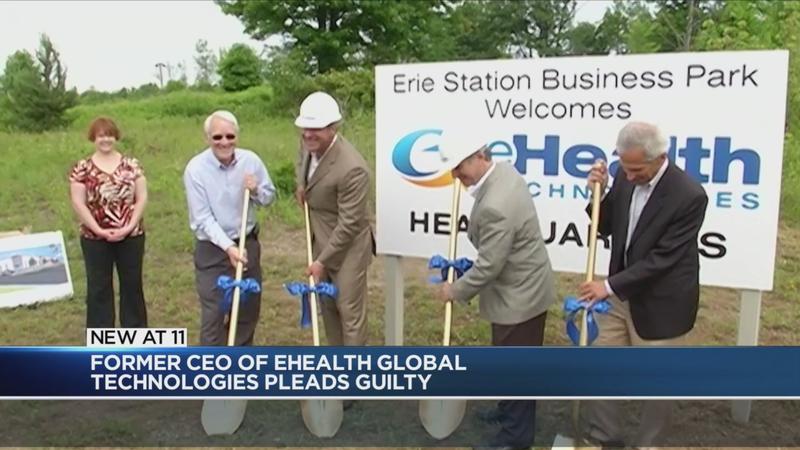
By June 2013, the company was planning a 36,000-square-foot office complex in West Henrietta. Its announcement described a workforce that had risen from 32 in 2010 to nearly 120, and annual revenue increases of more than 70 percent since 2011. The founders were scheduled to break ground on June 18. The basement chapter had acquired a rather large sequel.
The plans included catered food service, a fitness center and walking trails. These are revealing details in an announcement about expansion: the business now had enough people for the working day itself to become a design problem. Where would everyone eat? How would they move around? A growing payroll produces questions that a server never asks.
Margiotta also singled out the ten original employees who remained with the company. It was a moment to recognize continuity inside the expansion. A workforce is counted in totals, but it is built out of people who joined before the outcome looked obvious.
That November, eHealth Technologies appeared at number 12 on the Rochester Top 100 list. Margiotta was listed as chairman and CEO, Rosenfeld as president and chief technology officer. In the company of dealerships, lenders and other regional employers, the startup now occupied a visible place in Rochester’s commercial life. Its growth could be read without a founder’s pitch.
The founder moves on
Margiotta’s employment at eHealth ended in 2014. Rosenfeld succeeded him as CEO. Years later, eHealth would state explicitly that Margiotta had taken no part in its operations after his departure. The dates matter because a founder’s name can remain attached to a business long after the person has stopped running it.
His subsequent ventures included Patient Identification Platform, known as Patient iP, and ChartFill. He founded Untangled Healthcare Innovations around September 2014 and later rebranded it as Patient iP. He controlled that company as founder, chairman and chief executive. ChartFill followed in 2016. The sequence shows that leaving his first company did not end his appetite for starting another.
In April 2020, he announced Mike Margiotta Group, a consulting business offering sales and business development, executive and board guidance, fundraising support and exit-strategy assistance. By then he was selling experience as well as a product. He wanted to help small organizations establish themselves, and used his earlier operating career as the basis for that offer.
There is a familiar progression here: build a company, build another, advise others who are building. Each stage depends on people accepting the experience behind the pitch. In Margiotta’s case, that dependence would become a central question.
The invoice behind the growth story
In July 2021, Margiotta pleaded guilty to wire fraud and filing a false tax return. The conduct involved a recruiting agreement he had entered into as eHealth’s CEO in May 2011 with Healthcare Network Alliance, a company owned by his wife. The arrangement allowed a fee when a candidate referred by the recruiter was hired.
Between June 2011 and January 2014, he caused invoices to be submitted for recruiting work that had not been performed. One invoice, dated April 19, 2013, requested $44,000 for recruiting an employee whom the firm had not recruited. Across approximately 23 employees, the fraudulent recruiting invoices totaled $380,960. These were payments for services that he knew had not been provided.
The dates run alongside the expansion years. That overlap prevents the career from dividing neatly into an early period of growth and a later period of misconduct. The larger office and the false recruiting invoices belonged to the same stretch of time.
On September 30, 2022, U.S. District Judge Charles J. Siragusa sentenced Margiotta to 46 months in prison. He was also ordered to pay $914,810.52 in restitution to the IRS. The sentence followed convictions for wire fraud and filing a false tax return. Those are the outcomes, distinct from the broader allegations that accompanied his 2019 indictment.
A buyer’s interest, overstated
A separate matter concerned what Margiotta told investors in Patient iP. In November 2021, the Securities and Exchange Commission found that he had materially misrepresented prospective acquisition interest. In March 2017, he told potential investors that a large organization was keen to buy the company and attributed supportive comments to its executives. The executives had not made those comments.
The order also addressed statements about other potential buyers. It found that approximately $1.146 million had been raised from 16 investors on materially false and misleading statements, including roughly $765,040 from sales of Margiotta’s own shares. He settled without admitting or denying the findings, agreeing to disgorgement, interest and a $500,000 civil penalty. This was a separate civil enforcement proceeding from the criminal case.
The distinction between interest and an actual acquisition discussion can sound small when delivered in a confident conversation. For someone deciding whether to invest, it is substantial. A prospective buyer can make a young company appear closer to an exit, changing the way an investor weighs the opportunity. In this part of Margiotta’s career, the promise itself became the issue.
The next company name
Margiotta’s public LinkedIn profile now places him in Austin, Texas, and lists Paperless Property. It also lists studies at St. John’s from 1992 to 1994 in accounting and legal studies. The geographical shift and the new affiliation add another chapter to a career long associated with Rochester. They do not erase its earlier chapters.
The details that remain most memorable are small enough to picture: a defender staying on the field, a brother-in-law joining a basement enterprise, ten early employees still there when new offices were announced. They help explain why people saw an entrepreneur in him. The later financial conduct belongs beside those details, with equal precision. The company grew. The promises required checking. Both facts travel with the name.