In the industrial Midwest, ownership can be heard before it is seen. It is in the pitch of a machine that an experienced operator knows is slightly wrong, the scrape of a part pulled aside before it reaches a customer, the small economies noticed by people who expect to be in the same building next year. At Innovance, those people do more than draw wages. They own the place. Merritt Becker arrived in Albert Lea, Minnesota, in late 2023 because of that fact, not in spite of it.
This was a surprisingly particular choice for an executive whose résumé already stretched across large corporations and several continents. Becker had worked in systems engineering, truck parts, power systems, distribution and rail. He had managed a joint venture from Bangkok. He had led a locomotive business through a moment when century-old equipment was meeting batteries, alternative fuels and hydrogen. When he next went looking, he wanted an ESOP: an employee stock ownership plan, and specifically a collection of manufacturing companies built around one.
He found Innovance, a holding company whose name joins “innovation” to “performance” with the tidy confidence of a shop-floor label. Its five businesses do the unglamorous, exacting work on which more glamorous products depend. ALMCO makes finishing and washing systems. Mass Finishing builds equipment that deburrs and polishes parts. Panels Plus makes machinery for panelized construction. Lou-Rich handles precision machining, fabrication, paint and assembly. Jorgensen moves chips and coolant around machine tools. Together they employ more than 400 people, all owners.
A systems engineer learns to love the messy part
Becker began at Electronic Data Systems in 1988, working as a systems engineer and program manager. The job placed him near the wiring diagram of a business: how information moves, how decisions get translated, where a process drops a bolt. In 1998 he moved to Navistar. Over the next dozen years, his titles traveled from information technology into business development and then toward the parts business, including leadership of Blue Diamond Parts and a defense-parts operation.
Parts and service became an education in productive disorder. Years later, Becker described the aftermarket with conspicuous affection: the “variation, the craziness, the fun and excitement” of selling something new while also helping customers repair what they already had. It is not the language of an executive yearning for a clean dashboard. It is the language of someone who rather likes a difficult Tuesday.
Cummins gave that instinct a larger map. From 2010, Becker held leadership roles across distribution and OEM businesses. In 2018, he and his family relocated to Bangkok, where he ran Cummins DKSH, the joint venture serving Thailand, Vietnam, Cambodia, Laos and Myanmar. A corporate announcement in 2020 put him on Cummins' Asia Pacific leadership team. The scale was international; the underlying assignment remained intimate: keep equipment working for customers whose businesses depend on it.
Systems engineering and program management
IT, strategy, parts and general management
Distribution, OEM leadership and Southeast Asia
Locomotives, repowering and industrial services
Five employee-owned manufacturers
The locomotive is old. The question is new.
National Railway Equipment hired Becker as chief executive in June 2022. The company rebuilt locomotives and served railroads, inland waterways and other heavy industries. It also presented an unusually vivid version of a problem that shadows every factory: what does progress look like when the old equipment still has decades of useful life?
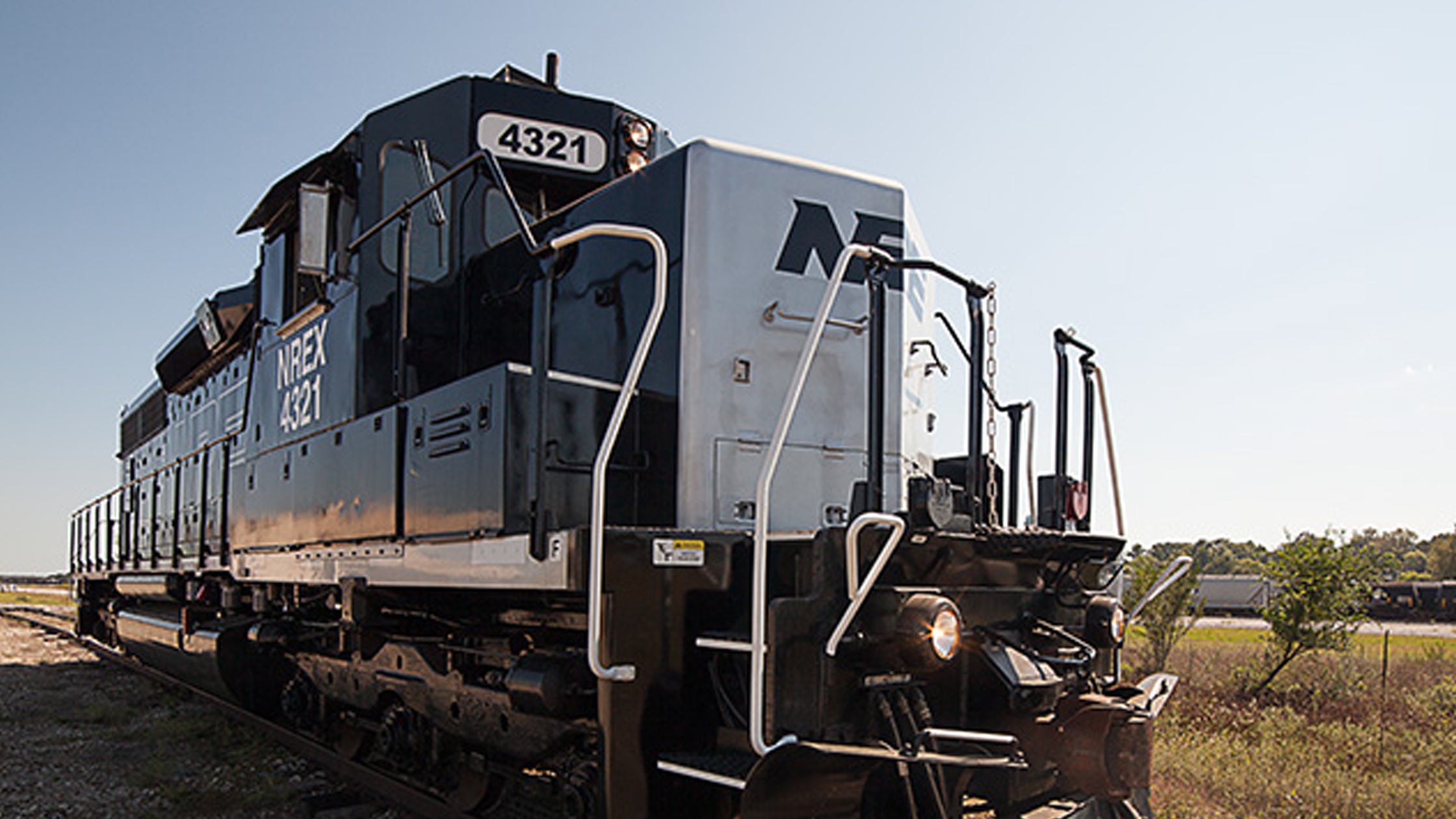
Becker's answer was neither nostalgia nor a ceremonial rush toward novelty. Fleet managers faced a ladder of choices from older emissions systems through electrification and hydrogen, while vast sums remained tied up in existing assets. The transition, he said, would be gradual. The durable companies would be the ones that helped customers move step by step.
“It’s just all about uptime. It’s all about efficiency and keeping that equipment running because it’s not cheap.”Merritt Becker, on repowering industrial equipment
That sentence is almost comically resistant to conference-stage varnish. Yet “uptime” contains a complete philosophy. Technology matters when it keeps a customer's equipment useful. Innovation earns its keep when it respects capital already spent. The future is not a showroom reveal; it is a retrofit that starts on Monday and still ships on Friday.
Bad news can be useful. Silence cannot.
The pandemic's supply-chain shocks sharpened another part of Becker's operating style. Asked what businesses had learned, he pointed to transparency and communication. Too little information, he argued, can be worse than information an operator does not like. A late part is a problem. A late part whose whereabouts remain mysterious is a scheduling department's private circle of hell.
This is the sort of observation that sounds modest until a factory is waiting on a component. Production managers can reschedule around a known delay. Customers can adapt to an honest date. Neither can do much with cheerful fog. Becker's preference is for information sturdy enough to make a decision upon.
Open communication gives customers and operators time to make real choices.
Modernize without pretending installed equipment or customer capital is disposable.
Judge the solution by whether the customer's operation keeps moving.
The grandparents in the boardroom
Becker's attraction to employee ownership also has an older source. His grandparents founded and owned small businesses in small-town Indiana. He watched the role those firms played in their communities, an impression strong enough that he later invoked it when explaining why NRE appealed to him. The companies he likes are not necessarily small in ambition. They are legible to the towns around them.
Innovance fits that geography. Its equipment and the parts produced by its contract-manufacturing arm travel around the world, while its companies remain based in Minnesota and Wisconsin. Shared teams provide information technology, finance, human resources, marketing, safety and research. The brands keep their specialist customers and histories. The center supplies the capabilities that are expensive to duplicate. It is federalism, only with coolant filtration.
Employee ownership adds a more demanding constituency. A strategic decision is not merely about distant shareholders or a quarterly number. It affects the retirement assets of the machinist, welder and accountant down the corridor. The arrangement does not abolish hard trade-offs. It does make their human address impossible to misplace.
An acquisition with 65 new owners
Only months after Becker arrived, Innovance announced the acquisition of Jorgensen Conveyor and Filtration Solutions in February 2024. Jorgensen had been founded in 1950 by Charles and Evelyn Jorgensen and carried through three generations of family ownership. Its conveyors, filtration systems and chip-processing equipment were a clean industrial fit beside ALMCO, Mass Finishing and Lou-Rich.
The more revealing number was 65. Innovance retained all 65 Jorgensen employees and brought them into the ESOP. A family business became an employee-owned business without being folded into anonymity. Becker framed the transaction as a way to add a recognized industrial-machine brand that complemented Lou-Rich's contract manufacturing. The portfolio logic was sound. The ownership logic made it distinctive.
Ownership is not the decoration on this strategy. It is the constraint that makes the strategy interesting.
In 2025, Jorgensen marked its 75th anniversary. Becker praised the company's long record of product innovation and customer service, and the opportunities it brought to the broader enterprise. The anniversary offered a neat reminder: acquiring a legacy is easier than deserving one. The work begins after the signatures, when old customers call and the machines still need to leave on time.
The margin and the mission
By September 2026, Becker was speaking about a less picturesque problem: inflation. Labor and material costs, he said, continued to challenge gross margins. Stronger demand offered some room to raise prices, but pricing changes trailed the pace of cost increases. Here, too, the interesting feature is the lack of enchantment. Employee ownership does not exempt a manufacturer from arithmetic. It gives the arithmetic more owners.
The task at Innovance is therefore a balancing act without a guaranteed pose: preserve the identity of five brands, find useful shared capabilities, acquire with discipline, keep customers' equipment moving, and grow the value held by hundreds of colleagues. Becker's career has prepared him less by providing one grand answer than by repeatedly putting him where systems meet stubborn physical reality.
There is an agreeable symmetry to his arrival in Albert Lea. The former systems engineer now oversees a system of companies. The international executive works from a small Midwestern city. Years spent thinking about parts and uptime now inform his leadership of owners who make the parts and guard the uptime. After a career among large engines, he chose a structure in which the smallest stake still belongs to someone with a name.